


The Indian Army once again showcased its commitment to innovation and excellence with the successful culmination of the Idea & Innovation Competition and Seminar, known as Inno-Yoddha 2024-25, held at the Manekshaw Centre in New Delhi, on December 5.
The annual event not only spotlighted the creativity of the Indian armed forces but also underscored the imperative need for continuous evolution in military capabilities. Inno-Yoddha represents a dynamic platform where the seeds of creativity sprout and mature into actionable innovations aimed at enhancing operational effectiveness and keeping pace with ever-complex challenges.

The mission of Inno-Yoddha is clear: to identify in-house innovations that bridge capability gaps, bolster logistics, enhance training methods, and ultimately, increase operational effectiveness in the field.
Operated against the backdrop of a diverse, sometimes hostile, environment, the Indian Army faces unique challenges that are intensified by complex terrains, unpredictable weather, and adversarial threats. It is amidst these multifaceted trials that our dedicated soldiers—armed with professional competence and an indomitable spirit—have been encouraged to channel their hands-on experiences into creative problem-solving.
This year’s competition was not merely an event; it was a celebration of ingenuity and intellect. A remarkable total of 75 diverse innovations were submitted, each stemming from the grassroots of the Army and ascending through rigorous levels of selection—from unit level to formation level and ultimately to Command HQs.
Only the best of the best made it through this stringent process, with 32 exemplary innovations showcased during the event. The recognition, initiated by General Dwivedi, reinforced the message that creativity is not just an asset but an essential part of military strategy.

Conducted in the presence of Vice Chief of the Army Staff Lieutenant General Pushpendra Pal Singh, the flagship event highlighted a record 89 in-house innovations, of which 32 cutting-edge solutions were selected to strengthen the Army’s combat, logistics, and training capabilities.
These innovations will now be refined, upscaled and prepared for field deployment by the Indian Army. Relevant IPRs will be filed, and upon successful rugged-ready prototypes, technologies may be transferred to industry for mass production, thereby strengthening the Indian Army’s commitment to Aatmanirbhar Bharat and the growth of an indigenous design, development, and manufacturing ecosystem.

Lieutenant General Pushpendra Pal Singh, VCOAS, interacted with the innovators and commended the soldier-driven nature of their contributions. He observed that soldiers on the ground understand battlefield challenges better than anyone else, and these innovations reflect their unparalleled field experience, technical proficiency and imaginative problem-solving.
Operating in some of the world’s most challenging and diverse environments, marked by extreme weather, demanding terrain and evolving adversarial threats, the Indian Army seeks insight, adaptability, and creativity of its personnel.
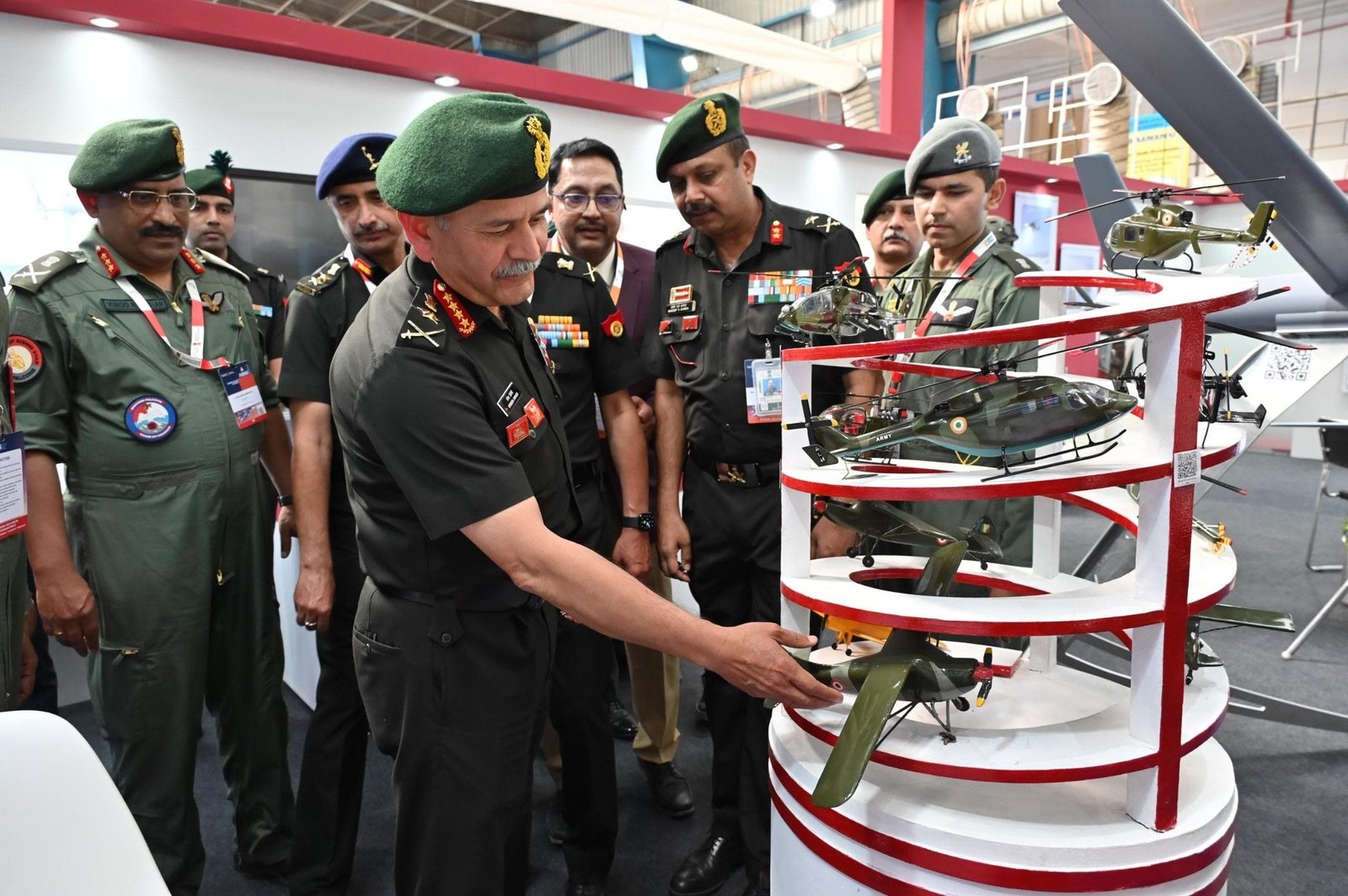
The competition celebrated this culture of innovation, acknowledging that the most effective solutions often emerge from troops directly engaged in operations.
Over the last five years, the Indian Army’s innovation ecosystem has delivered substantial and measurable outcomes, reflecting a growing culture of soldier-driven technological problem-solving. A total of 117 ideas and innovations have been selected during this period, of which 47 have already been successfully transformed into products, while nine more are currently undergoing prototype evaluation.
The Army has also filed 30 Intellectual Property Rights (IPRs), underscoring the institutional push towards protecting indigenous innovation.
In a significant step towards industry integration, five innovations have been transferred to industry under the Transfer of Technology (ToT) framework. These include the Exploder developed with FC Tech, Agniastra by Red Kite Digital Tech, Vidyut Rakshak with IS Trading Company, Baaz Attack Drone, and the Multi-purpose Octacopter.
Notably, two of these technologies were formally handed over to industry on December 5, marking another milestone in the Army’s journey towards operational self-reliance and indigenous capability development.

