


“To become a global power, the country must have a self-reliant defence sector driven by indigenous innovation and advanced technologies. Bold thinking and innovation are key to transforming our security landscape.”
APJ Abdul Kalam, Former President of India

In the rugged terrains of Ukraine, the volatile skies over West Asia, and even closer to home in Operation Sindoor, modern warfare has undergone a seismic shift. Machine guns, artillery, and tanks — once the undisputed kings of the battlefield — now play supporting roles. Precision strikes, AI-driven systems, swarming drones, unmanned underwater vessels, and electronic sabotage dominate. The 2024 pager explosions in Lebanon, widely attributed to Israeli intelligence, served as a chilling reminder: today’s conflicts are faceless, asymmetric, and tech-centric.
India’s political leadership and its war planners are taking note. Recognising that technological superiority is no longer optional, the country is harnessing its startup ecosystem to build self-reliance in defence. What was once a sector dominated by lumbering public giants and imports is now home to the world’s largest defence startup community — over 1,000 strong and growing. The Union Budget 2026 has explicitly acknowledged a pivotal truth: the future of this ecosystem lies not just in the traditional power centres of Bengaluru, Delhi-NCR, and Mumbai, but in Tier-2 and Tier-3 cities. Hyderabad, Pune, and Jaipur are emerging as vibrant new hubs.
The question is no longer whether decentralisation matters. It is whether governance — both central and state — will actively fuel it, or whether the gravitational pull of capital and scale will keep founders tethered to the big three metros. The stakes could not be higher. Decentralisation is the key to igniting a truly national innovation engine, one capable of delivering agile solutions across India’s diverse threat landscape, from glaciated borders to deserts and sea shores.
From Import Dependence to a Distributed Defence Ecosystem
India’s defence sector long operated under a centralised model. Public sector undertakings (DPSUs) and a handful of global primes handled procurement, R&D, and manufacturing. The result? Chronic delays, high costs, and heavy reliance on foreign suppliers. That model is being dismantled.

Recognising that technological superiority is no longer optional, the country is harnessing its startup ecosystem to build self-reliance in defence. What was once a sector dominated by lumbering public giants and imports is now home to the world’s largest defence startup community — over 1,000 strong and growing
Startups have injected agility, cost-efficiency, and speed. These nimble players now account for the largest share of armed forces procurement after DPSUs and established private industry — a trend Defence Minister Rajnath Singh has repeatedly hailed. The government’s push began in earnest with the 2018 launch of Innovations for Defence Excellence (iDEX) by Prime Minister Narendra Modi. iDEX opened Defence India Startup Challenges (DISC), inviting solutions to real military problems and offering grants of up to ₹1.5 crore (or ₹10 crore under iDEX Prime) tied to milestones.
The results have been transformative. Early sceptics doubted whether startups could meet the armed forces’ exacting standards. They were wrong. In one DISC-1 challenge, an IIT-Delhi startup developed a 100-megapixel camera for airborne platforms and missiles — a capability few nations possessed. Within 12 months, it delivered. The team then proposed a 1-gigapixel version; today, the startup collaborates with NASA and Lockheed Martin. Another winner achieved quantum key distribution over 150 km on fibre — 60 percent cheaper and more efficient than the global benchmark of 90 km. The company, now recognised among the world’s top quantum communication firms, has drawn interest from Google and Amazon and adapted its technology for the US post-quantum cryptography market.

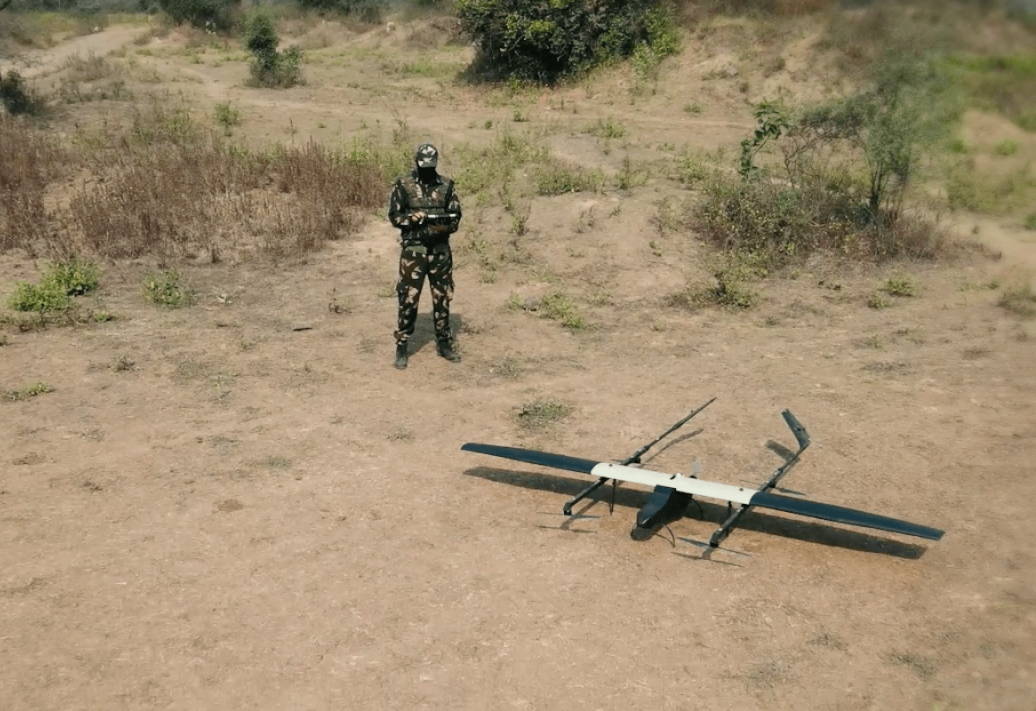
An unexpected signal of success arrived early: a request from the US embassy for collaboration on military swarms. The ministry, used to being the seeker rather than the sought, discovered the technology came from a startup founded by a retired Indian Air Force officer. Such stories illustrate how iDEX has bridged the gap between ideas and battlefield needs.
Today, iDEX has engaged thousands of innovators. Over 650 winners have emerged, with cumulative procurements exceeding ₹3,000 crore. Underwater and space challenges in 2022 drew hordes of participants; prototypes were showcased by the Navy within a year. The ecosystem now features more than 1,000 defence startups and 147 military-tech companies, supported by policies like positive indigenisation lists (banning imports of hundreds of items) and the Make-2 procurement route. Startups retain intellectual property — a departure from past norms — enabling civil and export applications.
The broader Indian startup ecosystem has already decentralised. DPIIT-recognised startups crossed 2 lakh by late 2025, with roughly 50 percent originating from Tier-2 and Tier-3 cities. This democratisation of entrepreneurship — once concentrated in metros — is now mainstream. Cities such as Jaipur, Indore, Coimbatore, and Bhubaneswar are recording explosive incorporations
Prime Minister Modi captured the spirit: “India needs your expertise and enthusiasm. The doors are open for innovation, the policies are supportive and the opportunity is unprecedented. Together we will make India not just Aatmanirbhar in defence but a global leader in defence manufacturing.”
The Budget 2026 Signal: Tier-2 and Tier-3 as the New Frontier
The broader Indian startup ecosystem has already decentralised. DPIIT-recognised startups crossed 2 lakh by late 2025, with roughly 50 percent originating from Tier-2 and Tier-3 cities. This democratisation of entrepreneurship — once concentrated in metros — is now mainstream. Cities such as Jaipur, Indore, Coimbatore, and Bhubaneswar are recording explosive incorporations.
The 2026 Budget doubles down on this trend. Finance Minister Nirmala Sitharaman announced a massive infrastructure push — ₹12.2 lakh crore overall — with dedicated focus on City Economic Regions (CERs) centred on Tier-2/3 cities and temple towns. Allocations for high-speed connectivity, data centres, and urban amenities target populations above five lakh. Reports link this directly to startup growth: enhanced digital public infrastructure, expanded credit guarantees, and simplified compliance are lowering barriers for founders outside metros.
Fund of Funds for Startups 2.0 adds another ₹10,000 crore to the corpus. The Scheme is designed to accelerate the next phase of India’s startup journey by mobilising long-term domestic capital, strengthening the venture capital ecosystem, and supporting innovation-led entrepreneurship across the country.
Under Fund of Funds for Startups 1.0, the entire corpus of Rs 10,000 crore has been committed to 145 Alternative Investment Funds (AIFs). Such supported AIFs have invested over Rs 25,500 crore in more than 1,370 startups across the country in sectors such as agriculture, artificial intelligence, robotics, automotive, clean tech, consumer goods and services, e-commerce, education, fintech, food and beverages, healthcare, manufacturing, space tech, and biotechnology among others.
In defence, this shift is already visible. The ecosystem is “increasingly distributed across multiple tiers of cities,” according to recent analyses. Manufacturing and R&D are moving beyond traditional hubs. iDEX has partner incubators across states, including Telangana (Hyderabad), Maharashtra (Pune region), and Rajasthan (Jaipur). T-Hub in Hyderabad anchors the country’s largest concentration of aerospace and defence-tech startups, serving as an iDEX activation partner. The Defence Innovation Organisation’s state-level presence ensures challenges reach talent pools nationwide.
Hyderabad stands out as an aerospace powerhouse. Startups such as Jeh Aerospace (aerostructures and aero-engine components) and Constelli (digital signal processing for electronic warfare) are leveraging local talent and infrastructure. Jeh is building a manufacturing hub in Telangana’s Kothur district. Pune, long a defence manufacturing base (home to Advanced Towed Artillery Gun System development), benefits from Maharashtra’s policy ecosystem and iDEX incubators. Jaipur, a Tier-2 leader with over 5,000 new incorporations in 2025, hosts Rajasthan’s iDEX partners and is positioning itself for deeper tech integration.
This broadening of regional innovation brings fresh talent untapped by metros. It also fosters diverse technological focus — advanced materials, drones, cybersecurity, maritime systems, and AI — tailored to India’s unique geography.
Decentralisation is not automatic. High barriers persist: stringent security clearances, lengthy procurement cycles, and testing protocols delay deployment. Drone startups, for instance, face licensing lags despite urgent battlefield needs
Drivers of Growth: Agility, Brain-Gain, and Global Ambition
Startups excel where traditional players struggle: rapid R&D and prototyping. While DPSUs remain the procurement mainstay, nimble firms deliver prototypes in 12-18 months on grants as low as ₹1.5 crore — versus years and hundreds of crores in legacy projects.
They are reversing brain drain. Nearly 40 percent of founders hail from IITs and IIMs; many Indian-origin professionals are returning. Capital inflows and marquee successes — ideaForge’s IPO at a 94 percent premium, Paras Defence’s listing, acquisitions like Alpha Design by Adani — have made defence-tech an attractive career path beyond traditional fields.
Export potential is rising. Defence exports surged from ₹686 crore in 2014 to over ₹23,000 crore by 2025. Startups are eyeing Southeast Asia, Africa, and the Middle East. Initiatives like INDUS-X (with the US) and iCET open global markets. Dual-use technologies allow revenue diversification.
The government’s 70 percent indigenous procurement mandate and ₹6.81 lakh crore defence budget (2025 figure, with continued growth) create sustained demand. NATO’s 5 percent GDP spending target opens billions in opportunities for Indian exporters.
Challenges on the Road to True Decentralisation
Decentralisation is not automatic. High barriers persist: stringent security clearances, lengthy procurement cycles, and testing protocols delay deployment. Drone startups, for instance, face licensing lags despite urgent battlefield needs.
Capital remains a bottleneck. Traditional VCs shy away from long-gestation defence projects. The Mounttech Growth Fund and public-private vehicles are steps forward, but more dedicated defence innovation funds are needed. Investors demand profitability amid cyclical revenues, unlike recurring SaaS models.
Policymakers must streamline regulations, expand dedicated funding, facilitate structured partnerships, and build indigenous supply chains. Allowing faster trial contracts and hand-holding through spiral development can shorten time-to-market. International collaborations (mirroring Israel’s Unit 8200 or Ukraine’s BRAVE1) and export support will elevate India from importer to exporter and global defence-tech hub
Collaboration with DPSUs and primes is essential yet challenging due to mismatched speeds and risk appetites. Supply-chain dependence on foreign microelectronics and composites undermines full self-reliance. Access to testing ranges and labs is limited outside major hubs.
Regulatory opacity and bureaucratic hurdles contrast sharply with the agility of the US or Israel. Without streamlined processes — bypassing some traditional steps for trial contracts and rapid prototyping — startups risk losing momentum.

Will capital and scale pull everything back to Bengaluru, Delhi-NCR, and Mumbai? Or will state governments, through incubator networks and policy alignment with iDEX, create viable alternatives? The Budget’s CERs and infrastructure focus, combined with state-level funds (such as Uttar Pradesh’s ₹1,000 crore startup fund targeting Tier-2/3), suggest governance is leaning toward facilitation. Yet execution will decide.
The Path Forward: A National Innovation Engine
India’s defence startups reflect both economic and strategic imperatives. By 2047, the vision of Viksit Bharat demands a robust, localised manufacturing base that reduces imports, creates jobs, and enhances security. Decentralisation — through iDEX’s nationwide reach, emerging hubs like Hyderabad (aerospace excellence), Pune (manufacturing depth), and Jaipur (Tier-2 dynamism) — is the catalyst.
Policymakers must streamline regulations, expand dedicated funding, facilitate structured partnerships, and build indigenous supply chains. Allowing faster trial contracts and hand-holding through spiral development can shorten time-to-market. International collaborations (mirroring Israel’s Unit 8200 or Ukraine’s BRAVE1) and export support will elevate India from importer to exporter and global defence-tech hub.
The old model is no longer gold. In its place rises a distributed, innovative, self-reliant network powered by startups from every corner of the country. If governance matches ambition with action, decentralisation will not just accelerate growth — it will redefine India’s defence posture and economic future. The innovation engine is revving. The question is how far and how wide it will go.

–The writer is a globally cited defence analyst based in New Zealand. The views expressed are of the writer and do not necessarily reflect the views of Raksha Anirveda
