

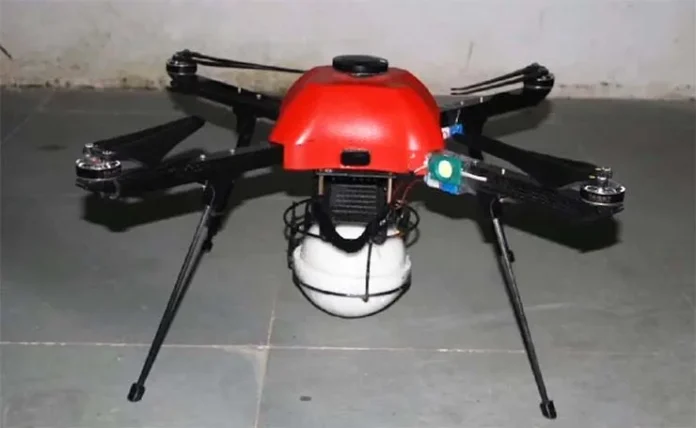
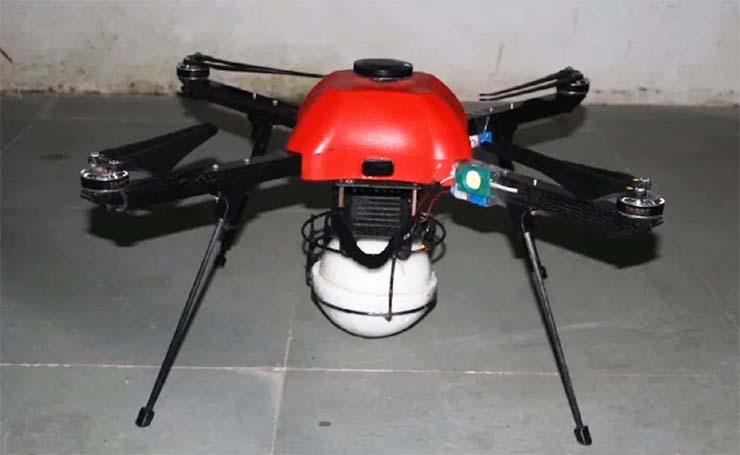
New Delhi: The Indian Army conducted successful trials of an all-weather, all-terrain, special lens that can be used to deceive the enemy air defence systems during wartime, helping in the suppression and destruction of enemy air defences for air operations. The lens is attached to a drone and used for locating enemy weapons and the type of weaponry used against ground forces and aircraft and helicopters.

Designed and developed by the Army Design Bureau, the Luneberg lens, when attached to a drone, increases the radar signature of the drone, making it appear like a helicopter. The radar cross-section is the ability of the target to reflect radar signals on the receiver. The more the area of the radar cross-section, the bigger the target is. Drones have a small radar cross-section compared to a helicopter. The Luneberg lens increases the radar signature and deceives the enemy’s air defence system, depicting the drone as a helicopter. It forces the enemy to initiate air defence measures like the use of missiles or anti-aircraft guns.
Speaking to a media outlet, Captain Dheeraj Umesh from the Army Air Defence (AAD) said, “If a swarm of drones (multiple drones) equipped with the lens is sent, it can confuse the enemy’s radar by alerting that attack helicopters are approaching a target and would force them to initiate air defence measures to counter.” Captain Dheeraj Umesh, the innovator of the Luneberg lens is from the 511 Air Defence Missile Regiment of the army. “The intelligence gathered will be helpful for future operations, adding that it can cover a 360-degree area on the radar and will reflect radar signals from any direction,” the officer added.
According to the officer, it will help the force locate the position of the enemy’s weapon and the type of system deployed which is helpful in the Suppression of Enemy Air Defence (SEAD) and Destruction of Enemy Air Defence (DEAD) operations. The drones can be used to conceal the planned route of heliborne operations of the army, where multiple quadcopters can be sent in a direction deceiving the enemy radar, making it a suitable choice of aerial deception.
Though the lens cannot depict a fighter aircraft currently, the officer said that in future, if a UAV or a drone with higher speed is developed, then we can use the lens to depict a fighter jet. The drone was tested in March, where the OSA-AK missile was fired from a range of 6.5 kilometres and on the radar system in an Electronic Warfare Test (EWT) in October. The drone has a range of 15 kilometres and can fly for 40 minutes. The system can operate in hot deserts and high-altitude mountainous terrain. The production cost of the drone is relatively cheap. A lens costs around Rs 55,000 and the cost per target is approximately Rs 2.5 lakh against the existing cost of Rs 25-30 lakh per target.


