
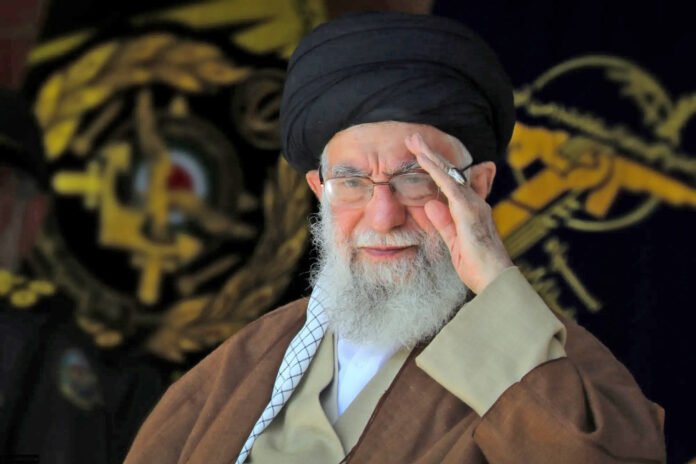
Ayatollah Ali Khamenei, the Supreme Leader of Iran, has been assassinated in a deadly air strike under “Operation Roar of the Lion.” Ayatollah Khamenei has gone, but his departure leaves deep scars on the body politic of the Middle East and West Asia. Even the globe will not remain the same. New global players may transform the hitherto known world into a multipolar order. Defiance of the United States by Iran could encourage others to stand up to the perceived bullying tactics of the US, which may gradually lose its status as a “ringmaster of the global circus.” It is therefore necessary to understand the reasons behind the volatility of the globe in the aftermath of Operation “Roar of the Lion.”
Egged on by Israel and Saudi Arabia, as well as emboldened by its own military superiority, evidenced by its actions in Venezuela, the USA appears to have invested its credibility in this operation against Iran. The whole operation was based on a questionable premise and a miscalculated notion of a “quick victory.” Not only was the inference about Iran’s military capabilities inaccurate, but the assumptions regarding an immediate revolt by the general public against the Khamenei regime were also misplaced.

The question arises: would the neutralisation of Ayatollah Khamenei and the top civil-military leadership of Iran lead to victory for the US and Israel? This, probably, was the central miscalculation that led to the initiation of “Operation Roar of the Lion.” The underlying principle of this operation was that of a swift and decisive victory. But that has not happened, and Iran has not capitulated. Instead, it has continued to inflict significant damage on Israel and US allies in the Middle East.
Its drones and missiles have caused havoc in 12–14 nations, ranging from Türkiye and Cyprus through Saudi Arabia and the UAE to Jordan and Israel. What is more, according to reports attributed to US Central Command, three F-16 fighter jets have reportedly been downed in Kuwait, challenging the myth of their invincibility.
Cost-prohibitive destruction has been caused on both sides, though Iran has suffered considerable damage. Yet Iran’s “will to fight” has not been broken. Bruised and severely wounded, Iran has stood up to a technological heavyweight and the world’s foremost military superpower. Therefore, the emerging scenario of the war indicates, so far, that the conflict is no more than a “bullfight” in which there may be “no victor and no vanquished.”
The fallacy of the thought process that led to “Operation Roar of the Lion” overlooks three fundamental realities about Iran. These realities defeat the idea of a “quick and complete victory.”

The war’s early assumptions of a swift victory over Iran appear deeply flawed. Despite suffering heavy losses, Tehran’s decentralised military structure and strategic geography have prevented a decisive outcome
Firstly, Iran had anticipated such an opening salvo by the initiators of a pre-emptive strike. Therefore, it appears to have created “autonomous commands” with full authority to respond to an invasion. Reportedly, there are some 30–31 such independent military regions with large stockpiles of drones and missiles, each with its defined target area. Despite massive hits, these autonomous commands are matching attacks “bullet for bullet.” This denies the possibility of a quick victory.
Secondly, missiles and drones, though capable of causing substantial losses, cannot ensure victory unless there are BOG (Boots on the Ground). Victories are not decided merely by the extent of destruction but by physical control of territory. In the ongoing scenario, the US appears reluctant to send its troops because of the fear of “body bags” returning home and the adverse reaction of the American population. The Trump administration cannot ignore the lessons of Afghanistan and Vietnam.

Further, its allies in West Asia, Israel included, do not possess sufficient forces for large-scale offensive deployment. Even where they do have relatively small but capable militaries, these forces are largely defence-oriented. Offensive operations are not their primary forte.
Thirdly, the inhospitable terrain and vast geography of Iran demand a very large ground force to conquer the country. Located between the Caspian Sea and the Persian Gulf, the coastline of Iran varies between 2,440 km and 2,815 km. The southern coastline (from the Persian Gulf to the Oman Sea) stretches from the Arvand Rud delta to the Gulf of Oman, covering the critical Strait of Hormuz, which controls around 20 per cent of global oil trade.
Besides, Iran has inhospitable mountainous terrain in the west and north. A series of massive, heavily eroded mountain ranges surround Iran’s high interior basin. The highest mountains include Mount Damavand, Alam-Kuh, Sabalan, Takht-e-Soleyman, Azad-Kuh, Zard-Kuh, and Shir-Kuh. These provide natural defence against invasion and facilitate the construction of underground silos and nuclear shelters. If push comes to shove, the Islamic Revolutionary Guard Corps (IRGC) could utilise them to counter invading forces.
Beyond the battlefield, the conflict threatens to trigger global economic shocks, oil supply disruptions, geopolitical realignments, and the gradual erosion of American dominance in world affairs
A Bloomberg report released in January 2026 claimed that the third Ayatollah, Mojtaba Hosseini Khamenei, owns holdings including high-value real estate in London and Dubai, along with interests linked to shipping, banking relationships, and hospitality assets in Europe. According to the investigation, these assets are generally not held directly in Khamenei’s name but are structured through intermediaries and layered corporate entities across multiple jurisdictions. Some of these assets have since been sold or restructured amid increased scrutiny.
Interestingly, he is expected to head the changed regime. He is the second son of the late Ayatollah Ali Khamenei, who was killed on February 28, 2026. It may be noted that the first Ayatollah, Ruhollah Khomeini, had lived in exile in Paris before returning to Tehran in 1979.
The three factors highlighted above suggest that the conflict is likely to remain stalemated, and a decisive victory may remain elusive. A stalemated conflict will generate a wide range of side effects — economic, socio-political, and military — potentially accelerating the collapse of the existing world order. It will have both regional and global repercussions.
Iran, too, may not remain the same. It could be destabilised and might risk sliding into the trajectory experienced by Syria, Iraq, or Libya. These side effects will be discussed in the next part.
….. Coming up Part II

-An ex-NDA and Wellington Staff College graduate, Col Rajinder Singh is a renowned author and security analyst. He has authored four books, two individually and two in collaboration. His best-selling books are Kashmir – A Different Perspective and The ULFA Insurgency. The views expressed are of the author and do not necessarily reflect the views of Raksha Anirveda
