

New Delhi: The defence procurement board (DPB) of the defence ministry has recommended the procurement of 60 Ghatak unmanned combat aerial vehicles (UCAVs) for the armed forces, as per reports. Ghatak is being developed by the Defence Research and Development Organisation (DRDO) and is designed to carry out deep-strike missions inside heavily defended enemy airspace.
Being developed for both deep strike and ISR (Intelligence, Surveillance, and Reconnaissance) operations, the unmanned aircraft is also suitable for SEAD (Suppression of Enemy Air Defences) and DEAD (Destruction of Enemy Air Defences) missions.

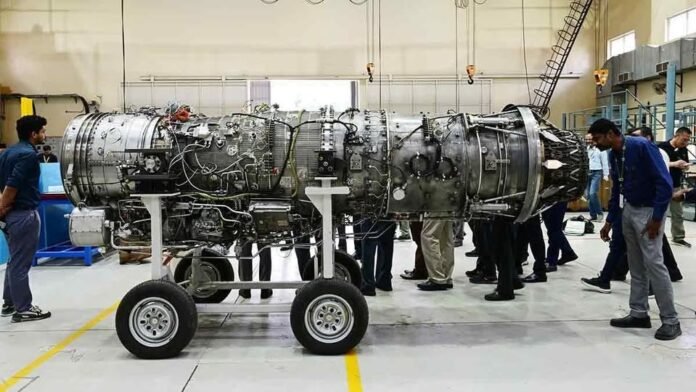
According to a leading media report, the move by the DPB comes as a boost to the country’s flying-wing combat drone programme. This also comes as a boost to India’s indigenous Kaveri jet engine programme as the Ghatak UCAV programme reportedly plans to use a derivative of the Kaveri engine in a dry configuration. ‘Dry’ engine refers to a jet engine that operates without an afterburner.
Developed by the Gas Turbine Research Establishment (GTRE) under the DRDO, the Kaveri engine programme was originally meant to power the LCA Tejas. As the engine failed to meet the aircraft’s thrust and reliability requirements, it has been repurposed for other uses, including powering UCAVs. Unlike the LCA’s afterburning engine, which produces 85 kilonewtons of thrust, the unmanned aerial vehicle is designed to operate at subsonic speeds and therefore does not require an afterburner. The UCAV aims to achieve speeds of Mach 0.9, fly at altitudes of up to 13,000m and have a two-hour endurance.
Last year, GTRE director S V Ramana Murthy in an interview stated that the afterburner not being required, among other capabilities, gave the UCAV the stealth dimension. “That is one of the fundamental differences with the fighter aircraft engine. That is why we call it a derivative engine or a dry engine,” he said.
Hopefully, with the procurement recommendation for Ghatak UCAV, the prospect of Kaveri engine flying in near future looks feasible.


