
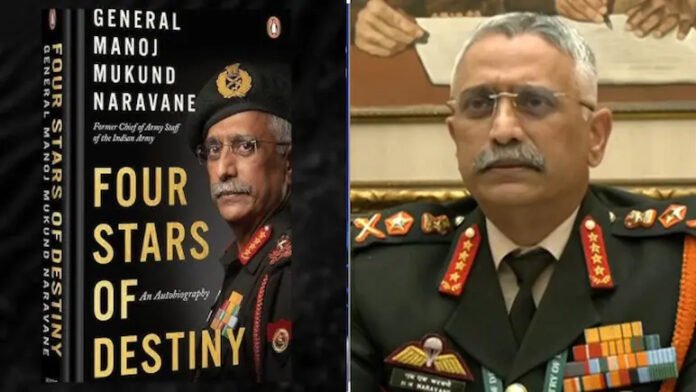
Not with standing the political noise about the five-and-a-half-year-old incident, which took place on August 31, 2020, at Rechin Pass of the Kailash range in Eastern Ladakh, when Chinese troops attempted an intrusion across the LAC, a question has arisen if there was dereliction of duty by the Union government or maybe even by the army. This incident has been allegedly recorded by General MM Naravane, ex-Army Chief, in his unpublished book, ‘Four Stars of Destiny’, which is in limbo for want of sanction by the government.
Before going any further, it is pertinent to understand the difference between LoC (Line of Control) and LAC (Line of Actual Control). These lines define virtual borders in the absence of defined borders with Pakistan and China, respectively. The difference is that LoC defines a virtual border with Pakistan in the Kashmir Valley, which is well identified on the ground and mutually agreed upon. However, the term LAC is used for the border with China because it was not identified on the ground, and its actual position is held on the ground by troops of India and China.

Non-identification of features on the ground is a deliberate tactic used by China to do ‘Salami Slicing’ or resort to a nibbling act. In pursuit of these tactics, China attempted to annex certain areas in the year 2020, which led to a clash of troops at Galwan Valley. It is of importance to note that the clash involved physical assault, without the use of firearms, as was prohibited by the Sino-Indian Agreement of November 29, 1996.
To checkmate China’s ‘Salami Slicing Tactics’ around Pangong Tso in Eastern Ladakh since April-July 2020, India, in a pre-emptive move, had occupied the Kailash Range in August 2020. This area serves as a primary hub for the People’s Liberation Army (PLA) in the Spanggur Lake area, which is situated directly east of the southern bank of Pangong Tso. This occupation of a dominating position by India allowed the Indian Army to peep into the Moldo military garrison of China. The Moldo garrison sits on the eastern side of the Spanggur Gap, a 3-km-wide flat terrain feature that acts as a gateway for potential armoured thrusts towards the Indian-controlled Chushul Valley and Leh.
To checkmate China’s ‘Salami Slicing Tactics’ around Pangong Tso since April-July 2020, India, in a pre-emptive move, occupied the Kailash Range in August 2020. This allowed the Indian Army to peep into China’s Moldo military garrison, which sits on the eastern side of the Spanggur Gap that acts as a gateway for potential armoured thrusts towards the Indian-controlled Chushul Valley and Leh
It is in this context that the incident of August 31, 2020, ought to be seen as described by General Naravane in his unpublished book. The incident elaborates a series of telephone calls between General Naravane and Northern Army Commander, Lt Gen Y Joshi. It is about the movement of four Chinese tanks and some infantry towards Rechin Pass to counter the Indian occupation of the Kailash Range. The unpublished book talks about this incident. The Government has not permitted its publication due to security reasons. The controversy is as to why the Prime Minister did not give clear instructions to the Army to deal with the situation, and also why it had taken so much time to accord permission.
It is a practised principle that on matters of national security, perceived and demonstrable, it was the prerogative of the Union government, whether to allow publication or not of sensitive military matters, particularly when the author had held a most sensitive and a very high position, with knowledge of national secrets. There is a precedent available on the debacle of the 1962 Sino-Indian war. The ‘Henderson Brooks Report’ on this conflict, to date, has not been published, even after 63 years. There are speculations about its conclusions, but its contents are as mysterious as the mystic ‘Himalayan man’ called ‘Yeti’.

General Naravane, as ex-Army Chief, definitely fits into this category of sensitive people. Each word of such people, spoken or written, needs scrutiny and thus falls under the scanner for clearance without prejudice to national security. Frankly speaking, General Naravane should have discussed his draft book with the authorities concerned. He allowed it to be done by publishers, which led to a deliberate leak of the pending action of the Government. Deliberately or otherwise, Naravane has turned a non-issue into a ‘serious issue’, thereby exposing his own failing as an Army Chief. In simple terms, he was looking over his shoulder to tackle a military situation, which was solely his job as a professional soldier. In military parlance, it could amount to ‘dereliction of duty’.
A leader on the spot, where a politico-military situation was developing, was best suited to act on his own in the best interests of the nation and his troops than waiting for political bosses to bail him out of adverse responsibility. Both Lt Gen Y Joshi, man on the ground, as well as General Naravane, as the head of the organisation, trained to safeguard borders, failed as professional soldiers
It is in this context that one is forced to ask what the dereliction of duty means. It is so because the leader of the opposition, Rahul Gandhi, raised this issue in the parliament on February 3, 2026, by quoting this incident of an alleged Chinese attempted intrusion across the LAC on August 31, 2020. The question arose as to who was at fault — the Government or the Army. Was it the job of a political leader to advise the military professional on how to deal with the menacing enemy, endangering the lives of his troops? If yes, then it was ‘dereliction of duty’ by a military professional.

The legal definition of dereliction is: The fact of deliberately not doing what you should be doing, especially when it is part of your job or responsibility. A simple question is: when a military situation arises, what should a military leader do? Should he look over his shoulder and ask a political leader to tell him what to do, or act as trained to do his job?
A leader on the spot, where a politico-military situation was developing, was best suited to act on his own in the best interests of the nation and his troops than waiting for political bosses to bail him out of adverse responsibility. The man on the spot was the best judge. Both Lt Gen Y Joshi, man on the ground, as well as General Naravane, as the head of the organisation, trained to safeguard borders, had failed as professional soldiers.
To say that the direction from the Prime Minister, ‘Act as deemed fit’ to a military leader was to “burden one with the adverse consequences”, is an insult to one’s own status of being a head of a military organisation. General Naravane is guilty of this thought process, which led him to include this inconsequential event of August 31, 2020, in his so-called unpublished book
To say that the direction from the Prime Minister, ‘ACT AS DEEMED FIT’ to a military leader was to “burden one with the adverse consequences”, is an insult to one’s own status of being a head of a military organisation. General Naravane is guilty of this thought process, which led him to include this inconsequential event of the Chinese intrusion of August 31, 2020, in his so-called unpublished book. It was a non-issue, but for reasons of his own, Naravane has blown it out of proportion.
Anyway, as chief of the army, he should have been prepared to face the consequences of his decision to blast the intruding Chinese rather than meekly looking for the Prime Minister/Defence Minister to tell him “What to do?” It is a wrong interpretation of civilian supremacy when national interests are likely to be in jeopardy. One should not forget the oath one takes on commissioning — it is loyalty to the Constitution and the nation, and NOT political leaders. Gen Naravane had failed to uphold the responsibility bestowed on him as army chief.

-An ex-NDA and Wellington Staff College graduate, Col Rajinder Singh is a renowned author and security analyst. He has authored four books, two individually and two in collaboration. His best-selling books are Kashmir – A Different Perspective and The ULFA Insurgency. The views expressed are of the author and do not necessarily reflect the views of Raksha Anirveda
