

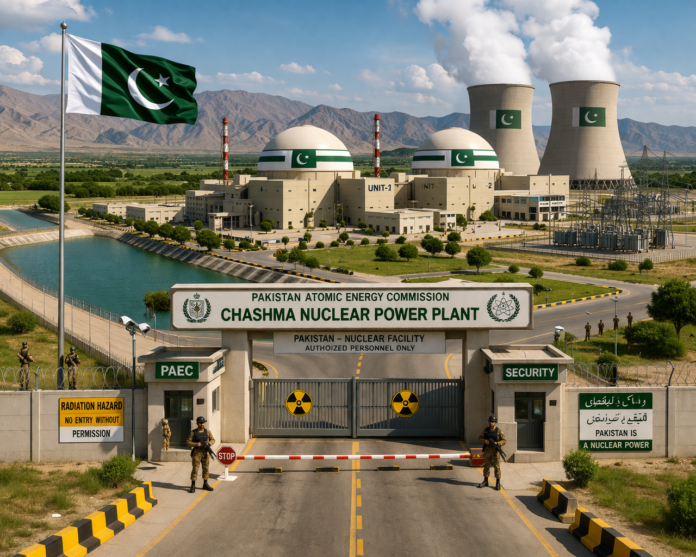
Pakistan has long portrayed its nuclear arsenal as the ultimate guarantor of its security against a conventionally superior India. Since conducting its first nuclear tests in 1998 (following India’s tests that year), Islamabad has built an estimated stockpile of approximately 170 warheads as of 2025-2026, according to assessments by the Federation of American Scientists and the Arms Control Association. This arsenal, paired with a doctrine of ‘full-spectrum deterrence’ that includes tactical nuclear weapons, is frequently invoked to project parity or even superiority in any conflict. Pakistani leaders and analysts have repeatedly suggested that nuclear weapons shield the country from conventional retaliation, enabling proxy actions through militant groups.
Yet repeated crises — from Kargil in 1999 to Balakot in 2019 and Operation Sindoor in 2025 — reveal a pattern: when India has conducted limited conventional strikes deep inside Pakistani territory, Pakistan has refrained from nuclear escalation, opting instead for de-escalation via hotlines or international begging. This raises a central question: Is Pakistan’s nuclear deterrent a credible shield, or has it become a bluff in scenarios short of existential threat?

The Illusion of Nuclear Parity: Kargil 1999
Pakistan’s nuclear programme was accelerated in response to India’s 1974 ‘Peaceful Nuclear Explosion’ and formalised after the 1998 tests. By the late 1990s, Rawalpindi’s military leadership believed the arsenal provided a nuclear umbrella under which it could pursue revisionist goals in Kashmir without fear of full Indian retaliation. This delusion drove the 1999 Kargil intrusion, where Pakistani forces (primarily from the Northern Light Infantry) infiltrated across the Line of Control, occupying heights in Indian-administered Kashmir.
India responded with a conventional counteroffensive involving the Indian Army and Air Force. Pakistani casualties were heavy — the estimated death toll was over 2,700 soldiers for the Northern Light Infantry alone. Islamabad issued veiled nuclear threats, with then-Prime Minister Nawaz Sharif and military spokesmen hinting at the ultimate weapon. Yet Pakistan never moved its nuclear forces to a launch-ready posture in a way that altered the conflict’s course, nor did it cross the threshold. Instead, under US pressure (facilitated by President Bill Clinton’s intervention), Pakistan withdrew, allowing an orderly retreat.
Every crisis, from Kargil in 1999 to Balakot in 2019 and Operation Sindoor in 2025, reveals a pattern: when India has conducted limited conventional strikes deep inside Pakistani territory, Pakistan has refrained from nuclear escalation, opting instead for de-escalation via hotlines or international begging
India’s then-Defence Minister George Fernandes captured the lesson in January 2000: “Pakistan did hold out a nuclear threat during the Kargil War last year. But it had not absorbed the real meaning of nuclearisation — that it can deter only the use of nuclear weapons, but not all and any war.”
As strategic analyst Subhash Kapila of the South Asia Analysis Group later observed, “Nuclear warfare is not a commando raid or commando operation with which Pakistan is more familiar. Crossing the nuclear threshold is so fateful a decision that even strong American Presidents in the past have baulked at exercising it.”

The Kargil episode exposed a core asymmetry: Pakistan’s nuclear stockpile cannot offset India’s massive conventional edge (India’s active army strength exceeds 1.4 million versus Pakistan’s roughly 650,000).
Balakot 2019: Testing the Threshold
The pattern repeated two decades later. Following the Pulwama suicide bombing in February 2019 (claimed by Pakistan-based Jaish-e-Mohammed), India launched airstrikes on a terrorist training camp near Balakot in Khyber Pakhtunkhwa — the first Indian air operation inside undisputed Pakistani territory since the 1971 War. As many as twelve Mirage 2000 jets dropped precision-guided munitions, killing up to 300 Jaish terrorists. Pakistan scrambled fighters in response, leading to a dogfight in which an Indian MiG-21 was downed by Pakistani anti-aircraft fire, while the MiG downed a Pakistani F-16C fighter.

No nuclear weapons were readied or threatened credibly by Pakistan. Islamabad attempted feebly to retaliate with its own airstrikes on Indian positions but kept the exchange limited and non-nuclear. Pakistani analyst Lt Gen (retd) Khalid Kidwai later argued that the crisis ‘amply demonstrated’ Pakistan’s nuclear deterrent had worked by preventing deeper Indian incursions.
Indian perspectives, however, saw it differently: New Delhi had demonstrated the ability to strike inside Pakistan without triggering nuclear escalation, expanding the space for conventional operations below the nuclear threshold. Pakistan’s response was conventional, not nuclear — further evidence that nuclear rhetoric serves more as a psychological tool than an automatic tripwire.
Operation Sindoor 2025: The Most Direct Challenge
The most recent and revealing test came in May 2025. Triggered by a terrorist attack in Pahalgam, Jammu and Kashmir, on April 22 (killing 26 civilians, with Pakistan-based groups like The Resistance Front implicated), India launched Operation Sindoor. On May 7, Indian forces used stand-off missiles, cruise missiles (including BrahMos and Scalp), and air strikes to hit nine terrorist infrastructure sites in Pakistan and Pakistan-occupied Kashmir. India explicitly framed the operation as targeted at non-state actors, not the Pakistani military.
“Nuclear warfare is not a commando raid or commando operation with which Pakistan is more familiar. Crossing the nuclear threshold is so fateful a decision that even strong American Presidents in the past have baulked at exercising it,” says strategic analyst Subhash Kapila
Pakistan responded with airstrikes and aerial engagements that were repulsed. Over the next four days, the conflict escalated: Indian forces struck 11 Pakistani airbases (including Sargodha and Nur Khan), destroying significant assets — up to 20% of Pakistan Air Force capabilities in some assessments. OSINT analysts like Damien Symon and aviation historian Tom Cooper cited satellite imagery suggesting damage to entrances at Kirana Hills near Sargodha, a key suspected nuclear weapons storage and assembly site (Pakistan has long denied foreign access). Indian officials, including the Vice Chief of Air Staff, have denied targeting nuclear facilities, insisting strikes were limited to terror camps and conventional military targets.
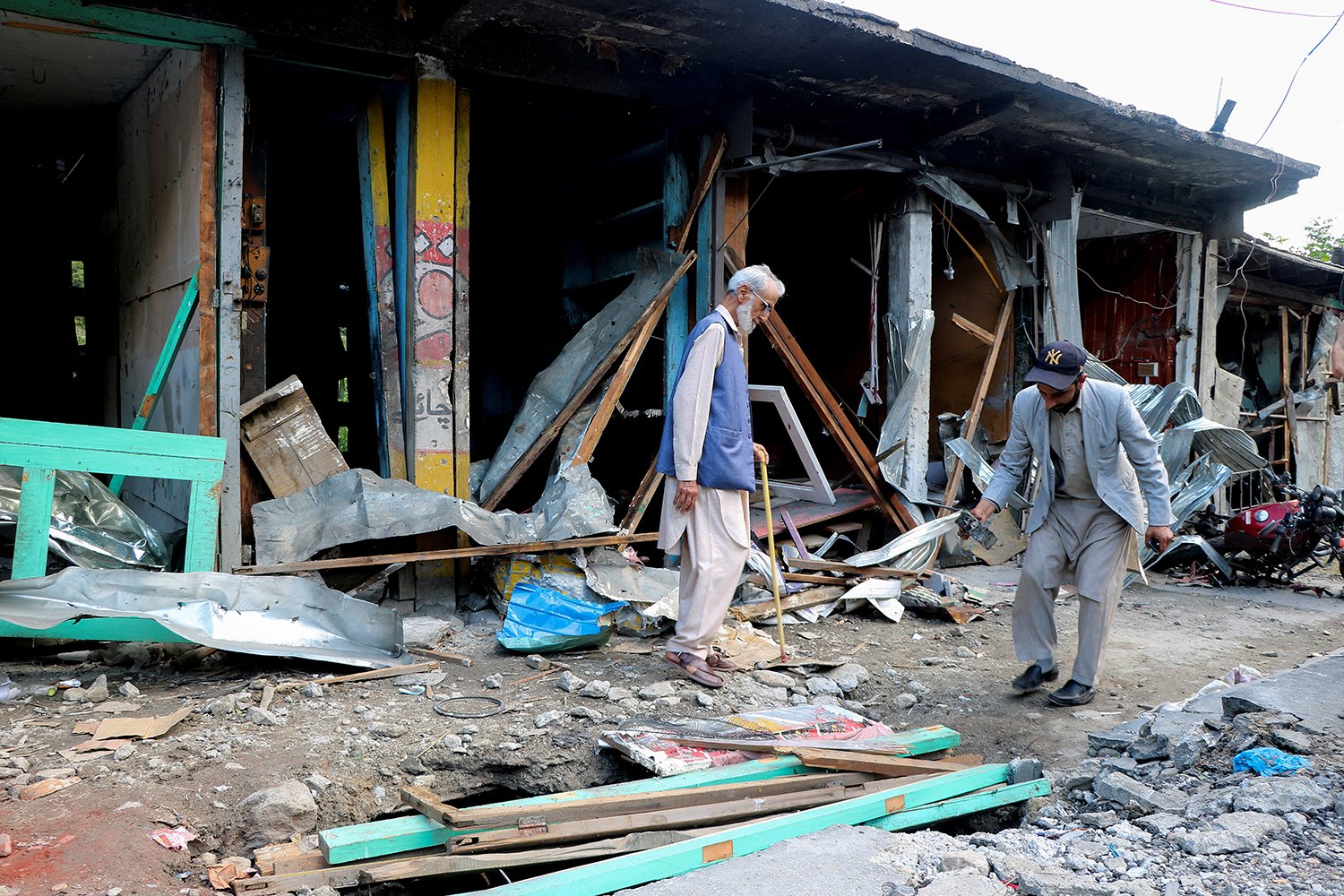
Crucially, despite these deep strikes — including alleged hits near nuclear-related infrastructure — Pakistan did not escalate to nuclear use. No warheads were reportedly mated to delivery systems, and the conflict de-escalated rapidly. On May 10, Pakistan’s Director General of Military Operations (DGMO) initiated a hotline call with his Indian counterpart at around 15:35 hours, leading to a ceasefire by 17:00. Pakistan reopened its airspace shortly after, and the brief war ended without the nuclear threshold being crossed.
On March 21, 2026, former Pakistani diplomat Abdul Basit articulated an extreme version of this deterrence logic in recent statements: if Pakistan were attacked by the US or Israel, it would redirect retaliation towards India, including nuclear strikes and terror attacks on cities like Mumbai and Delhi. “If we can’t reach the USA and Israel, we will target India. We must not spare it,” he said on a Pakistani television programme. This reflects a strain of thinking in Pakistani strategic circles that India serves as a default proxy target. Yet during Operation Sindoor — when India directly struck Pakistani military assets — Islamabad reached for the DGMO hotline rather than the nuclear button, underscoring the gap between rhetoric and action.
Doctrinal and Structural Realities
Pakistan’s nuclear doctrine emphasises asymmetric escalation: the willingness to use tactical nuclear weapons early against an Indian conventional offensive to prevent defeat. This is intended to compensate for conventional inferiority. However, as US strategic analyst Ralph Peters has noted, “Pakistan’s leaders know full well a nuclear exchange would leave their country a wasteland. India would dust itself off and move on.” India’s no-first-use policy, larger territory (making decapitation via first strike nearly impossible), and second-strike capabilities (including submarine-launched missiles) create a lose-lose dynamic for Pakistan. A Pakistani first strike invites overwhelming Indian retaliation; an Indian first use (though doctrinally eschewed) would still erase Pakistan as a viable state.
India demonstrated the ability to strike inside Pakistan without triggering nuclear escalation, expanding the space for conventional operations below the nuclear threshold. Pakistan’s response was conventional, not nuclear, further evidence that nuclear rhetoric serves more as a psychological tool than an automatic tripwire
Pakistan’s arsenal — delivered via aircraft, short-range missiles like Nasr (for tactical use), and medium-range Shaheen/Ghauri systems — cannot alter the fundamental mismatch. India’s strategic forces, with around 180 warheads and diversified delivery platforms, could inflict unacceptable damage with a fraction of its inventory. Moreover, Pakistan’s military (poorly trained relative to India’s professional forces) relies on nuclear threats to deter not just invasion but also punitive strikes against terror infrastructure.
A Deterrent with Limits
Islamabad clings to nuclear swagger for domestic legitimacy, funding from allies and psychological edge. It funds proxies like Lashkar-e-Taiba, betting terror wears India down without crossing red lines. And in fact, Pakistan’s nuclear weapons have successfully deterred full-scale conventional war between the two nuclear-armed neighbours since 1998, preventing the kind of decisive conflicts seen in 1965 or 1971. This stability-instability paradox allows Pakistan to sustain low-level proxy terrorism with relative impunity, knowing India will hesitate to escalate to total war.
Pakistan’s nuclear bluff has proven hollow when India calibrates responses below the threshold Islamabad dares not cross. Future crises will test whether this pattern holds, but history since 1999 suggests India’s conventional resolve continues to expose the practical limits of Pakistan’s nuclear posturing
However, in limited crises — Kargil, Balakot and especially Operation Sindoor — India has repeatedly demonstrated the ability to impose costs through conventional means without triggering nuclear retaliation. Each time, Pakistan has prioritised survival and de-escalation over crossing the fateful threshold. Statements like Basit’s reveal a willingness to invoke India as a fallback target in hypothetical scenarios involving distant powers, but real-world actions show restraint when the adversary is India itself.
As Fernandes observed after Kargil, nuclear weapons deter nuclear use — but not conventional punishment for terrorism or limited military adventurism. Pakistan’s leaders understand this calculus: using the arsenal risks national suicide for marginal gains. The nuclear bluff is thus not illusory in existential terms, but it has proven hollow when India calibrates responses below the threshold Islamabad dares not cross. Future crises will test whether this pattern holds, but history since 1999 suggests India’s conventional resolve continues to expose the practical limits of Pakistan’s nuclear posturing.

–The writer is a globally cited defence analyst based in New Zealand. The views expressed are of the writer and do not necessarily reflect the views of Raksha Anirveda
