

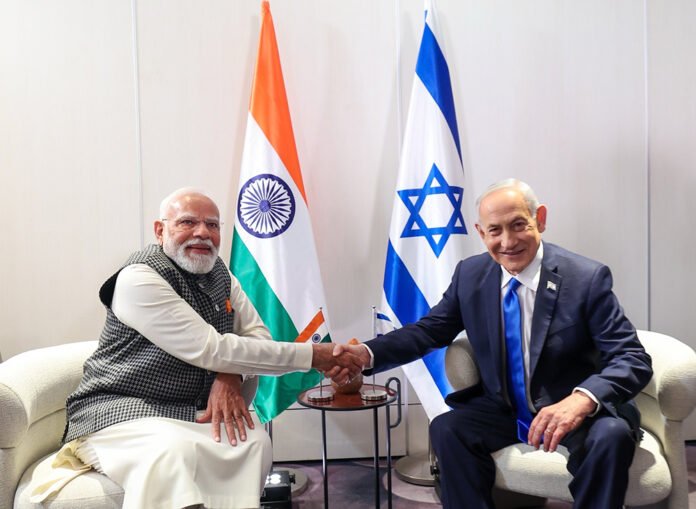
Prime Minister Narendra Modi is visiting Israel on February 25 and 26. While this visit is important from the perspective of India’s ties with the Middle East, this engagement also underscores India’s balanced diplomacy in the volatile geopolitics of the Middle East and North Africa (MENA). In recent years, the MENA region has witnessed an accelerated outreach from New Delhi.
Before Modi’s travel to Israel, India hosted the Second India-Arab Foreign Ministers’ Meeting in New Delhi on January 31. Apart from India, this meeting saw participation from the foreign ministers, ministers of state and other senior officials of all 22 Arab countries. India co-chaired this meeting along with the UAE. This is only the second time that such a meeting has taken place. The First India-Arab Foreign Ministers’ Meeting was held a decade ago, in 2016, in Bahrain.

Just two days before the Second India-Arab Foreign Ministers’ Meeting, India’s Deputy National Security Adviser Pavan Kapoor travelled to Iran on January 29. Earlier , the UAE’s President Sheikh Mohamed bin Zayed Al Nahyan was in India on January 19.
Multi-polarity in Indian diplomacy is usually viewed from two perspectives. One, India’s balanced approach in engaging with the West and Russia. Two, India’s insistence on countering China’s economic and strategic assertiveness by aligning with like-minded countries.
However, besides the broader global context, India’s quest for multi-polarity is evident at the regional level as well.
The MENA region is shaped by three major poles—the Arab world, Iran, and Israel—each with its own internal dynamics and fault lines. India has skilfully navigated these rivalries, maintaining strategic partnerships with Saudi Arabia, the UAE, Iran, and Israel simultaneously
Poles in the MENA Region
The MENA region, home to several sub-regions, has its own internal geopolitical dynamics and fault lines. Three major poles in this region are considered in this article.

First, the Arab world. Though grouped under a common identity, the Arab world is a group of 22 Arab countries and must accommodate competing and conflicting interests of its members. A primary fault line in the Arab world pertains to gaining supremacy over the Muslim world. This competition has led to tussle among countries like Saudi Arabia, the UAE, Qatar and Egypt. In recent times, friction has widened between Saudi Arabia and the UAE on the question of increasing their respective footprints in the geopolitics of Yemen and Sudan.
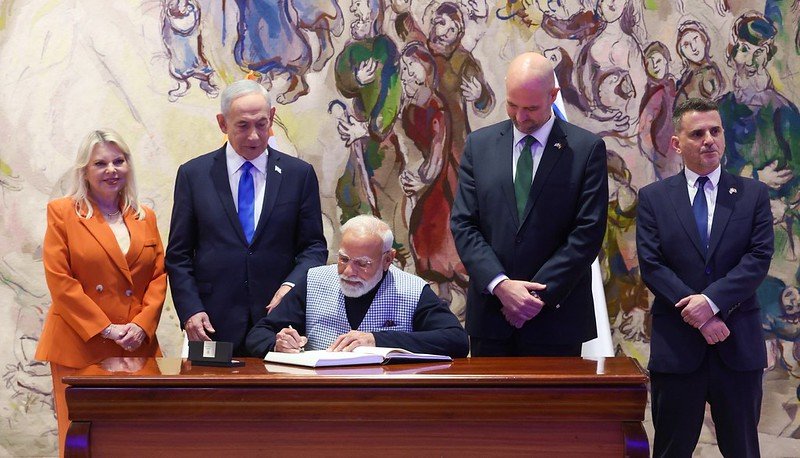

For its part, India has steered clear of this intra-Arab rivalry and has navigated its way through cordial engagements with the Arab world. This is important since a free trade deal with the Gulf Cooperation Council (GCC) is expected in the near future. Another fractious relationship in the Arab world is between Algeria and Morocco. However, India’s ties with North Africa are still in an emerging stage and India is yet to establish a major stake in the region as it has in the Gulf.
Second is Iran. Iran presents a greater complexity as it is in conflict with the West and the Arab world. Iran’s conflict with the West also puts India in a delicate position as Iran remains a crucial gateway for India to Central Asia. Conversely, Iran’s rivalry with the Arab world (again for supremacy of the Islamic world) has barely had any impact on New Delhi’s engagements with Tehran. India has resisted pressure from the West to isolate Iran. New Delhi continues to engage with Tehran and is biding its time to expand interactions between the two countries.
From steering clear of intra-Arab tensions to resisting Western pressure to isolate Tehran, New Delhi has ensured that its engagements remain balanced and interest-driven
The third pole is Israel. While Israel has been at odds with the Muslim countries in general, in the past few years, relations between the Jewish state and some of the Arab countries have seen improvement. However, the Iran-Israel relationship remains strained and even prone to military action, although in a restricted manner. Over more than three decades of engagement with Israel, India has ensured balanced growth in relations with Israel and the Arab countries. India has successfully established strategic partnerships with Israel, Saudi Arabia and the UAE, a testimony to India’s consistent diplomacy.
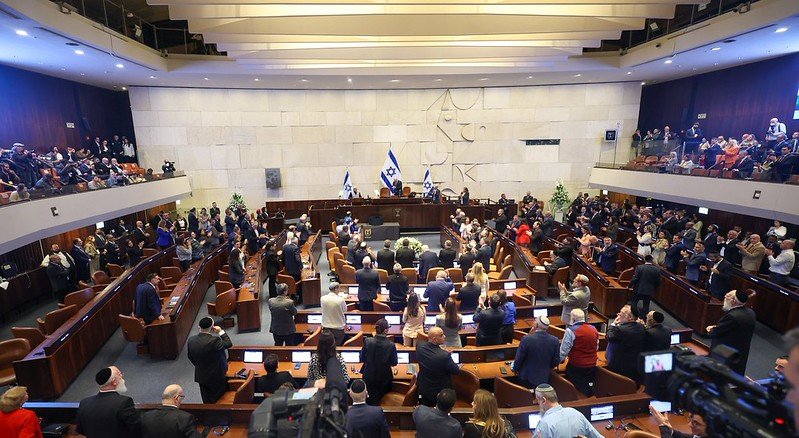
The Way Ahead for India
There are two major areas on which New Delhi could focus in its engagements with the MENA countries.
One, India’s interactions with the Arab world, Iran and Israel are coming close on the heels of its free trade deal with the European Union (EU). India, Middle Eastern countries and European countries are engaged in the development of the India-Middle East-Europe Economic Corridor (IMEC). An important factor in India’s growing ties with Europe is the diversification of supply chains. For India and Europe, reducing over-dependence on the United States and China is a part of this diversification.
As India deepens its footprint in the region, two priorities stand out. First, operationalising the India-Middle East-Europe Economic Corridor (IMEC) requires stability in the Middle East—a goal on which India and Europe can collaborate. Second, New Delhi must expand its outreach beyond its traditional partners in the Gulf
However, to bring this plan to fruition would require operationalising the IMEC. It is imperative that peace and stability are established in the Middle East so that economic activities between India, the Middle East and Europe remain uninterrupted. India and Europe could contribute to peace in the region that has experienced major and minor conflicts over the past few years.
Two, India’s engagements with the Arab world show a trend similar to its relations with Europe. While it is a stakeholder in the MENA region, India still has close relations with only a handful of countries there, like Saudi Arabia, the UAE, Oman, Iran and Israel. As India looks to engage more with the region, it is important to expand its outreach. In particular, New Delhi’s ties with most of the countries in North Africa, with the exception of Egypt, are still in an emerging stage. Recently, India-Morocco relations have shown a positive trend. India should now look to increase its footprint among the other North African and Arab countries.
Through the recently concluded India-EU Free Trade Agreement, India has displayed the multi-alignment in practice that it has been advocating as part of a balanced and rules-based world order. While engaging with the MENA region, India has followed the same template and is skilfully advancing its own economic and strategic interests.

–The writer is an Independent Political Analyst and Researcher based in Vadodara. Follow him on Twitter: @NiranjanMarjani. The views expressed are of the writer and do not necessarily reflect the views of Raksha Anirveda
