

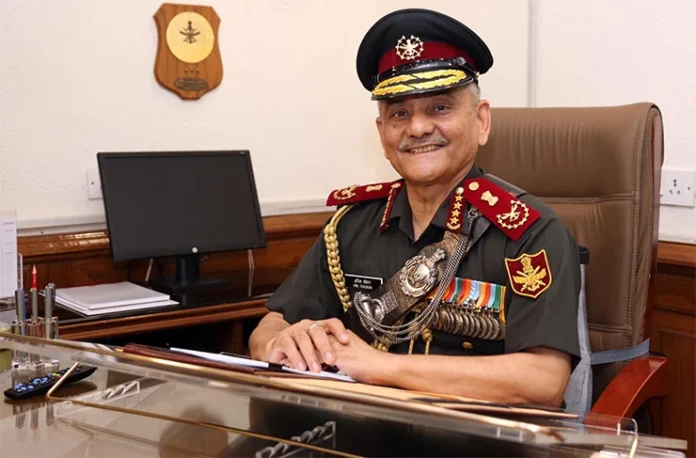
New Delhi: The Chief of Defence Staff, Gen Anil Chauhan, has laid stress on developing of a “joint operational culture” for the armed forces while underlining the need to respect the uniqueness of each service and its role during war-time.
According to Theaterisation plan, each of the theatre commands will have units of the Army, Navy and IAF. All of them will work as a single entity looking after security challenges in a specified geographical territory.

At present, the Army, Navy and the Air Force have separate commands. Theatre commands are being planned to integrate capabilities of three services.
He was speaking here at the first-ever tri-services’ conference on “brainstorming for change.”
The Navy and the Indian Air Force which are relatively smaller in size as compared to the Army have internally expressed fears of their operating philosophy getting overwhelmed by the creation of a new structure being planned as theatre commands — or joint commands. A joint and integrated operational structure envisages all three forces working in tandem under a common military commander.
The CDS said a “de novo” approach was needed towards traditional concepts. “The capabilities of each service needs to be integrated by creating structures that increase efficiency and enhance war-fighting ability and interoperability,” he added.

The tri-services’ conference was curated as a brainstorming session to generate new and fresh ideas, initiatives and reforms to further propel jointness and integration of the armed forces.
“Jointness and integration” are the “cornerstones” of the transformation to joint structures which the armed forces are progressing towards with the intention of being “future ready”, the Defence Ministry later said in a statement.

The conference was attended by heads of the Andaman and Nicobar Command and Strategic Forces Command, commandants of National Defence Academy, Defence Services Staff College, College of Defence Management and Military Institute of Technology as well as heads of the Armed Forces Special Operations Division, Defence Space Agency, Defence Cyber Agency and the Defence Communication Agency.
Officers from all the three services with diverse service experience attended the discussion and contributed ideas towards initiating the next-generation reforms related to modernisation, procurement, training, adaptation and collaboration while embracing emerging and innovative technologies.

