

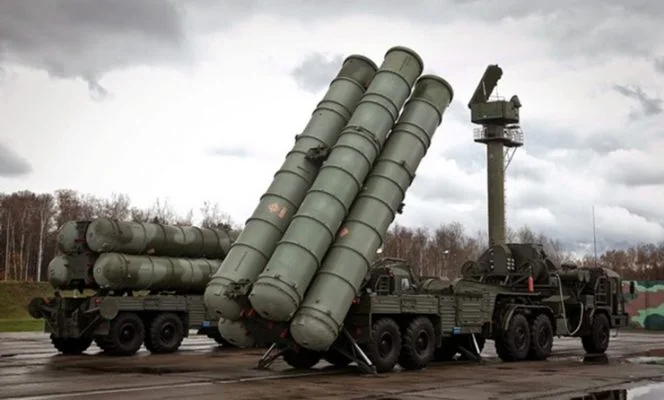
New Delhi: In a move to give a boost to its air defence in the wake of the increasing two-front threat, India is accelerating efforts to bolster its air defence capabilities with plans to acquire five additional squadrons of the Russian S-400 Triumf system, known domestically as Sudarshan. This move follows reports of its exceptional performance during Operation Sindoor against Pakistan last year.
The decision comes amid growing strategic needs along India’s eastern and western fronts. Defence officials have highlighted the S-400’s role as a game-changer, crediting it with downing five to six Pakistani fighter aircraft and one surveillance aircraft in the four-day conflict.

Notably, the system achieved what has been described as the longest-ever air kill, striking a high-value Pakistani spy plane at over 300 kilometres inside enemy territory. This feat has reinforced confidence in the platform within the Indian Air Force.
In contrast, Pakistan deployed extra squadrons of the Chinese-origin HQ-9 during the operation. Officials claim the HQ-9 proved ineffective, failing to counter Indian aircraft that struck multiple terror targets deep inside Pakistan.
The HQ-9’s shortcomings extend beyond the subcontinent. It reportedly failed to safeguard Venezuelan leadership during recent American actions and underperformed in Operation Epic Fury involving American and Israeli forces against Iran.
India’s air defence network, bolstered by the S-400, also neutralised cruise and ballistic missiles launched from across the border. This comprehensive success has prompted the push for more units.

Originally, India signed a deal in 2018 for five S-400 squadrons from Russia. Three are already inducted and operational, with the remaining two pending delivery.
New Delhi now seeks expedited delivery of the outstanding systems alongside the new order for five more squadrons. The Ministry of Defence is set to review the Indian Air Force’s proposal imminently.

Strategic deployment of these additional squadrons will target sensitive sectors. This expansion aims to fortify the overall air defence grid against evolving threats.
The Indian Air Force is also pursuing significant quantities of S-400 missiles. Discussions with Russia are underway, with a tender for these munitions to be reissued shortly. Parallel to foreign acquisitions, the Defence Research and Development Organisation is advancing Project Kusha. This indigenous programme focuses on long-range air defence to enhance self-reliance.
The timing of the S-400 expansion coincides with reports of Chinese-origin systems faltering in global theatres. This underscores India’s preference for proven Russian technology amid regional tensions.
Operation Sindoor highlighted disparities in air defence efficacy. While the S-400 delivered decisive results, the HQ-9’s limitations exposed vulnerabilities in rival systems.
Defence sources emphasise the S-400’s multi-layered capabilities, including long-range engagement and integration with other assets. Its success has elevated its status as indispensable for India’s missile shield.
As deliveries progress, India balances imports with domestic innovation. Project Kusha represents a step towards reducing reliance on foreign suppliers in critical domains.
The proposed acquisition signals heightened vigilance along borders with Pakistan and China. It aligns with broader military modernisation under the Aatmanirbhar Bharat initiative.
Russian collaboration remains pivotal, with ongoing talks ensuring timely supply chains. This partnership has weathered geopolitical pressures, including past US sanctions threats.
The S-400’s combat validation in Operation Sindoor provides empirical backing for the expansion. It positions India to deter aerial incursions more effectively. Meanwhile, missile stockpiles will be ramped up to sustain operational tempo. The reissued tender reflects proactive planning for sustained readiness.
Project Kusha, if successful, could complement systems like the S-400. DRDO’s efforts target comparable ranges, fostering a layered, indigenous defence architecture.
This dual-track approach—importing proven tech while building homegrown alternatives—strengthens India’s strategic posture. It addresses immediate gaps without compromising long-term autonomy.

