

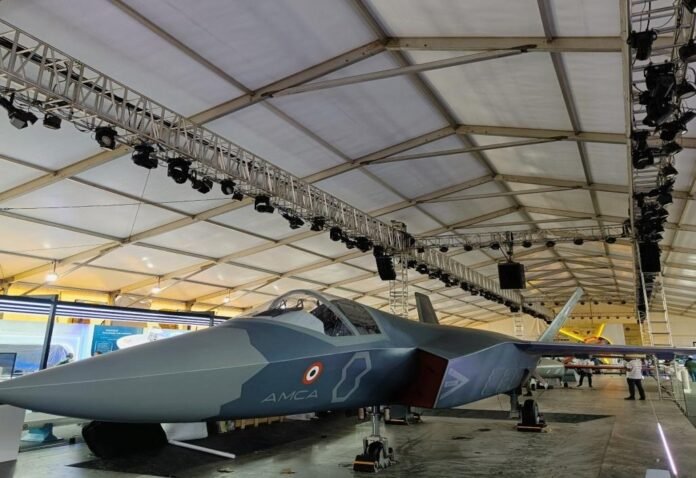
The Inflection Point: In the history of nations, there are moments when decisions taken in committee rooms quietly redraw the contours of strategic power. India may be living through one such moment. The reported shortlisting of private-sector giants — Tata Group, Larsen & Toubro, and Bharat Forge — for the manufacture of the Advanced Multirole Combat Aircraft (AMCA), alongside the exclusion of Hindustan Aeronautics Limited (HAL), is more than a procurement development. It signals a structural transition: India may be moving from a state-dominated aerospace model towards a diversified military-industrial ecosystem.
This is not merely about who builds India’s next fighter jet. It is about how great powers construct industrial depth, distribute technological risk, and prepare for wars that demand not just brave pilots, but resilient production lines. The question, therefore, is not whether HAL’s time is over. The real question is far more strategic: Is India finally building the aerospace ecosystem required for long-term strategic autonomy?

The Aircraft That Triggered the Debate
The AMCA represents India’s ambition to enter the elite club of nations capable of designing and producing fifth-generation stealth fighters. It is not simply another platform — it is a declaration of technological intent.
Stealth shaping, sensor fusion, super-cruise capability, advanced avionics, and AI-assisted battle management are no longer luxuries; they are prerequisites for surviving future air combat environments saturated with drones, hypersonic weapons, and networked defences.
Programmes of this complexity impose enormous industrial demands:
- Deep supply chains.
- Precision manufacturing.
- Systems integration.
- Rapid upgrade cycles.
- Digital design architecture.
No single organisation — public or private — can easily shoulder this burden alone. Seen in this light, the AMCA is less a fighter programme and more a stress test of India’s aerospace capacity.

HAL: The Institution That Built India’s Wings
Before asking whether India is moving beyond HAL, intellectual honesty demands acknowledging what HAL represents. For decades, HAL has been more than a manufacturer — it has been a nation-building institution.
In the fragile decades after independence, India lacked:

- Private capital willing to risk long-gestation defence investments.
- A mature engineering ecosystem.
- Aviation-grade metallurgy.
- Electronics capability.
- Testing infrastructure.
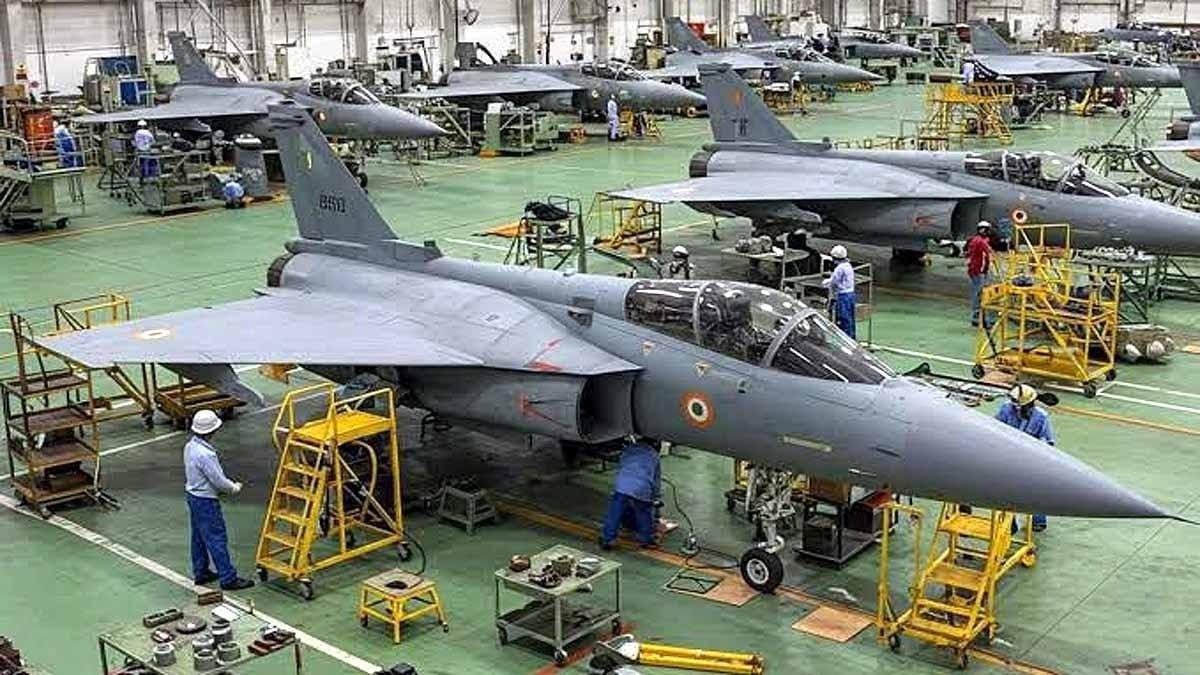
The state stepped in because no one else could. HAL licensed, learned, assembled, improvised, and gradually indigenised. It trained generations of engineers and technicians. It absorbed technological shocks that might have crippled a profit-driven enterprise. Every aircraft rolling out of an Indian hangar today carries some imprint of HAL’s institutional memory.
The AMCA represents India’s ambitious plans to enter the elite club of nations capable of designing and producing fifth-generation stealth fighters. It is not simply a platform; it is a declaration of technological intent. It is less a fighter programme and more a stress test of India’s aerospace capacity
Critics often measure HAL against private-sector efficiency metrics. That is analytically convenient — but historically shallow. HAL was never designed to behave like a start-up. It was designed to guarantee sovereignty. And sovereignty rarely optimises for speed.
Why the Old Model Is No Longer Enough
The geopolitical environment confronting India today bears little resemblance to that of the late twentieth century. Future wars will not allow leisurely production timelines.
They will demand:
- Industrial surge capacity — the ability to ramp up output rapidly.
- Distributed manufacturing — resilience against supply chain disruption.
- Technological agility — faster upgrade cycles.
- Cost discipline — sustainability in prolonged competition.
Airpower is no longer just about aircraft performance; it is about the industrial engine that sustains fleets over decades. Consider a sobering strategic reality: In high-intensity conflict, aircraft losses can outpace peacetime imagination. Victory belongs not only to the side with better jets, but to the side that can replace them faster.
A monolithic production structure, however competent, introduces systemic risk. Diversification is therefore not ideological — it is strategic.
The Rise of India’s Private Defence Manufacturing
The emergence of serious private-sector participation marks one of the most consequential shifts in India’s defence economy. Unlike earlier decades, today’s industrial houses bring:
- Global partnerships.
- Advanced manufacturing practices.
- Access to capital.
- Export orientation.
- Programme management discipline.
Stealth shaping, sensor fusion, super-cruise capability, advanced avionics, and AI-assisted battle management are no longer luxuries; they are prerequisites for surviving future air combat environments saturated with drones, hypersonic weapons, and networked defences
Equally important is cultural contrast. Private industry often operates under the tyranny of deadlines. Delays erode margins; inefficiency invites market punishment. This behavioural architecture can be strategically valuable in defence production, where timelines frequently shape operational readiness.
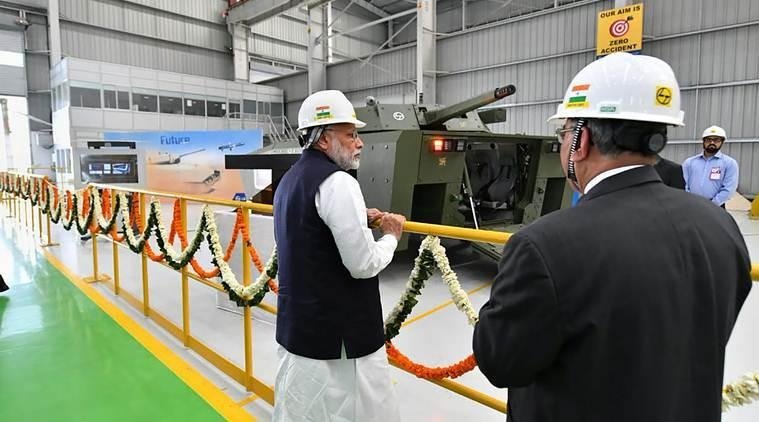
Yet enthusiasm must be tempered with realism. Manufacturing excellence does not automatically translate into aerospace mastery. Building aircraft is not akin to assembling automobiles. It demands orchestration of thousands of precision components within unforgiving safety margins. Most private Indian firms are still climbing the learning curve in full-spectrum aircraft integration. The transition must therefore be evolutionary — not disruptive.
The Strategic Mistake India Must Avoid
There is a temptation in policy circles to frame the emerging landscape as a binary contest:
- Public vs Private.
- Legacy vs Efficiency.
- Monopoly vs Competition.
Such framing is intellectually seductive — and strategically dangerous. The real risk is not that HAL will fade. The real risk is that India might confuse manufacturing breadth with technological sovereignty.
Let us be clear about one principle: A nation that cannot design its own fighters cannot claim strategic autonomy — no matter who manufactures them.
- Design is power.
- Design is deterrence.
- Design is independence.
Critics often measure HAL against private-sector efficiency metrics. That is analytically convenient, but historically shallow. HAL was never designed to behave like a start-up. It was designed to guarantee sovereignty. And sovereignty rarely optimises for speed
If diversification weakens indigenous design capability, India would merely exchange one form of dependency for another. That would be a historic miscalculation.
Towards an Aerospace Ecosystem
Great aerospace powers do not rely on single champions. They cultivate ecosystems. The United States thrives on multiple primes supported by dense supplier networks. Europe collaborates through multinational consortia. Even highly centralised systems increasingly distribute production risk.
India appears to be inching towards a similar architecture:
- HAL → high-end design, integration, testing.
- Private majors → scalable manufacturing.
- MSMEs → specialised components.
- Startups → autonomy, AI, sensors.
Such a layered structure enhances resilience. It also unlocks innovation — because breakthroughs often emerge from unexpected corners of industrial networks.
But ecosystems do not arise spontaneously. They must be deliberately engineered through procurement reform, stable orders, technology-sharing frameworks, and export incentives. Without policy continuity, diversification can devolve into fragmentation.
Are We on the Right Path?
The answer is cautiously affirmative — but conditional.
- Yes, competition typically improves efficiency.
- Yes, broader participation reduces bottlenecks.
- Yes, industrial depth strengthens deterrence.
But success depends on strategic clarity. India must resist the urge to treat defence manufacturing purely as an economic sector. It is fundamentally an instrument of national power. Short-term cost advantages should never eclipse long-term capability. The AMCA moment should therefore trigger not celebration, but introspection. Are we aligning industrial policy with geopolitical ambition? Because the latter is rising rapidly.
Will HAL Lose Relevance?
Predictions of HAL’s decline are premature. Institutions anchored in sovereign capability rarely vanish; they adapt. Indeed, HAL may become more strategic, not less.
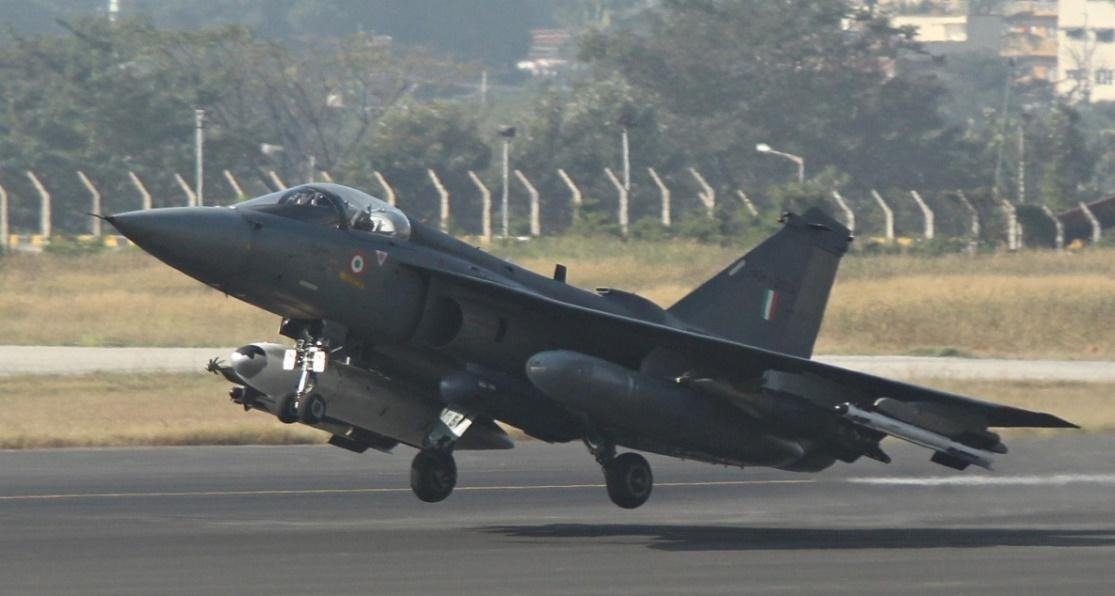
As aerospace platforms grow more complex, the premium on design authority rises. Integration expertise becomes indispensable. Certification infrastructure cannot be improvised. These are not easily replicable assets. Rather than viewing private participation as displacement, it may be more accurate to interpret it as load sharing.
Airpower is no longer just about aircraft performance; it is about the industrial engine that sustains fleets over decades. Consider a sobering strategic reality: In high-intensity conflict, aircraft losses can outpace peacetime imagination. Victory belongs not only to the side with better jets, but to the one that replaces them faster
HAL’s future could resemble that of a national design house, guiding architecture while leveraging distributed manufacturing capabilities. Such repositioning would align India with mature aerospace models. The alternative, eroding HAL without cultivating equivalent design depth elsewhere, would be strategically reckless.
The Workforce Question Few Discuss
Industrial transitions are not merely technological; they are human. HAL embodies decades of tacit knowledge—skills often undocumented yet critical. If diversification proceeds without mechanisms for knowledge diffusion, India risks creating parallel silos rather than synergistic networks. Policy must therefore encourage:
- Cross-industry mobility.
- Joint research clusters.
- Academic partnerships.
- Apprenticeship pipelines.
Aerospace competence accumulates slowly—and dissipates faster than policymakers assume.
The Export Imperative and Deeper Strategic Context
No aerospace ecosystem can thrive on domestic demand alone. Exports are not just revenue streams; they are validation mechanisms. They enforce quality standards and maintain production lines between domestic orders.
Private industry tends to think globally by instinct. This orientation could prove transformative if supported by diplomatic and regulatory alignment. Export success would also alter India’s strategic posture, converting it from a major importer into a consequential supplier. Industrial strength often precedes geopolitical influence
Private industry tends to think globally by instinct. This orientation could prove transformative—if supported by diplomatic and regulatory alignment. Export success would also alter India’s strategic posture, converting it from a major importer into a consequential supplier. Industrial strength often precedes geopolitical influence.
The twenty-first century is witnessing the return of great-power competition. Airpower sits at the centre of this contest because control of the skies increasingly determines freedom of action across domains—land, sea, cyber, and space. But aircraft alone do not confer an advantage. Industrial endurance does.
Wars are rarely won by platforms conceived in peacetime alone; they are sustained by factories that keep producing when circumstances turn hostile. If the AMCA decision nudges India towards greater industrial redundancy, it may enhance deterrence without firing a shot. Adversaries calculate not only inventories, but also replenishment capacity.
Moment That Demands Strategic Patience
Transitions of this magnitude inevitably generate anxiety. Institutional pride, labour concerns, and technological uncertainties—all surface simultaneously.
If executed wisely, this transition could mark the dawn of India’s aerospace century. If mishandled, it risks diffusing capability at the very moment consolidation is required. Great powers are not built on aircraft alone, but on the ecosystems that design, produce, repair, upgrade, and reinvent them
Yet strategic patience is essential. Nations that built enduring aerospace power did so over generations, not procurement cycles. India must therefore resist abrupt swings—whether towards excessive statism or uncritical privatisation. Balance, not ideology, should guide policy.
Beyond the HAL Debate
The temptation to reduce the current moment to a headline — “Is HAL finished?”—misses the larger story. India is not dismantling its aerospace inheritance. It may be attempting to scale it. The true measure of success will not lie in which company assembles the next fighter. It will lie in whether India succeeds in building an industrial architecture capable of supporting sustained strategic competition.
For policymakers, the message is clear: Do not weaken the pillar while expanding the temple.
- HAL must evolve.
- Private industry must mature.
- The state must orchestrate.
If executed wisely, this transition could mark the dawn of India’s aerospace century. If mishandled, it risks diffusing capability at the very moment consolidation is required. Great powers are not built on aircraft alone—but on the ecosystems that design, produce, repair, upgrade, and reinvent them. The AMCA moment is therefore not about one programme or one company. It is about whether India is ready to think of airpower not merely as a military asset, but as a civilisational capability. And in that quiet realisation may lie the blueprint of future strength.

Lt Gen Rajeev Chaudhry (Retd) writes on contemporary national and international issues, strategic implications of infrastructure development towards national power, geo-moral dimension of international relations, and leadership nuances in a changing social construct. The views expressed are of the author and do not necessarily reflect the views of Raksha Anirveda
