
History bears testimony that transactional unity of empires/nation states/political outfits, created by force or misleading philosophy, always falls apart because of civilisational disunity and ethnic cleavages. Artificial unity of forcible occupation/ annexation of territories, not sharing culture, history, language, traditions, customs and geographical contiguity would often lead to dismemberment. It happened with the British Empire. It happened with the Ottoman Empire. It is a truism that monarchical/authoritative/
Defying ethnic cleavages, Pakistan was created by a British-sponsored ‘religious Coup’ in 1947. Civilisational homogeneity was thus dented by the founders and conspirators of the creation of Pakistan in thinking that religion alone makes a nation. Truth is, it does not. If religion could make a nation, then the world would not have witnessed 57 Muslim nations and 120 Christian nations. This religious-based myth of Pakistan’s creation was broken in December 1971, when Bangladesh separated.

Pakistan is on the edge of implosion. It is visible in every walk of life, from region to region and from civil society to the military. If Baluchistan is inflamed, then Khyber Pakhtunkhwa is on the verge of rebellion. The Imran Khan issue has further propped up the socio-politico-military divisions
Pakistan was created on the political sand-dune of the Two-Nation Theory, which blew up in 1971, when Bangladesh was born. Frankly speaking, Pakistan was the illegitimate child of the colonial misadventure of the British policy of ‘divide and rule’. After the 1857 mutiny, Britain needed to create this division to rule the geographic land mass, called South Asia, through the ‘mutual fear psychosis’ of the two major communities. Accordingly, the Hindu-Muslim divide, through the Two-Nation Theory, was, thus, a pivotal hinge of British strategy.
The idea of the Two-Nation Theory germinated at the beginning of the 20th Century, in 1906 to be precise, when the Aligarh Muslim Movement culminated in the founding of the All India Muslim League. With this, the Hindu-Muslim divide began to show its fangs. It has been brought out by James Ramsay McDonald, British Prime Minister from 1929-1935, in his book ‘Awakening of India’, written in 1910.
Ramsay McDonald asserts, “The leaders of the League (Muslims) were inspired by certain Anglo-Indian officers, and that certain wires were pulled at Shimla and in London and of malice aforethought sowed the discord between Hindus and Mohammedans.”
In fact, the creation of Pakistan was an attempt to deny the shared history and geography of a regional civilisation which stood far above the religion. Ethnic divisions were widened, and civilisation unity was deplored by the leaders of Pakistan when they denied their roots and sought identity with the Arabian peninsula. Military-induced ‘India-hatred’ further led it to a confrontation with India. Thus, instead of creating a unique identity of Pakistan, the Punjabi-dominated leadership of the newly-created state, egged on by military interests, sought confrontation with India.

In the bargain, it has become an archipelago of Military and Generals but not a nation. In order to retain its grip, the military invented the ‘Kashmir dispute’, which it knew could never be forcibly annexed from India. But it ensured that the very mention of the word ‘Kashmir’ became an adrenaline for the masses of Pakistan to loathe India. This is what kept “ethnically and historically-deficient Pakistan” together, but not integrated, for the last 78 years. But how long could religion and the smoke screen of “Kashmir as Jugular vein” fool people? An overdose of religion could not subdue ethnic identities. Excess of everything is not only bad but also counter-productive.
Thus, the highhandedness of Generals and the Military continued to pursue military interests at peril to the economic and socio-political cohesion of Pakistan. Consequently, it retained ethnic diversity and inherent disunity. Its military competition with India further damaged its economy, resulting in the impoverishment of people and causing regional imbalances in development. Therefore, Pakistan today is on the edge of implosion. It is visible in every walk of life, from region to region and from civil society to the military. If Baluchistan was inflamed, then KPK is on the verge of rebellion. The Imran Khan issue has further propped up the socio-politico-military divisions.

Imprisonment of Imran Khan, internationally recognised as the most popular leader of Pakistan, has first time created a civil-military trust deficit. The bulk of the province of Pakistani Punjab, which was hitherto a strong base of the Pakistan military, has silently risen in rebellion against the Army. The alleged rumours were widely circulating that the Army had killed Imran Khan in jail. This rumour gained momentum when the army refused to allow Imran’s relatives and his supporters, including his lawyers, to meet him in jail. This led to thousands of Imran Khan supporters assembling at Adiala prison, where he was jailed, on December 1-2, 2025. Thus, the Army was forced to allow Imran Khan’s sister Uzma Khan to meet him, which was earlier denied, even after the Islamabad High Court orders. After the meeting, she said that Imran Khan was angry with Army Chief, Field Marshal Asim Munir, and he blamed him for the atrocities and brutalities against him. This caused further resentment among Imran Khan’s supporters.
The highhandedness of Generals continued to pursue military interests at peril to the economic and socio-political cohesion of Pakistan. Consequently, it retained ethnic diversity and inherent disunity. The military competition with India further damaged its economy, resulting in the impoverishment of people and causing regional imbalances in development
Imran Khan’s party, PTI, was the largest in the last elections, but it was kept out of government by the Army’s manipulation. It seems the Army engineered a weak coalition government of PML-N (Pakistan Muslim League-Nawaz) and PPP (People’s Party of Pakistan), which Imran Khan’s supporters refer to as ‘Form-47 Government’, meaning that senators of this ruling combination were fraudulently declared (Form-47) winners in the last elections. Therefore, there is a simmering, silent discontent and frustration against Field Marshal Asim Munir and his puppet regime of Prime Minister Shabaj Sharif.
This discontent is visible even among ruling party members. In this case, it is pertinent to note the recent statement of Mariyam Nawaz, current Chief Minister of Punjab, daughter of PML-N supremo and niece of the present PM. She is alleged to have stated: “I was not party to the wrong decision of extensions.” This has reference to the five-year extension given to Field Marshal Asim Munir through the 27th amendment to Pakistan’s Constitution. The interesting point of this amendment is that the Field Marshal has become the real ruler of Pakistan. What is more interesting is his constitutional exoneration of all misdeeds and wrongdoings. He cannot be persecuted in any court in Pakistan even after his retirement, if he ever does retire. Earlier, through the 26th Amendment, the judiciary was tamed, and the Supreme Court was made redundant by reducing its powers and creating a super institution, called, ‘constitutional court’.
The Imran Khan factor, along with damaging amendments to the constitution, has alienated the public in Pakistani Punjab, which had always stood with the Army. In fact, Punjab used to celebrate the Army takeover of the nation. But the Pakistani Army no longer enjoys this favouritism. The situation in KPK (Khyber Pakhtunkhwa) has been explosive. It is further likely to deteriorate if Imran Khan is eliminated. The provincial government is led by PTI of Imran Khan. Currently, the insurgency led by TTP (Tehreek-e-Taliban of Pakistan) has been striking at will on the Pakistan Army. Asim Munir threatens to impose Governor’s rule to control the TTP insurgency. If it happens, its breakaway is assured. Every day, Pakistani soldiers are killed on the Durand Line. TTP controls the province.
Imprisonment of Imran Khan, internationally recognised as the most popular leader of Pakistan, has first time created a civil-military trust deficit. The bulk of the province of Pakistani Punjab, which was hitherto a strong base of the Pakistan military, has silently risen in rebellion against the Army
Add to this what was going on in Baluchistan. A full-fledged insurgency has been raging there. Baluchistan wants to secede from Pakistan. This is the FIFTH PHASE of the Baloch insurgency. The main resentment now was of missing the Baloch youth. It is alleged that the Army was behind this. Since 2021, Baloch militant groups have escalated both the frequency and complexity of their attacks. Their primary targets include security forces, alleged informants, members of ‘Death Squads’, infrastructure linked to security forces and China–Pakistan Economic Corridor (CPEC) projects, Punjabi workers, and Chinese nationals. The March 2025 attack on the Jaffar Express, carrying soldiers, by the BLA, explains the magnitude of the alienation of the Baloch people. While the Pakistan Army did not disclose the true strength of soldiers killed, militants claimed to have killed 250. BLA claims to have carried out some 2000 attacks on the Pakistan Army in 2024-25. The situation in Baluchistan is explosive, and it has almost gone out of the hands of the Pakistan Army. There are reports of soldiers surrendering or deserting their posts.
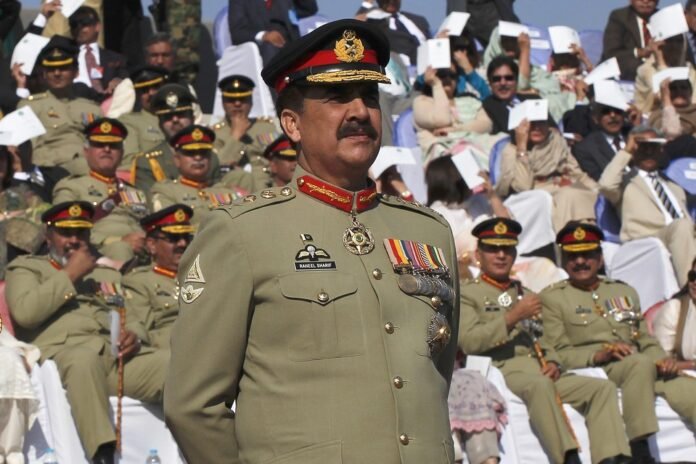
Internal alienation within the Army has been further fuelled by Field Marshal Asim Munir when, in his address to journalists at NDU (National Defence University), Islamabad, he criticised Pakistani politicians as incapable, uneducated, inefficient and lacking knowledge. Strangely, it included the ruling combination that has given him promotions and an extension. It may be noted that he claimed a false victory against India in May 2025 and got himself promoted to Field Marshal through his puppet civil government. And now, through the 27th Amendment by the same puppet regime, he has become CDF (Chief of Defence Forces), while retaining control over the Army by being COAS concurrently. This will cause friction not only Intra-Army but also inter-Armed Forces of Pakistan.
All said and done, Pakistan, today, sits on a powder keg of internal resentment in all walks of life. It needs a spark of fragmentation, which Asim Munir will definitely provide by mishandling the Imran Khan issue. He is bound to do so because the ruling party supremo, Nawaz Sharif, has given him an extension because of his commitment to do so. It may be noted that almost a week was lost in the notification of the extension of Munir’s appointment as COAS-cum-CDF. Nawaz Sharif wanted his pound of flesh by having removed his arch-enemy Imran Khan from the political scene of Pakistan. And as a first step towards this, Imran Khan has been declared a ‘National Security Threat’. This was declared by DG ISPR, Lt Gen Ahmed Sharif Chaudhary, in his press conference on December 5, 2025.
Internal alienation within the Army is further fuelled by Field Marshal Asim Munir when, in his address at the National Defence University in Islamabad, he criticised Pakistani politicians as incapable, uneducated, inefficient and lacking knowledge. Strangely, it included the ruling combination that gave him promotions and an extension
Thus, Pakistan has all the raw material for its implosion. It is bound to happen if Asim Munir continues to rule Pakistan through his puppets. The only way to retrieve Pakistan from implosion is for its army to adopt a consolatory approach towards its internal dissidents and immediate neighbours. It has to shun its habit of wars with its neighbours, from Iran to Afghanistan and India. Pakistan has to tame its army to ensure it does not have war-mongering Generals. As a true democracy, it needs to pay attention to issues raised by dissenting regions. What’s more, it must amalgamate different ethnicities into one identity. It cannot be done by imposing the Urdu language.
But the basic question is: will Asim Munir and Generals shed their fiefdom? A long time back, a Pakistani journalist, Shaheen Sehbai, had written in Express Tribune, an online newspaper of Pakistan, on non-reconciliation by Pak Generals on Kashmir with India: “Generals are not fools to go out of business.” If this remains the attitude of Pakistan’s Generals, then Pakistan will implode sooner or later, because Generals can’t see things beyond their noses and they always consider socio-political issues as a war game of ‘Red Land’ versus ‘Blue Land’ forces. And of course, in their sand model type, perceptive thinking ‘Blue Land Forces’ were always the winners. Lo! There can be nothing like this, far from the truth.

-An ex-NDA and Wellington Staff College graduate, Col Rajinder Singh is a renowned author and security analyst. He has authored four books, two individually and two in collaboration. His best-selling books are Kashmir – A Different Perspective and The ULFA Insurgency. The views expressed are of the author and do not necessarily reflect the views of Raksha Anirveda
