

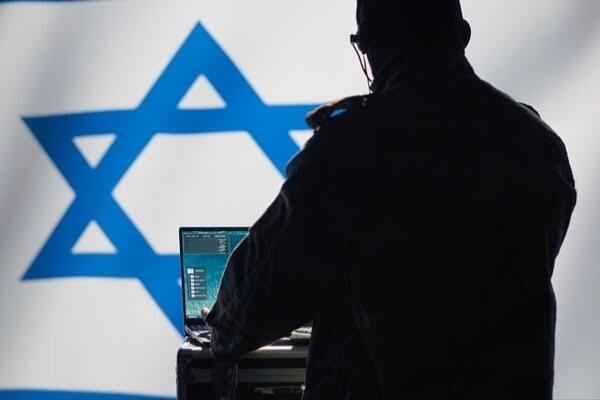
The outgoing Mossad Director, David Barnea, reportedly gave a pre-operation assessment to Israel’s top leadership that high-grade offensive operations in Iran could potentially topple the regime. However, it was more than just an intelligence assessment; it seemed to be a risky gamble that Mossad notoriously relied on to pursue high rewards.
For an agency like Mossad, which has studied Iran extensively for decades and probably knows more than the Americans, it is perplexing how such a flawed assessment was made when Mossad’s ground intelligence failed, resulting in no regime change. While the CIA’s assessment could have been mistaken on this point, for Israelis, making such an error represented a serious analytic gap that cost dearly a few years ago, when the agency failed in its intelligence management on Hamas, leading to the October 7 attacks.

The risky gamble in the intelligence world, especially in the Middle East, shows that, beyond tactical success, it delivered a fractured strategic picture and even severe strategic losses. In the current scenario for Mossad, it may be a golden opportunity to severely weaken Iran and penetrate further into its networks, as we have seen that Mossad has strong intelligence ground in Iran, which enabled the wiping out of Iran’s top leadership and targeting high-profile targets in Iran.
Mossad and CIA recognised a high risk in the operation, but both were blinded by intelligence bias, which arose not only from the potential for high reward but also from optimism within the intelligence community. This rests on the belief that an agency can control the situation and outcome. It led them to pursue high-reward strikes even if these carried a certain degree of risk.
On a tactical note, this series of Intelligence successes is worth praise, but are these successes converting into real strategic success that Mossad aimed for? The answer is No because Israel’s famed Intelligence aimed for causing a shock and awe effect and a systemic destabilisation effort that would lead to the collapse of the regime, which has not been achieved, and, therefore, it would be appropriate to assess that it was a risky gamble that will create more strategic security problems for Israel as Iran will now be more prone to cross redlines and become more hardened in asymmetrical warfare tactics.

Both Mossad and CIA spymasters recognised a high risk in the operation, but both were affected by intelligence bias that blinded them to the ‘risk’ in their assessment. The bias arose not only from the potential for high reward but also from optimism bias within the intelligence community, which rests on the belief that an agency can control the situation and outcome, further underestimating its enemy. This led them to pursue high-reward strikes even if these carried a certain degree of risk.

General Brom, a Senior Research Associate at Tel Aviv University, argues that Mossad’s assessment of Saddam Hussein was notably flawed. This faulty assessment, alongside those by the British MI6 and the American CIA, exacerbated regional insecurity in the early 2000s and contributed to the 2003 invasion of Iraq, which destabilised the region and fuelled the rise of terror groups.
However, intelligence work in such complex environments often results in a zero-sum game, where conflicts can either spiral out of control or be strategically contained to minimise escalation. Spies operate in a high-stakes world where actions can lead to spectacular successes or catastrophic consequences.
Covert Games on the Edge of War
During the Iran-Iraq war, one of the longest conflicts in the Middle East, covert operations played a crucial role behind the scenes. Mossad, Israel’s intelligence agency, made the strategic decision to support Iran, despite it being a sworn enemy, to counterbalance Iraq under Saddam Hussein. This move was part of Israel’s periphery doctrine, a policy aimed at forging ties with non-Arab nations to counterbalance Arab and other adversarial nations.

Israel clandestinely ran a covert programme supplying weapons to Iran, with permission from the United States to sell unsophisticated arms. However, Mossad deviated from this agreement, secretly supplying sophisticated American-made weapons to Iran instead. This was done to gain Iran’s trust and secure intelligence on Iraq’s main nuclear reactor, which was later destroyed in Israel’s famous Operation Opera.
While prolonging the war is not in the region’s broader interest, it does provide Iran with a strategic opportunity to pressure the US-Israel axis, potentially forcing negotiations on its terms. However, Mossad’s involvement in regional espionage suggests that Israel may again take high-stakes gambles to weaken Iran’s proxy war capabilities, both politically and militarily.
The covert arms business with Iran continued smoothly until 1982, when the location of Israel’s front company in the US and its role in purchasing sophisticated weapons for resale to Iran was leaked by the New York Times. In response, Israel shut down its operations in the US and resumed them in London by 1983. Despite the US launching Operation Staunch, a campaign aimed at prohibiting arms sales to Iran, American intelligence agencies turned a blind eye to Israel’s violation of the secret agreement. This espionage episode highlighted three critical points: first, Israel risked jeopardising its trust with the US; second, it armed its enemy with advanced weaponry; and third, its strike on Iraq’s nuclear reactor during an ongoing war could have escalated the conflict further. Consequently, Iran retaliated with its own strikes on Iraqi nuclear reactors in Operation Scorch Sword.
Throughout this chaos, the US intelligence community remained in the shadows. Israel’s strategic gamble, tempered with careful calculation, could have easily backfired, turning the course of the war against them. While Israel’s risks yielded favourable outcomes, such high-stakes gambles in geopolitics do not always produce the desired results.
Mossad’s Missteps and Misjudgments
As argued by General Brom, a Senior Research Associate at Tel Aviv University, Mossad’s assessment of Saddam Hussein was notably flawed. Brom contends that Mossad’s tendency to prepare for worst-case scenarios often leads to erroneous conclusions. Israel’s miscalculation regarding Hussein is a prime example, where the nation was convinced that Saddam would deploy non-conventional weapons against Israel, ignoring the reality that he was struggling for survival. This faulty assessment, alongside those by the British MI6 and the American CIA, exacerbated regional insecurity in the early 2000s and contributed to the 2003 invasion of Iraq, which destabilised the region and fuelled the rise of terror groups.
Similarly, Mossad’s misjudgment during the Yom Kippur War could have had dire consequences for Israel if not for a timely intelligence input that redirected the country’s focus. However, at times, Mossad’s risky strategies have proven to be the only viable option, as evidenced by the recent assassination of a Hamas leader.
Risky Tradecraft Business In Conflict: Deterrence And Escalation
The core question remains the same: risky tradecraft manoeuvres amidst brewing conflicts carry the risk of flaring the dangers beyond the red lines and blurring the negotiating space, which Israel seeks to resolve the hostage deal conundrum. The question is not about concerns involved in fulfilling national security interests, but the timing and risk-taking decisions that Israel’s Intelligence agency Mossad has been taking, which sometimes yield not-so-desirable results. The recent scenario where Israel is taking risks of escalating the conflict and complicating the exit further. The risk factor here lies in two perspectives. One argues that a continued offensive posture will deter and weaken the axis of resistance, forcing them to negotiate and de-escalate. In contrast, the second perspective argues that the prolonged conflict may dangerously widen the Middle East brinkmanship, which will have an adversarial impact on Israel both at the external and internal levels.
While prolonging this conflict is not in the region’s broader interest, it does provide Iran with a strategic opportunity to pressure the US-Israel axis, potentially forcing negotiations on its terms. However, Mossad’s involvement in regional espionage suggests that Israel may once again take high-stakes gambles to weaken Iran’s proxy war capabilities, both politically and militarily. Still, questions remain about how feasible it was for Mossad to carry out a large-scale decapitating strike aiming for regime change, especially when the agency has already achieved significant intelligence successes in damaging Iran’s strategic will and capability from within in recent years. The overt display of covert elements once again compels Mossad to reconsider its high-risk, high-reward approach, as it now faces a scenario in which risks outweigh rewards.

The writer is a national security analyst specialising in intelligence and strategic affairs. He has worked extensively with national security and foreign policy think tanks of repute, and has written for publications including The Telegraph, The Print, Organiser, and Fair Observer. He has also been a guest contributor to the School of International Studies at Jawaharlal Nehru University (JNU).
