


Over the past two decades, Russia has steadily built one of the world’s most layered, integrated, and technologically diverse air-defence systems. The S-300 series laid the foundation; the S-400 Triumf expanded range and multi-target performance; and now the S-500 Prometey represents a generational leap. Designed not as a replacement but as a strategic upper tier over the S-400, the S-500 enters domains previously reserved for specialised missile-defence systems — near-space interception, ballistic-missile defence (BMD), and counter-hypersonic operations.
While the S-400 is already considered one of the world’s most formidable long-range SAM systems, the S-500 pushes the envelope of air and space defence. This detailed analysis explains why and how the S-500 is more effective than the S-400, examining its mission profile, engagement envelope, interceptors, radar architecture, command-and-control improvements, survivability, and implications for future warfare.

Evolution of Roles: From Air Defence to Space-Enabled Missile Defence
S-400: An Advanced Long-Range Air Defence System. The S-400 is one of the world’s premier anti-aircraft platforms, capable of engaging: fixed-wing aircraft (stealth and non-stealth), UAVs, cruise missiles and limited categories of short-range ballistic missiles. It was designed primarily for air-breathing targets with some capability against ballistic threats.
The purpose of S-500 is fundamentally different. It is designed to intercept ballistic missiles (intermediate-range and possibly ICBM terminal stages), hypersonic glide vehicles (HGVs), high-speed manoeuvring warheads, Low Earth orbit (LEO) objects, possibly satellites, and stealth aircraft and high-altitude ISR assets
S-500: Expanding the Mission into Near-Space. The S-500’s purpose is fundamentally different. It is designed to intercept: ballistic missiles (intermediate-range and possibly ICBM terminal stages), hypersonic glide vehicles (HGVs), high-speed manoeuvring warheads, Low Earth orbit (LEO) objects, possibly satellites and stealth aircraft and high-altitude ISR assets. This expansion into the exo-atmospheric domain — altitudes above 100 km — marks the single most important difference. Where the S-400 protects the sky, the S-500 defends the edge of space. This role change necessitated entirely new radars, new missiles, new computational architecture, and new command protocols.
Engagement Envelope: Range and Altitude Superiority
Range Comparison. There has been a quantum jump in the range comparison between the S-400 and S-500 air defence systems. The S-500 has a maximum engagement range against air targets of around 600 km, an improvement of over 200 km against the S-400 system. In terms of maximum engagement against ballistic targets, the difference is huge, from 60 km of S-400 to 600 km of S-500.
Altitude Comparison. This difference in altitude is transformational. Intercepting at 200 km requires: heat-resistant interceptors, high-thrust boosters, advanced seekers that survive high-velocity engagements, and radars capable of tracking objects outside the atmosphere. Thus, even if both systems appear similar in their surface layout, the S-500 functions in a vastly more complex battlespace.

Missile Interceptors: New Classes Designed for Ballistic Threats
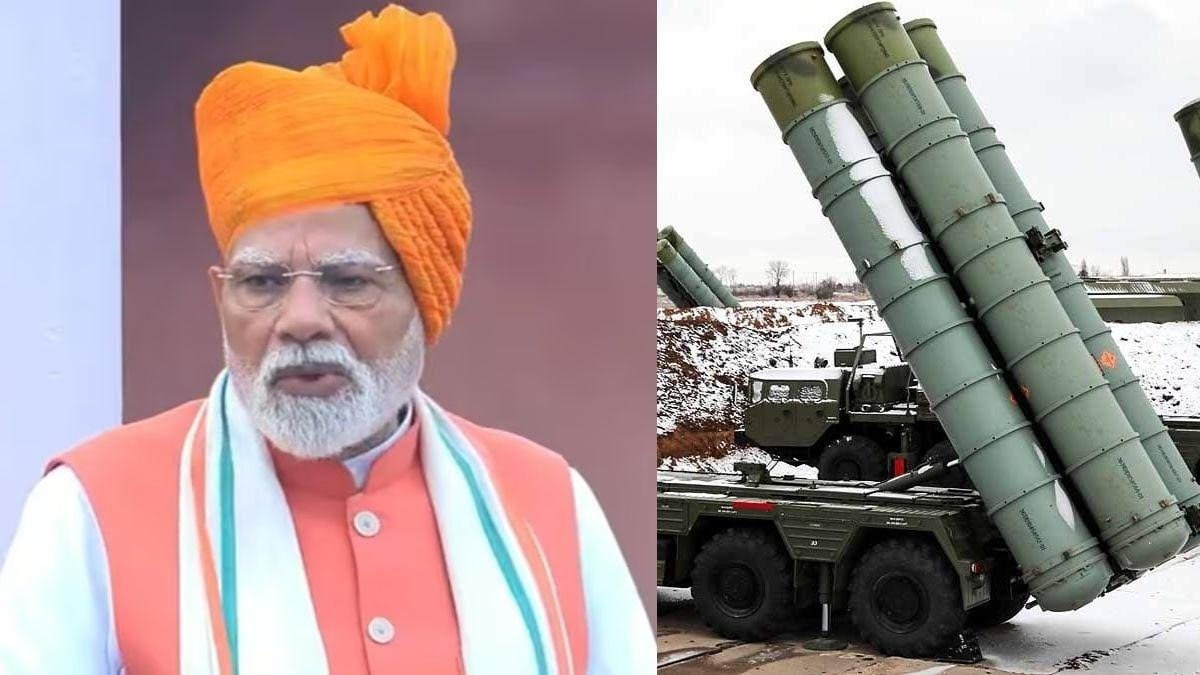
The S-400 uses a mix of missiles: 40N6 – 400 km long-range, 48N6DM – 250-300 km, 9M96 series – 40–120 km, and specialised anti-TBM rounds. These are excellent against aircraft and cruise missiles but not designed for exo-atmospheric engagements.

The S-500 introduces the 77N6/77N6-N1 interceptor series, Russia’s first hit-to-kill capable missile family designed from the ground up for ballistic missile defence. Key features include extremely high speed (reportedly exceeding Mach 15), exo-atmospheric manoeuvring, guidance suites designed to distinguish warheads from decoys and kinetic or enhanced-fragmentation intercept. Additionally, upgraded 40N6M variants may serve as long-range anti-air missiles.
The S-500 has expanded the range into Near-Space. It has a maximum engagement range against air targets of around 600 km, an improvement of over 200 km against the S-400 system. In terms of maximum engagement against ballistic targets, the difference is huge, from 60 km of S-400 to 600 km of S-500
Ballistic missiles travel at hypersonic speeds and outside the atmosphere. They require interceptors radically different from SAM missiles. The S-500’s missile suite, therefore, gives it a capability set the S-400 cannot match.
Radar and Sensor Architecture: A New Generation of Eyes in the Sky
S-400 Radar Suite employs powerful radars (91N6E, 92N6E) capable of tracking 300+ targets, detecting stealth aircraft at reduced ranges and guiding multiple missile types simultaneously.
S-500 Radar Suite is entirely new: 91N6A(M) – upgraded big bird early-warning radar, 96L6-TsP – battle management radar, 76T6 – ABM acquisition radar and 77T6 – ABM engagement radar. These radars offer: enormous detection ranges (claimed in thousands of kilometres for ballistic trajectories), multi-band discrimination (critical for identifying warheads vs decoys), extremely high refresh and processing rates (needed for hypersonic manoeuvring) and enhanced anti-stealth detection capabilities.
The S-500’s radar suite is not a simple upgrade. It is a specialised ABM radar family, similar in concept to the US’s THAAD and Aegis BMD radars. This fundamentally elevates the system from “air defence” to “integrated air-and-space defence.”
The S-500 introduces Russia’s first hit-to-kill capable missile family designed from the ground up for ballistic missile defence. Its key features include extremely high speed (reportedly exceeding Mach 15), exo-atmospheric manoeuvring, guidance suites designed to distinguish warheads from decoys and kinetic or enhanced-fragmentation intercept
Reaction Time and Fire-Control Efficiency
Hypersonic weapons compress engagement timelines dramatically. A missile travelling at Mach 10 covers ~3.4 km per second. The S-400 Response time is ~9–10 seconds, which is optimised for fighter aircraft and cruise missile threats. In comparison, the S-500 claimed Response time as low as 3–4 seconds, which encompasses automated tasking to handle fast, unpredictable trajectories and faster data buses, processors, and targeting algorithms. The reduced reaction time allows the S-500 to catch ballistic or hypersonic targets earlier in their descent phase, increasing kill probability.
Integrated Layered Defence: The S-500’s Place in Russia’s AD Architecture
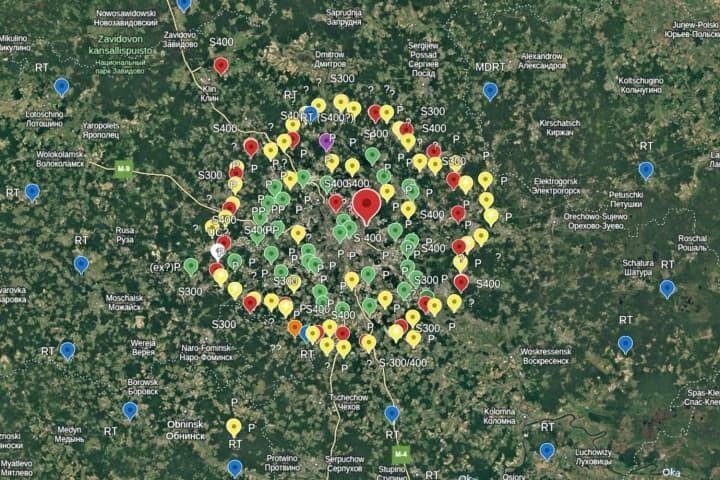
Russia’s modern IADS is structured in layers: Pantsir / Tor / Tunguska – close-range point defence, Buk / S-350 – medium-range defence, S-400 – long-range anti-air & limited ABM, S-500 – upper-tier anti-ballistic & anti-hypersonic defence, A-235 “Nudol” – dedicated anti-satellite / BMD system. Within this architecture, the S-500’s job is to: intercept threats before they reach S-400/S-350 altitudes, destroy high-value objects such as terminal-phase IRBMs or satellites, and take the first shot at hypersonic glide vehicles. This layered design distributes engagement load and ensures no single system can be saturated easily.
Counter-Stealth and Counter-Hypersonic Capabilities
Counter Stealth. The S-500 incorporates multi-band radars (including low-frequency detection), advanced signal processing and algorithms optimised for small RCS signatures. While the S-400 can track stealth fighters at certain ranges, the S-500 pushes this envelope further and is reportedly capable of detecting: B-2 / B-21 class stealth bombers, F-35 / F-22 profiles, and high-altitude UAVs with stealth characteristics.
Counter-Hypersonic. This is where the S-500’s superiority is clearest. Hypersonic glide vehicles (HGVs) manoeuvre unpredictably. To intercept them, you need: radars capable of high-frequency updates, advanced trajectory-prediction algorithms, missiles with enormous speed margins and high-g manoeuvrability outside the atmosphere. The S-500 is designed for precisely this environment.
The S-400’s Response time is 9–10 seconds, optimised for fighter aircraft and cruise missile threats. In comparison, the S-500 claimed a Response time as low as 3–4 seconds. The reduced reaction time allows the S-500 to catch ballistic or hypersonic targets earlier in their descent phase, increasing kill probability
Survivability, Mobility, and SEAD Resistance
Shoot-and-Scoot Mobility. Like the S-400, the S-500 is fully mobile. However, its radars, command posts and launchers are designed for rapid relocation to avoid detection and targeting by SEAD/DEAD operations.
Electronic Warfare Protection. The S-500 reportedly features improved frequency agility, ECCM packages, digital signal filtering and resistance to anti-radiation weapons.
Distributed Sensor-Launcher Layout. Its architecture supports wide spatial separation of: radars, launchers and command modules, making it harder to neutralise in a single strike.
Limitations and Realistic Constraints
While the S-500 is advanced, it is not invincible. The system is extremely expensive, and Russia cannot deploy it in large numbers quickly. Much of the S-500’s claimed capabilities remain untested under real combat conditions. Even with advanced BMD systems, MIRVs, decoys, and mass salvos can complicate defence. Its ABM role requires early-warning satellites and external sensors; without them, interception windows narrow. Nevertheless, these limitations do not diminish the leap that the S-500 represents.
While the S-500 is advanced, it is not invincible. The system is very costly and cannot be deployed in large numbers quickly. Much of the S-500’s claimed capabilities remain untested under real combat conditions. Even with advanced BMD systems, MIRVs, decoys, and mass salvos can complicate defence
Strategic Impact and Future Warfare Implications
The S-500 enhances: strategic deterrence, protection of command-and-control nodes, defence of Moscow and key industrial centres and Russia’s ability to contest space. Regarding the adversary, the S-500 complicates offensive planning: stealth aircraft need altered ingress routes, ballistic missile attacks require more decoys or MIRVs, and hypersonic weapons face early intercepts.
Conclusion
The S-500 is not a mere upgrade over the S-400; it represents a paradigm shift. Its superiority comes from: much higher engagement ranges, near-space interception capabilities, new hit-to-kill missile families, advanced multi-band radars, faster reaction time, enhanced counter-stealth and counter-hypersonic ability and deeper integration into Russia’s strategic layered defence network.
In essence, if the S-400 is a highly capable long-range air defence system, the S-500 is a strategic air-and-space defence weapon. It closes the gap between atmospheric air defence and anti-ballistic missile systems, making it one of the most ambitious integrated defence systems developed outside the United States.

-The author retired as Major General, Army Ordnance Corps, Central Command, after 37 years of service. A management doctorate and expert on defence modernisation, he is the author of four books, including the Amazon bestseller “Breaking the Chinese Myth,” and a frequent media commentator. He is affiliated with several leading defence and strategic studies institutions in New Delhi. The views expressed are of the writer and do not necessarily reflect the views of Raksha Anirveda
