

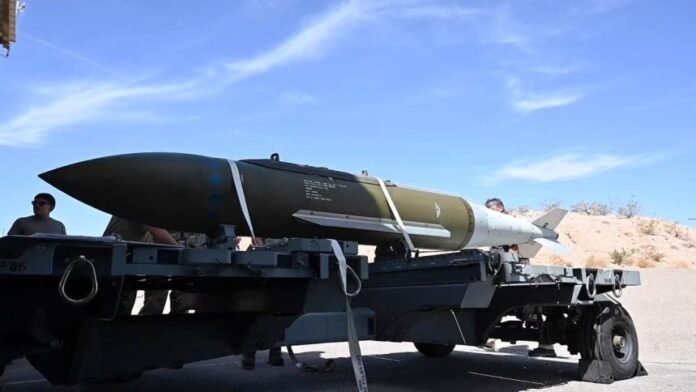
Tel Aviv: On March 17, 2026, US forces used several 5,000-pound GBU-72 Advanced 5K Penetrator bombs against hardened Iranian anti-ship missile facilities along Iran’s coastline near the Strait of Hormuz. This was confirmed by the US Central Command (CENTCOM).
In the midst of Iran’s blockade of the strait, this operation targeted subterranean installations endangering international trade.
The GBU-72 is a bunker-busting munition designed for deeply buried targets, capable of penetrating over 150 feet of earth with GPS/INS guidance for all-weather use. It integrates a BLU-138 warhead with a JDAM kit and can be deployed from F-15E fighters, B-1B, and other bombers, offering higher lethality than predecessors like the GBU-28.
These strikes are part of the ongoing US-Iran conflict in the Middle East, escalating from prior actions including US use against Houthi targets and strikes on Iranian nuclear sites with heavier GBU-57 bombs. The GBU-72 preserves larger munitions stockpiles while addressing coastal threats.
The GBU-72, also known as the Advanced 5K Penetrator (A5K), is a US-developed 5,000-pound (2,300 kg) precision-guided bunker-busting bomb.
It combines a hardened BLU-109 or BLU-137/B warhead with the GPS/INS guidance kit from the GBU-31 JDAM, enabling all-weather strikes on fixed, deeply buried targets.
The bomb resembles an enlarged GBU-31 with extended fins for stability and offers higher lethality than the older GBU-28, potentially penetrating over 150 feet of earth or 15+ feet of reinforced concrete.
The US reportedly used it in May 2024 against a Houthi underground site in Yemen during Red Sea operations. In September 2024, Israel’s Air Force allegedly deployed up to ten GBU-72s on Hezbollah leader Hassan Nasrallah’s Beirut bunker.

-The writer is an Israel-based freelance journalist. The views expressed are of the writer and do not necessarily reflect the views of Raksha Anirveda
