

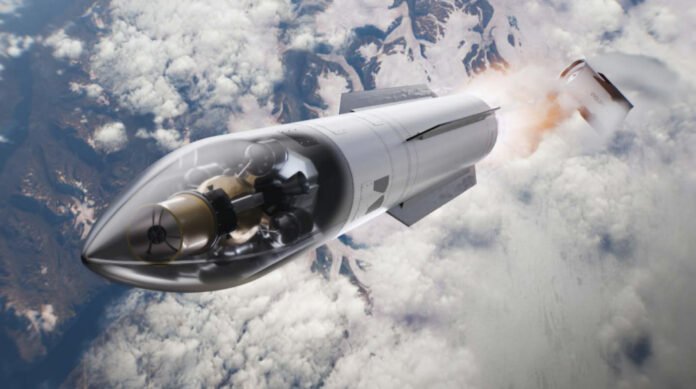
Washington: In a move to strengthen defence, California-based defence technology company Long Wall has unveiled Cyclops, a surface-launched interceptor designed to destroy ballistic missiles during the midcourse phase of flight.
This comes as nations grapple with a growing volume of missile attacks that have strained existing air and missile defence systems.

The new interceptor is intended to operate outside Earth’s atmosphere and target ballistic missiles using a hit-to-kill approach, relying on direct impact rather than explosive warheads.
Long Wall said Cyclops is designed from the outset for mass production, addressing what defence planners increasingly describe as a critical weakness in the current missile defence architecture: limited interceptor inventories and high costs.
Defence analysts warn that adversaries can manufacture offensive missiles far more quickly and cheaply than defenders can produce interceptors, creating a growing imbalance.
Long Wall says Cyclops is intended to close that gap by offering what it calls “magazine depth,” a term militaries use to describe having enough interceptors available to sustain prolonged defence operations.

The interceptor incorporates modern advances in computing, autonomy, optical sensors, and propulsion technologies, many of which are drawn from commercial sectors with much higher production volumes than traditional defence programmes.
At the core of Cyclops is an exoatmospheric kill vehicle, or EKV, which destroys incoming missiles through kinetic energy alone.


