
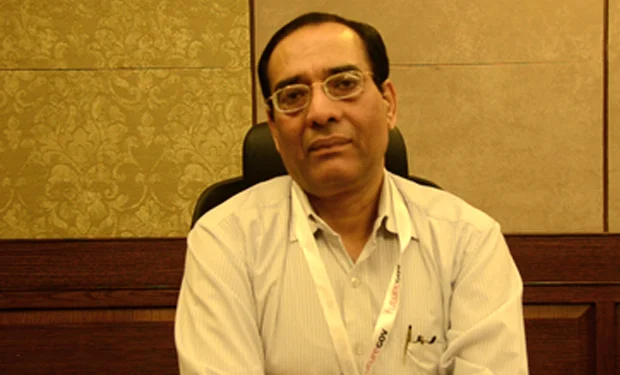
New Delhi. Outlining the growing threats in cyber space, Dr Gulshan Rai, National Cyber Security Coordinator, Prime Minister’s Office, Government of India on August 29 emphasised upon the need to create a universal model of cyber governance, based on uniform laws and privacy framework, which is acceptable to all.
Dr Rai was speaking on the concluding day of the International Conference on ‘Digital Space & Cyber Space: Maximizing Benefits, Minimizing Risks, Unleashing Creativity’, organised by The Institute for Defence Studies and Analyses (IDSA), and The Institute for Policy, Advocacy, and Governance (IPAG), Dhaka, Bangladesh, on August 28-29, 2018.

Describing the absence of an international legal framework as a major hindrance to deal with cybercrimes, Dr Rai suggested that the heterogeneity of the systems dealing with various aspects of cyber threats has made it difficult for the stakeholders to formulate universally accepted legal framework.
He called for more collaborative efforts at the global arena to accelerate the process of evolving such a mechanism and establishing comprehensive measures to deal with cyber threats.
Elaborating upon the unique characteristics of the internet- free of cost features, lack of accountability of ICT companies, heterogeneity, and lack of transparency etc, Dr Rai noted that because of these features, despite basic protection in place, data is vulnerable.
He also pointed to the noticeable increase in the weaponisation of cyberspace in recent years. Dr Rai called for more accountability on the part of ICT companies whose current licensing models essentially absolve them of all liability. Data localisation, data ownership and data sovereignty are few of the emerging trends, he added.

While acknowledging that there has been a tremendous growth in the Cyber sphere in the last 15 years, Dr Rai suggested that it has also created disparities between countries on how internet is utilised. As a result, even countries like India that were in favour of utilising cyberspace for global goods, are in a minority as more and more countries are putting their individual interests first, leading to the inevitable fragmentation of cyberspace.
Earlier, in his welcome address, Maj Gen Alok Deb (Retd), Deputy Director General, IDSA, while lauding the contributions of Dr Rai in the sphere of Cyber security, informed the audience that under the guidance and support of Dr Rai, a Centre of Excellence on Cyber Security has been recently instituted at IDSA.