

India’s approach has traditionally focused on strategic caution and diplomacy to maintain good relations with Gulf nations, mainly to secure energy supplies. However, over the past decade, there has been a shift towards more strategic engagement with West Asian affairs. Under the principle of strategic autonomy, the Look West policy has evolved to help India both maintain balance and strengthen ties at appropriate moments.
During the 1980s, India remained committed to its Non-Aligned Movement (NAM) strategy and tested it on the international stage to navigate the complexities of the Cold War, particularly in the conflict-prone West Asian region. This approach was evident during the Iran-Iraq war, which was perhaps the first major test of India’s stance on Gulf affairs. The strategy was clear: engage cautiously, avoid taking sides, and maintain operational ties. The goal was to adopt a transactional approach with Gulf nations to ensure a steady flow of oil and gas without becoming entangled in Gulf politics and regional conflicts. The cautious, functional approach towards the Gulf had significant strategic gaps and limited benefits.

The first strategic gap was giving Pakistan strategic space in the Middle East by remaining uninvolved in Gulf affairs and being hesitant to cultivate deep strategic ties with Gulf partners, as India was cautious about Arab sensibilities and supported the Palestinian cause to maintain some political engagement. However, this political engagement came at a cost for India on the diplomatic front. India was invited to the Rabat Summit of 1969, the inaugural meeting of the Organisation of Islamic Cooperation (OIC), but Pakistan’s President, General Yahya Khan, threatened to boycott the summit if India were allowed to participate. Pakistan’s pressure led to India’s exclusion, with key Gulf nations — Jordan and Saudi Arabia — asking India to withdraw.
The Indian delegation was forced to return, and the final session occurred without India. This was a significant diplomatic failure that led to a censure motion against the then Prime Minister Indira Gandhi.
The failure was caused by India’s inability and hesitant approach in cultivating strategic ties with Gulf nations. The political relations, which were also transactional and limited, gave Pakistan the opportunity to wield influence in the Gulf, not only politically but strategically, by leveraging political platforms. This limited approach created the impression that India is only a transactional partner, mainly in oil and gas, offering fewer benefits to the Gulf region, thereby reducing India’s strategic relevance in West Asia.
The second gap was a political compromise where India sought to expand its influence by supporting Palestine, which strained its relations with Israel. The strategic aim was to increase engagement with the Arab cause to persuade the Arab world to remain neutral in Kashmir, but this also failed to produce the desired results. During the peak of terror in Jammu and Kashmir (J&K) in the 1990s, the diplomatic backing and support India expected from the Arab world never materialised, despite India consistently voting against Israel for decades. The reason for this gap was that India’s only effective influence, which was limited to energy needs, did not extend to regional interests.

Conversely, Pakistan steadily built diplomatic influence through its ideological appeal, thereby countering India’s efforts to expand its outreach in the Gulf. India’s muted response to Iraq’s invasion of Kuwait under Saddam Hussein’s leadership faced criticism. Although I K Gujral’s visit to Iraq and his quiet diplomatic approach enabled the safe repatriation of the 170,000 Indians trapped in Kuwait, his informal hug with Saddam Hussein sent mixed signals that impacted India’s position during the 1991 Gulf Crisis. However, India did not focus on broader regional security and interests, which created friction and, as a result, placed long-term strain on its relationships with key Gulf countries, especially Kuwait.
India’s political relations with Gulf nations, which were transactional and limited, gave Pakistan the opportunity to wield influence in the Gulf, not only politically but strategically, by leveraging political platforms
The third strategic gap was security, as India’s caution and functional approach adversely affected its security interests, with Pakistan exploiting the Gulf as a hub for terror financing, organised crime, and a safe haven for anti-India elements. India also limited its engagement with Israel’s strategic and defence domains in exchange for Arab political support that never significantly materialised. The breakthrough only came after the end of the Cold War, especially during the Kargil War in 1999, when Israel supplied critical military technology to India, such as laser-guided bombs and laser-designated pods, which played a crucial role in precision high-altitude air strikes on Pakistan’s supply chains and bunkers in Operation Safed Sagar.

Overall, India’s cautious and pragmatic approach, dubbed ‘quiet diplomacy’ with the Gulf, was characterised by ambiguity, confusion, and restraint. This resulted in a diplomatic spectacle with West Asia, which harmed India’s strategic position rather than enhancing it.
The Pragmatic Beginning
Post-Cold War, India’s diplomatic approach towards West Asia began to make some pragmatic adjustments. Under the Vajpayee government, India began a strategic de-hyphenation and adopted a multi-vector engagement in the Gulf, laying the groundwork for increasing its influence in the region. The first major step was cultivating ties with Israel and bringing Indo-Israel relations out of the shadows.
In 2003, Ariel Sharon became the first Israeli Prime Minister to visit India; the visit signalled that India was no longer driven solely by Arab considerations and strategic restraints, but by strategic pragmatism that guided national interests. In another example of a pragmatic approach that same year, Iranian President Mohammed Khatami was the Chief Guest at India’s Republic Day. The two nations signed the Delhi Declaration, focusing on energy security and a strategic partnership. Most notably, India diversified its energy portfolio with the Gulf by moving towards hydrocarbons with Saudi Arabia and not just transactional oil purchases.
However, the Vajpayee government’s policy faced a major test, similar to that faced by the V P Singh government during the Gulf War in 1991. The United States (US) invasion of Iraq in 2003 highlighted India’s response, as it was beginning to realign strategically with West Asia. India adopted a balancing approach, but this time it was not reactive and chaotic, unlike in 1991—such as during the US plane refuelling crisis—and I K Gujral’s visit to Iraq caused controversy and sent mixed signals to the West and Gulf, complicating the relationship.
Vajpayee’s government’s quiet diplomacy had a pragmatic approach that not only provided strategic clarity on India’s stance but also effectively managed India’s approach to the Gulf-US complex relationship dynamics. Vajpayee sought a parliamentary resolution by allowing a debate in Parliament. The Parliament unanimously passed a resolution “deploring” the war in April 2003.
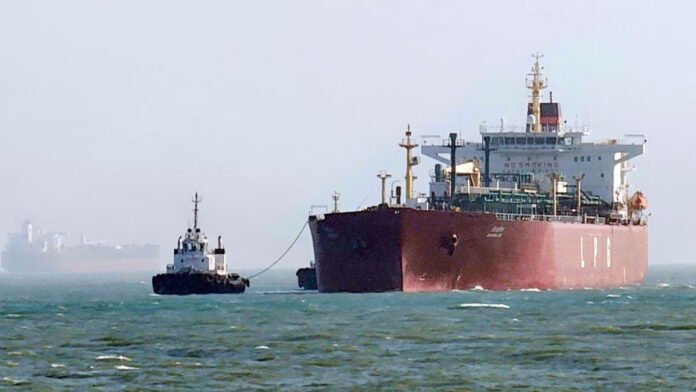
India leveraged the strategically developed relationship with Iran through the Chabahar Project to negotiate safe passage through the Strait of Hormuz and ensure smooth naval escort under Operation Sankalp
The will of Parliament was then conveyed to the US, and, valuing democratic principles, the US administration was not able to push India beyond a certain point. Additionally, Parliament’s condemnation of the war pleased its Gulf partners and helped maintain India’s growing reputation and influence in West Asia. Moving to the present, India is again faced with a somewhat similar situation, and it seems that quiet pragmatism is also being followed now, but with some upgrades.
Look West To Act West
Since 2014, India’s Look West policy has been effectively revived and gradually elevated to what can be called “Act West” by accelerating strategic de-hyphenation and asserting autonomy towards the Middle East. The clear strategy of increasing India’s strategic relevance was evident through projecting India as a strategic partner and potential influencer in larger regional interests by becoming a key player in crucial strategic initiatives like the India-Middle East-Europe Economic Corridor (IMEC) and the India-Israel-UAE-USA (I2U2) grouping.
While the current government has strengthened Vajpayee’s foundation in India’s approach to West Asia and the key aspects of managing relations during complex Gulf situations, India’s stance on ongoing US-Israel operations against Iran reflects pragmatism rather than a muted, passive response. Although there is a sense of reduced reactivity and quieter diplomacy, one cannot overlook the underlying strategic intent, similar to what Vajpayee conveyed in 2003. India recently condemned Iran’s attacks on Gulf nations diplomatically, leveraging the strategically developed relationship with Iran through the Chabahar Project to negotiate safe passage through the Strait of Hormuz and ensure smooth naval escort under Operation Sankalp. While largely avoiding direct involvement in the conflict, this approach neither limits India’s prospects for engagement in the Middle East nor damages relations with Gulf partners. Critics who remain silent on this issue should understand that there is no complete silence—only a strategically guided silence driven by pragmatic aims that allow India to act swiftly in its own interests.

The writer is a national security analyst specialising in intelligence and strategic affairs. He has worked extensively with national security and foreign policy think tanks of repute, and has written for publications including The Telegraph, The Print, Organiser, and Fair Observer. He has also been a guest contributor to the School of International Studies at Jawaharlal Nehru University (JNU).
