

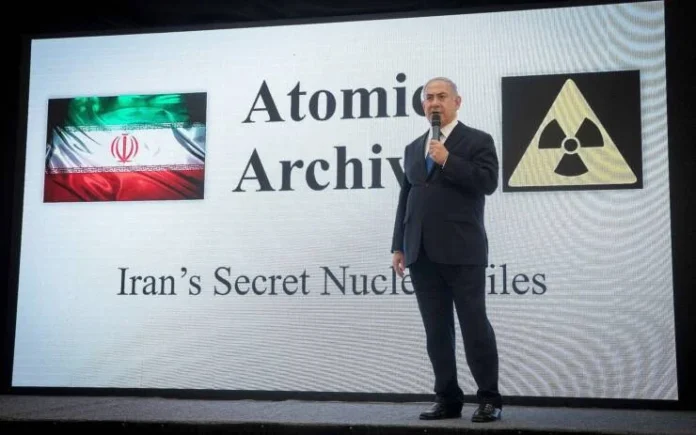
Tel Aviv. Israeli intelligence experts say that Tehran is using the “Whispering policy” of the Biden administration to accelerate the military nuclear program.

They added that neither the US nor the European countries, understand the real actions of Tehran regarding its nuclear program.
Israel has recently declared that it enhanced the intelligence gathering efforts in Iran, and repeated that it will not allow Iran to have nuclear weapons.
“There is less access, let’s face it.” This is how Rafael Mariano Gross, the “director-general of the International Atomic Energy Agency (IAEA), summarized the results of his talks with the Iranians during mid-February, just before a new Iranian law mandated by parliament went into effect, cutting back the monitoring of the Iranian nuclear program. There would be no more “snap inspections” by the West on Iranian facilities.
In an article written by Dore Gold who served in many high positions among them the director general of the Israeli ministry of foreign affairs And Israel’s ambassador to the UN, he writes that there was little reason to celebrate the new understanding, for the Iranians followed this latest deal with new statements about their program which were clearly disturbing. The Supreme Leader, Ayatollah Ali Khamenei, declared that Iran’s uranium enrichment levels would no longer be limited to 20 per cent.

The article was published by the Jerusalem center for public affairs.
According to Gold, verification of the JCPOA understandings was extremely flawed. Last November, Iran’s enrichment levels reached 12 times the amount that had been permitted, according to the IAEA. Tehran is now on a path to get closer to an atomic bomb than ever before.

“The Iran nuclear deal had other serious defects that needed to be fixed, but it did not appear that these changes were going to happen. Take ballistic missiles. When the West created an arrangement with Saddam Hussein at the end of the First Gulf War that sought to address his weapons of mass destruction, they did not limit themselves to dismantling the biological, chemical, and nuclear components that the Iraqis possessed. They included all ballistic missiles above a range of 150 kilometers. But the JCPOA did not touch Iran’s missile capabilities. It was a huge hole in the agreement. There is no indication that it is now going to be remedied.”
Gold adds that another defect in the JCPOA was that it was built around the assumption that if Iran adhered to its terms, Iranian behavior would become more moderate. This was projected in the West to be a possible consequence of the easing of sanctions on the Iranian economy.” But now looking back to 2015, the relaxing of sanctions on Iran did not moderate its regional behavior.”
Gold writes that right now, Washington is still determined to re-enter nuclear talks with Tehran. “Without a strong reaction, the Iranians are likely to escalate their actions even further across the Middle East. But there was no indication that the US and Europe understood what they were facing.”
-The writer is International Roving Correspondent of the Publication

-The writer is an Israel-based freelance journalist. The views expressed are of the writer and do not necessarily reflect the views of Raksha Anirveda
