

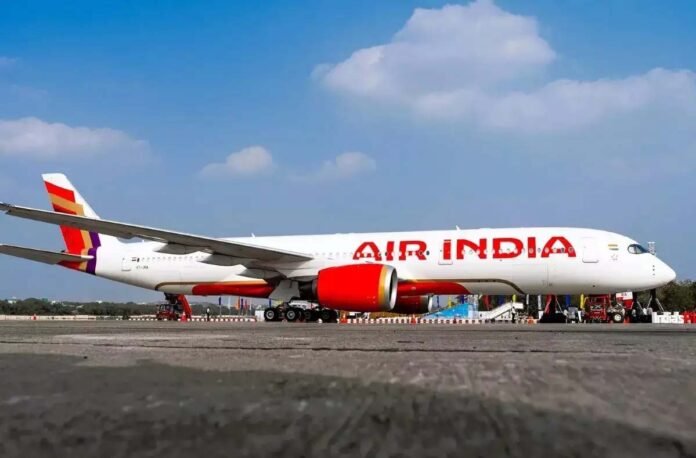
New Delhi:The European Union Aviation Safety Agency (EASA) has raised concerns over safety lapses identified in aircraft operated by Air India following a series of surprise inspections at airports across Europe, says a report in media.
The report states that, the inspections found a relatively high number of technical and documentation-related issues, leading the regulator to alert the Directorate General of Civil Aviation (DGCA). The Indian aviation regulator subsequently increased its scrutiny of the airline’s operations.

Under Europe’s Safety Assessment of Foreign Aircraft (SAFA) programme, EASA inspectors carry out unannounced checks on aircraft belonging to non-European airlines when they land at airports in the region.
During these inspections, officials examine roughly 54 safety parameters, including emergency equipment, operational documentation, and crew licensing.
In January, the number of issues identified during inspections of Air India aircraft resulted in a findings-per-inspection ratio of 1.96, close to a threshold that could trigger stricter regulatory action. If the ratio crosses 2, airlines may face enhanced scrutiny or, in extreme situations, operational restrictions in European markets.
Following EASA’s concerns, the DGCA introduced corrective steps aimed at improving compliance and preventing potential operational disruptions in Europe.

According to officials, increased monitoring and follow-up checks have already reduced the findings ratio to 1.76 as of last week.
Airlines with strong safety records typically maintain a ratio of below 1, making the earlier figure a cause for concern.

A senior Air India official attributed the higher number of findings to the airline’s ageing aircraft fleet. The carrier has been working to refurbish older planes as part of a broader overhaul initiated after its acquisition by Tata Sons.
Air India had launched a $400 million refurbishment programme to upgrade cabins and improve aircraft interiors. However, progress has reportedly been delayed due to supply-chain constraints affecting global aviation suppliers.
European inspection standards are known to be strict, and even relatively minor issues — such as worn emergency markings or damaged cabin components — can be recorded as compliance violations.
Air India aircraft flying long-haul routes to North America have also been making more technical stops in Vienna since June to refuel after rerouting flights to avoid Pakistan airspace. These additional stops have increased the likelihood of aircraft being selected for SAFA inspections.
DGCA officials said the airline has conducted more than 100 internal checks on aircraft scheduled for international operations. Aircraft are cleared for further flights only after any identified issues are rectified and compliance is confirmed.
Air India’s operational and engineering challenges highlight the broader effort by Tata Sons to transform the airline since taking ownership.
The aviation regulator has previously flagged concerns around the airline’s maintenance and engineering processes. In recent months, several senior engineering officials were suspended and the airline’s CEO Campbell Wilson was issued a show-cause notice over compliance lapses, including an incident involving aircraft operating without a required airworthiness permit.
To strengthen its engineering capabilities, Air India has also drawn on expertise from Singapore Airlines, which holds a 25.1% stake in the airline. Earlier this month, Jeremy Yew from Singapore Airlines Engineering Company was appointed to lead Air India’s engineering division.

