
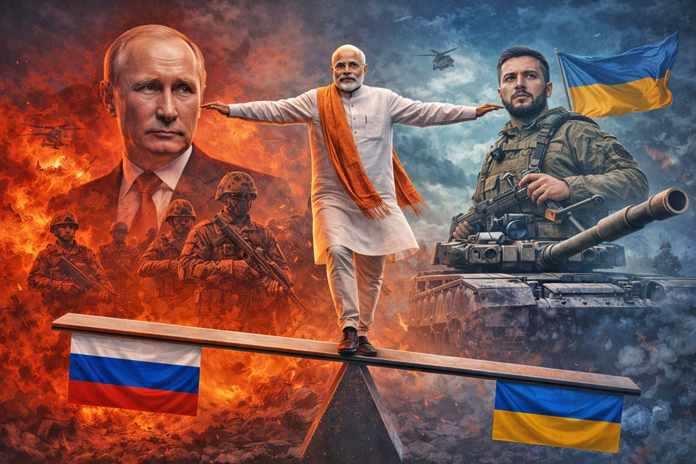
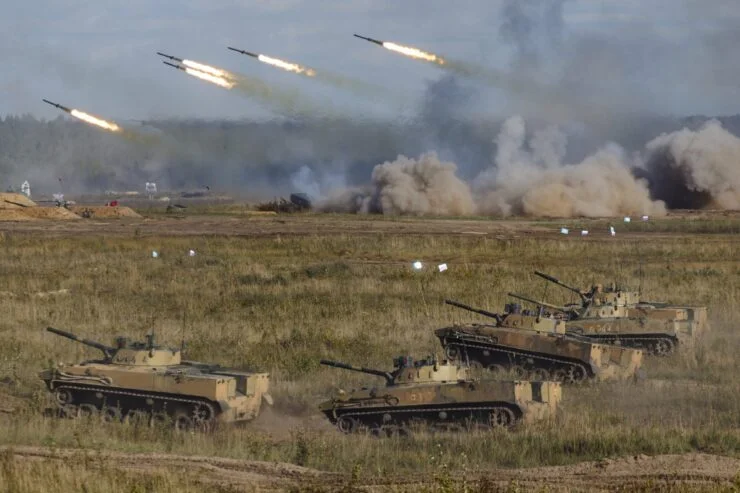
After more than four years of conflict, Russia occupies roughly about 20 per cent of Ukraine, or about 4000 square kilometres as of 2024, having gained more territory through air strikes on energy infrastructure, while Ukraine holds defensive positions and maintains drone attacks. Roughly 53,000 civilian casualties have been reported, with massive infrastructure damage, including severe power outages in cities like Kyiv and Kherson resulting from strikes on energy facilities by Russian firepower.
Russia has also suffered immense casualties. Both warring nations have suffered about 2 million casualties across all categories. While diplomatic negotiations occurred in early 2025, focussing on prisoner of war exchanges, no major peace deal has been reached. Ukraine has received over $175 billion in US aid and $197 billion from the EU. Russia’s economy faces mounting pressure with slowing growth and perceivably very limited high-tech progression.

The conflict remains defined by significant indiscriminate attacks on infrastructure and intense localised combat, with the potential for further escalation.
India’s Potential Role
India has traditionally enjoyed friendly relations with Ukraine. The bilateral relations were also cordial even when Ukraine was part of the Soviet Union. There has been international cooperation between India and Ukraine to the extent that Ukraine supported the idea of the resolution of the issue of Jammu and Kashmir (J&K) between India and Pakistan on the basis of the Simla Agreement. After Ukraine declared independence from the Soviet Union, India was one of the first countries to recognise it as a sovereign country in December 1991 and established diplomatic relations in January 1992. Ukraine opened its embassy in Delhi in February 1993, which was also Kyiv’s first diplomatic mission in Asia.
Several bilateral agreements have been signed between India and Ukraine, including pacts of cooperation in science and technology, foreign office consultation, space research and cooperation, and avoidance of double taxation, among other domains. In terms of economic relations, Ukraine is India’s second largest trade partner after Russia. In 1992, India and Ukraine signed the Treaty on Friendship and Co-operation, which provided a significant boost to bilateral relations between the two nations. In fact, in 2020, India was the 15th largest exporter to and the 2nd largest importer of pharmaceutical products from Ukraine. For India, Ukraine is the 23rd largest export market and the 30th largest import market for Indian products in the same category. Besides this, as of 2020, India had a trade deficit of $ 1.7 billion with Ukraine. This number includes exports worth $ 438.3 million and imports worth $ 2.1 billion. India’s major exports to Ukraine include electrical and electronic equipment, plastics and related articles, oil seeds, oleaginous fruits, grain, fruits, seeds, and chemical products. India’s major imports from Ukraine include animal and vegetable fats and oils, amounting to $ 1.6 billion, and fertilisers, which stood at $ 232.8 million in 2020.
In terms of soft power, India also provides training programs to Ukraine as part of the Indian Technical and Economic Cooperation (ITEC) program. Under this programme, various training and capacity building programs in various centres of excellence in India are organised. The Indian government also offers scholarships for higher-level courses covering a wide range of subjects in various prominent Indian institutions.

At the same time, India and Russia have strong and versatile relations, dating back to the era of the erstwhile USSR. The strategic partnership between both nations spans many decades. This strong bilateral partnership encompasses various domains such as defence, energy, and cultural and people-to-people exchanges. Russia has been India’s topmost supplier of military equipment. Besides this, both nations have collaborated on various global issues, including counterterrorism and regional stability.
However, the conflict between Russia and Ukraine has somewhat strained India’s relations with Russia. The 2014 Russian annexation of Crimea and its support for separatist movements in eastern Ukraine have raised concerns among the international community, including India. India, recognised for its adherence to the principle of non-interference in the internal affairs of other nations, has had to tread carefully when it comes to the conflict, with Russia’s military actions putting India in a tight spot.

In past decades, India and Russia have converged on various geopolitical issues and mutual interests, which have also served as the primary drivers of India-Soviet Union relations. To the Soviet Union, India was characterised as a stable and populous country with a large market that emerged as the forerunner of the non-aligned and anticolonial nations. As for India, the Soviet Union was a significant economic and defence partner, supporting and assisting Indian aspirations for both development and security in the decades immediately after independence. There was mutual diplomatic support between the two nations, with the Soviet government supporting India’s claim to Kashmir and India voting with Moscow or abstaining on Soviet actions during key Cold War events, including the 1968 Soviet invasion of Czechoslovakia.
The disintegration of the Soviet Union and its subsequent weakened international status shifted the balance of the relationship between Moscow and New Delhi. The latter emerged as a key actor with a transformed economic landscape after economic liberalisation in the years after 1991. At present, India’s behaviour towards Russia, however, appears to be shifting. Its voting behaviour at the UN indicates a shift from its long-standing practice of voting with Russia or abstaining from votes condemning Moscow’s conflict with Ukraine. At the SCO summit at Samarkand in September 2022, Prime Minister Modi told President Putin that ‘today’s era is not of war,’ expressing India’s concerns about the ongoing conflict. India also voted at the UN to allow Ukrainian President Zelensky to address the UN General Assembly, in opposition to Russia. This was the first vote related to the Russia-Ukraine conflict where India neither sided with Russia nor abstained.
India’s approach to the Russia-Ukraine conflict underscores its commitment to maintaining a delicate balance in its relations with Russia and the United States. New Delhi’s traditional and historical relations with Russia and its enhancing strategic partnership with the United States have influenced its distinct posture while dealing with these two major global powers. India underlines the need for peaceful dialogue and negotiations, while expressing apprehensions over Russian actions. However, there is a strong need for India’s actions to include appropriate steps to attain an immediate cessation of hostilities between Russia and Ukraine. To this end, India can collaborate with like-minded nations such as Australia, Canada, Japan, and South Korea.
Should there be a decline in the Russia-India relationship, it would have significant effects on India’s relations with other nations as well. A downturn in the arms trade and diplomatic relationship with Russia could prompt India to enhance its strategic and economic engagement with other potential partners or regional actors who could be potential balancers in a coalition against Russia and China, as well as potential arms suppliers. In this context, the nations India could approach for balancing purposes are the Philippines and/or Vietnam. Furthermore, New Delhi could diversify its arms dealings and elevate them to another level with countries like Israel and Western European nations.
India’s Choices and Options
India’s approach aims to balance various considerations while striving towards lasting peace and stability in the Eurasian region, including strategic partnerships, energy security, economic interests, and adherence to international norms. India has been viewed as a reliable strategic partner of Russia, with the latter having supported it at the United Nations and played a vital role in contributing to the build-up of Indian military multidimensional capabilities and providing it with the space to exercise strategic autonomy vis-à-vis the West. Following the Russian invasion of Ukraine, however, New Delhi faces various challenges connected to its sensitive and time-tested ties with Moscow. India is steadfast in traditionally maintaining its neutral stance related to global conflicts involving major powers. It could continue advocating for bilateral and multilateral dialogues and peaceful resolutions, emphasising the importance of adhering to international law and diplomatic negotiations.
Furthermore, India must weigh its economic interests and energy security concerns, considering its significant imports of defence equipment, energy resources (like oil and gas), and other trade relations with Russia. So far, New Delhi has been able to carefully manage the crisis through well-calibrated responses while strategically balancing its partnerships. Still, India faces a delicate and challenging situation in this context, given its historical ties with Russia and its growing relations with Western nations.
The war has also led to the discontinuance or breakdown of numerous fundamental infrastructure projects in the region. For example, India was planning to build a natural gas pipeline between India and Russia, which would have been a major economic gain for both countries. Unfortunately, because of the war, the project has been put on hold indefinitely. India had been banking on lucrative military contracts with Russia to help boost its own defence industry, but Moscow has been prioritising its own military needs, leaving India to look elsewhere to further its strategic national interests.
India’s balanced approach is likely to be a judicious mix of appropriate response mechanisms involving consideration of a range of viable factors, including India’s strategic interests, regional stability, adherence to international norms, economic considerations, and its aspiration to maintain positive relations with all nations involved. The dynamic nature of international relations implies that India’s actions and stance may evolve based on changing circumstances and global developments.
Theoretically, India has consistently advocated for a peaceful and diplomatic resolution to the conflict, emphasising dialogue and negotiation to de-escalate tensions and find a way forward that respects the sovereignty and territorial integrity of all nations involved. Listed below are a few policy options in terms of the role that India can play in effectively mediating this ongoing war between Russia and Ukraine, which has largely lost the attention of the media and the world populace, a situation attributed to the ongoing Israel-Hamas- Palestine conflict.
India, recognised for its adherence to the principle of non-interference in the internal affairs of other nations, has had to tread carefully when it comes to the conflict, with Russia’s military actions putting India in a tight spot
While India and Russia maintain amiable relations, their geopolitical priorities have evolved. India’s emerging camaraderie with the US has enhanced significantly, also leading to India’s rising prominence, whereas Russia has drawn closer to China. As for Russia, India has neither common adversaries nor common partners, a dynamic which could eventually lead to the slackening of their geopolitical ties. Also, Russia’s growing affinity with China could lead India to deepen its relations in various strategic domains with the United States. However, it is possible that India may do so at the cost of its ties with Russia.
Here it is necessary to keep in mind that New Delhi’s relations with Russia extend beyond arms trade to a larger and multifaceted relationship. During President Putin’s visit to India in December 2021, both nations rekindled their commitment to a “special and privileged strategic partnership.” For instance, India’s nuanced posture toward Russia was further re-affirmed by its participation in Vostok 2022, a military exercise hosted by Moscow in August-September 2022, alongside China and several other nations. The exercise reportedly involved 50,000 troops, more than 140 aircraft, and 60 warships.
So, it can be said that India-Russia relations have undergone a rebalancing. The balance in the relationship has shifted decidedly in India’s favour. Much of it is attributable to India’s growing great power ambitions and fast-paced economic development. At the same time, it also highlights the challenges that India faces as a result of this impressive growth. However, the question that needs to be asked is where Russia fits in this newly emerging dynamic, given its commitment to the “no limits” partnership with China and its simultaneous desire to safeguard its multi-decade investment in its relationship with India.
India must uphold its tradition of a non-alignment policy and promote a neutral, non-confrontational approach to actively engage with a highly optimised diplomatic strategy, offering to mediate or facilitate constructive dialogues between Russia and Ukraine to cease hostilities against each other. Given its historical ties with both nations, it could use its diplomatic influence and soft power to encourage peaceful negotiations through the instrumentation of its declared policy of ‘Strategic Autonomy.’
It is imperative for the UN to play a pivotal strategic role and initiate a ‘No War Pact’ between Russia and Ukraine at a specially convened session of the UNGA for the purpose. India, known for its active role in UN peacekeeping missions, can contribute significantly by providing a leadership role. The international community should underscore its commitment to work towards an effective multilateral and holistic ceasefire arrangement under its auspices to maintain a robust and sustainable equilibrium for complete peace and security, including consideration of the demarcation and sanctity of the new border between Russia and Ukraine.
India can reiterate its commitment to international norms and principles of sovereignty and territorial integrity, urging its key allies and like-minded strategic partners, including the EU, NATO, the United States, and its allies around the world, to get involved and pledge support for peace initiatives.
India can utilise other viable multilateral platforms, such as BRICS or the Shanghai Cooperation Organisation (SCO), to actively engage in discussions regarding the conflict, collaborating with other stakeholder nations for a collective approach.
New Delhi can accentuate its ‘soft power’ dynamics by providing humanitarian assistance to the affected regions both economically and through myriad welfare measures, showcasing India’s unwavering commitment to humanity, irrespective of the geopolitical context, whilst safeguarding its energy security interests by closely monitoring the conflict’s impact on global energy markets and exploring alternative sources to ensure a stable energy supply.
Furthermore, New Delhi can enhance economic and diplomatic ties with Ukraine without antagonising Russia, which will help in highlighting India’s balanced approach to ‘philanthropic post-war diplomacy’. This posturing, with a paradigmatic outlook, can prove to be a significant step towards diversifying India’s global partnerships; it would also showcase an evolving flexible responsiveness and a dynamic symbiosis with the EU and western nations, while largely respecting the interests of all parties involved.
It is imperative for India to play a decisive role to ensure that certain confidence-building measures are implemented between the forces, which would serve to build the desired trust and begin the reconciliation process between the armed forces of the warring nations. At the same time, disarmament, demobilisation, reintegration, and downsizing of forces should be pursued.
Undertaking humanitarian measures such as demining and protection of civilians, establishing a process for dealing with prisoners of war and political prisoners, ensuring logistical supplies of consumer items, facilitating the movement of goods, and guaranteeing the security of installations is significant to prevent the collapse of the administrative system. It is incumbent upon the governments to carry out seamless, ‘fast track,’ high-trust activities to instil confidence in the people to restore normalcy in the region.
At the SCO summit at Samarkand in September 2022, Prime Minister Modi told President Putin that ‘today’s era is not of war,’ expressing India’s concerns about the ongoing conflict. India also voted at the UN to allow Ukrainian President Zelensky to address the UN General Assembly, in opposition to Russia. This was the first vote related to the Russia-Ukraine conflict where India neither sided with Russia nor abstained
India, as a significant member of the Global South, has been persistently courted by both Russia and Ukraine since the beginning of the conflict in 2022, and it can play a significant role in bringing about the cessation of this conflict. New Delhi’s refusal to explicitly criticise the Russian intervention in Ukraine has allowed it to maintain historical ties with Moscow, while also sustaining warm ties with Ukraine. During Prime Minister Modi’s meeting with Ukrainian President Zelensky on the sidelines of the G-7 summit in Japan in May 2023, he guaranteed that New Delhi would do “everything it can” to help end the conflict. Through this, India can act as an intermediary between Russia and Ukraine by facilitating the requisite conversations between the conflicting nations, moderating the humanitarian impact of the conflict, and helping to assuage the economic damage this conflict has caused to the Global South. India should not overestimate what it can do to moderate this conflict between Russia and Ukraine; however, India should not shy away from presenting itself as a credible arbiter and emphasising its ideas in resolving a conflict.
The Russia-Ukraine war has adversely affected the Indian economy through its negative consequences on trade, such as in coal, oil, natural gas, and other commodities like steel, cotton, and wheat from Russia, and the import of highly valuable energy sources, such as nuclear fuel, from Ukraine. The war has incontrovertibly led to disruption in these trade flows due to increased tariff rates and sanctions, leading to higher prices and diminished availability of these commodities in India. This has had spiralling effects on the livelihood of people, their economic prosperity, and access to resources.
Similarly, this conflict has also impeded access to reliable and inexpensive communication systems, as the Eurasian region contains most of the underwater communication cables in the world that form the backbone of the internet. These cables are necessary for the proper functioning of global information technology networks and services, with serious repercussions on download and upload speeds, data security, and other internet-driven services. This has also directly impacted the process of international trade, compounded by the fact that Ukraine and Russia produce an enormous share of global exports of wheat, a situation which has resulted in the deterioration of vast stocks at Ukrainian ports. The resentment and protracted discord between the countries have caused prices of diesel, petrol, wheat, vegetable oils, and many other commodities to increase rapidly.
Inevitably, the ongoing Russia-Ukraine conflict has an extensive and far-reaching impact on the world economy, especially for India, whose close economic links with both nations have been disrupted, leading to higher costs and reduced investment opportunities. Additionally, the war has resulted in a resurgence of concerns about terrorism, which has caused increased security costs and created deterrent problems related to progressive growth-oriented development and a desired robust economy.
During Prime Minister Modi’s meeting with Ukrainian President Zelensky on the sidelines of the G-7 summit in Japan in May 2023, he guaranteed that New Delhi would do “everything it can” to help end the conflict. Through this, India can act as an intermediary between Russia and Ukraine by facilitating the requisite conversations between the conflicting nations
In the past few months, India’s transparent approach and diplomatic finesse, its manoeuvrings, were showcased through the G20 summit that was most successfully organised in September 2023. In this context, India, with its enhancing global profile and successful G20 presidency, can contribute significantly to bringing this ongoing conflict between Russia and Ukraine to an end. In this, the United States can become India’s partner, as it has stated that it hoped to work with its partners and allies around the world, including India, to support freedom and democracies, and the ability of countries to choose their own future.
However, amidst all of this, it is necessary to keep in mind that India’s approach should reflect its commitment to global peace, stability, and adherence to international norms while safeguarding its strategic interests and fostering constructive relationships with all nations involved. Flexibility, diplomacy, and a commitment to peace will be crucial elements in India’s response to the Russia-Ukraine conflict.
Key Takeaways
The conflict between Russia and Ukraine has had broad and extensive implications for the global economy, food security, and the basic principles outlined in the United Nations Charter on sovereignty and territorial integrity. The Russia-Ukraine conflict has further disrupted supply chains, resulting in price increases for various commodities including oil, food, and gas. It is certain that this conflict between Russia and Ukraine has no real winner, as myriad factors are to be considered prior to deciding on winners in this dastardly and abominable conflict, where sadly humanity and infrastructure have paid a very heavy price. It clearly highlights the flouting of global norms and international rules being thwarted by one of the guarantors. However, the major challenge today remains to mitigate the overall damages, accept ethical compromises, and undo the knots of conflict for the greater good of humanity in 2026.
The Ukrainians in early March 2022 sought to negotiate an end to the conflict and offered to accept neutrality. However, the Ukrainian government’s position hardened later in March 2022 when Russian atrocities came to light. On the other hand, it is also true that a long war will have no advantages for Ukraine, and sustaining public support for the aid that Ukraine requires in the longer term can prove to be challenging for the West. The ravages of this ongoing conflict have been heartbreaking, with so many precious human lives lost, the displacement of people, and with property damaged beyond recognition and the ecosystem ruined. Undeniably, the scars would persist for decades as a grim reminder of the cruelty and hatefulness of human minds with petty egos.
India, with its enhancing global profile and successful G20 presidency, can contribute significantly to bringing this ongoing conflict between Russia and Ukraine to an end. Flexibility, diplomacy, and a commitment to peace will be crucial elements in India’s response to the Russia-Ukraine conflict
It is prudent for world nations to come together and prevail upon Russia to accept the captured territories and terminate the conflict to a conclusive end, without further bloodshed and attacks from either side. A committee comprising such nations as may be enunciated by the UN must meet with representatives of both countries and resolve the pending issues amicably, to obviate further suffering of families and children. It is incumbent upon the UN to set up a well-structured long-term committee to examine all possible pertinent issues pertaining to a peaceful settlement to the war by the end of June 2026 (short term) and by the end of October 2026 (mid-term), adopting a deterministic approach and overseeing the completion of reconstruction work within stipulated timelines. India is recommended to have an ‘Asian Observer Status’ only, to be specified in the initial stages of the reconstruction phase, attributable to its sovereign credentials as a strong member nation of the UN.
It is imperative to consider the manifold security advantages of a non-violable Demilitarised Zone between Ukraine and Russia. The final withdrawal of forces must take place by a specific date established by the UNSC, with a suitable mandate for representatives from both Ukraine and Russia. Violations of the issued mandate by either nation should be dealt with seriously,
with punitive actions mutually agreed upon by member countries. Both nations’ economies are bearing a severe brunt of the ongoing conflict. Exchange of prisoners of war has progressed after productive talks, as both nations wish to get their soldiers back. Trilateral talks amongst the USA, Ukraine, and Russia resumed in the UAE after a major energy attack. We have to wait and see which nation takes a full pragmatic initiative to put a ceasefire plan with utmost precision in place for both nations to agree to meet at a proposed Round Table Conference in 2026-27, preferably in the UAE or any mutually agreed, non-contentious venue. In the present geopolitical global turmoil, Russia would supposedly find it difficult to offer Ukraine the best possible templates for conflict resolution.
Our solemn prayers are offered to God in all earnest hope that Peace and Good Sense Prevail and Humanity Remains Safe.
Lt Gen S K Gadeock is a distinguished military leader, global strategist, and scholar who served as the Commandant of the Defence Services Staff College. A decorated veteran and former Logistics Advisor to the Botswana Defence Force, he has held numerous high-ranking appointments including Director General of the Amity Institute of Defence & Strategic Studies. Serving on the Advisory Board of Raksha Anirveda, he is a prolific writer and motivational speaker.
