

Tel Aviv. While being upgraded continuously, the Israeli Iron Dome air defence system, the Iron Dome, today marks the 10th anniversary of the first combat interception. Iron Dome’s development began in December 2007, and was completed in less than 3 years.

Within less than a month after being deployed in Israel, on the evening of April 7, 2011, the system was challenged in combat for the first time. A rocket that was launched from the Gaza Strip was detected by Iron Dome’s radar. Within seconds, the data transmitted to the BMC (Battle Management Centre) was processed, and the battery operators needed to decide whether to activate an interceptor against the threat. With precise impact location provided by the BMC, pointing to the southern Israeli city of Ashkelon, with a population of more than 130,000 civilians, the crew decided to launch an interceptor, and made combat history by intercepting the threat, preventing civilian injuries and significant damage to property.
Iron Dome’s first massive and dramatic performance took place during operation Pillar of Defense in 2012, when it intercepted over 500 different threats fired from the Gaza Strip onto different parts of Israel, including heavy rocket barrages. Iron Dome had become a game-changer, earning it the Israel Security Award in 2012.

Iron Dome has played an instrumental role in every conflict since then, by stopping thousands of rockets from hitting Israel, spanning small to large mortars and rockets with varying ranges and warheads.

Iron Dome serves as highly mobile, dual mission systems, designed to defeat Very Short Range (VSHORAD), as well as rocket, artillery and mortar (C-RAM) threats, aircraft, helicopters, UAVs, PGMs, and cruise missiles.
Iron Dome provides robust, yet selective defense. Its ability to discriminate between threats headed towards a populated area and those that will fall into the sea or open fields, reduces costs, and limits unnecessary interceptor launches. A single battery can protect a medium-sized city.

Iron Dome’s development has continued throughout the years, and its capabilities today include wider coverage, providing protection against a broader spectrum of threats, the ability to handle simultaneous threats, very high-volume salvos, and much more.
In August 2019, Israel’s Ministry of Defense and the US Defense Department signed an agreement for the purchase of two Iron Dome batteries for the US Army. Both batteries have now been delivered to the US.
In May 2020, Rafael and Raytheon Technologies Corporation signed a joint venture agreement to produce Iron Dome interceptors and launchers in an all-up-round facility in the US. The partnership is called Raytheon Rafael Area Protection Systems (R2S).
Rafael has developed additional variants of the Iron Dome system, to form a family that consists of the naval variant C-Dome, providing protection of strategic naval and land assets against advanced ballistic, aerial and surface-to surface threats, including saturated attacks. C-Dome is operational with the Israeli Navy. Iron Dome is also offered as an integrated, all-in-one air defense (I-Dome) system for manoeuvring tactical forces in the field on a single vehicle.

Rafael’s President and CEO, Maj. Gen. (Ret.) Yoav Har-Even commented, “Iron Dome is a household name in Israel, and has become synonymous with excellence. We are proud of our teams of scientists and engineers who developed this extraordinary system and are continuing to do so on a daily basis. Thanks to them, Iron Dome’s capabilities are light years beyond its original design. We have seen it turn from a blueprint into a true game-changer, saving lives, preventing escalation, enabling military and political decision-makers to make calm and collected decisions. It has allowed Israel to carry on its daily routine, even while being targeted by an indiscriminate enemy. We are thankful to our teams, to the Israeli Ministry of Defense and to the IDF, to our partner industries ELTA, our subsidiary mPrest and others. We are especially thankful to current and past American administrations for their support in the manufacturing of the system.”
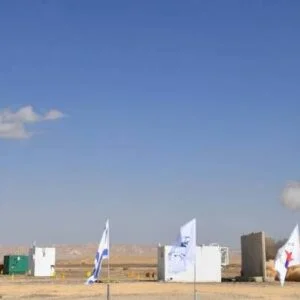
In a series of tests conducted in February, the Iron Dome system proved its capability to intercept many aerial targets including salvos of rockets and UAV’s. This tests, along with two recent Iron Dome flight tests, demonstrated a significant upgrade of the system’s technological capabilities. The Iron Dome was tested in a range of complex scenarios and successfully intercepted and destroyed targets simulating existing and emerging threats, including the simultaneous interception of multiple UAVs as well as a salvo of rockets and missiles.
-The writer is an International Roving Correspondent of the publication.

-The writer is an Israel-based freelance journalist. The views expressed are of the writer and do not necessarily reflect the views of Raksha Anirveda
