
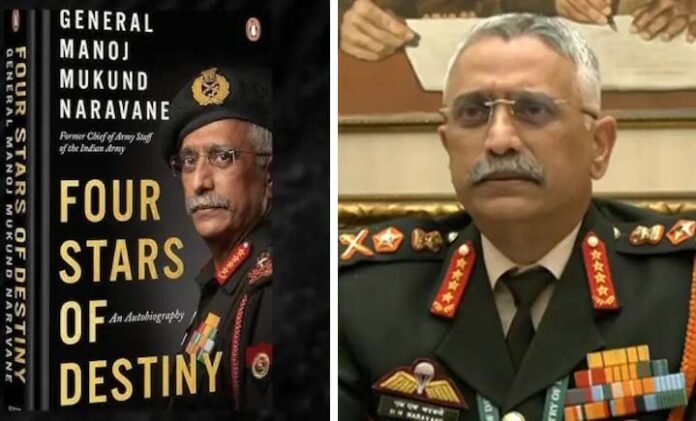
In February 2026, the Government of India initiated a debate over a proposed mandatory 20-year cooling-off period before former senior officials — including top military commanders — could publish books after retirement. The reported proposal was discussed in Union Cabinet deliberations against the backdrop of controversy around the unpublished memoir Four Stars of Destiny by former Army Chief General (Retd) Manoj Mukund Naravane. The proposal is said to apply to senior military and government officials and be formalised in rules affecting book publication after service.
This move has triggered intense controversy among defence analysts, constitutional jurists, civil liberties advocates, and historians. In a democracy, the freedom to document, reflect, criticise and analyse institutional experience plays a critical role not only in public accountability but also in constructing collective memory and strategic scholarship. At issue is whether national security imperatives justify curtailing this freedom for two decades, and what the implications would be for military history, institutional transparency, civil-military relations, and research.

Context: The Naravane Memoir Controversy and the Policy Proposal
The immediate genesis of the debate lies in the political uproar over General (Retd) Naravane’s memoir Four Stars of Destiny, which has not yet been officially published pending defence ministry review. Portions of the draft triggered heated discussion in Parliament when cited by a political leader, sparking a dispute over whether unpublished material could be treated as authoritative. A digital PDF of a pre-print manuscript also circulated online, leading to a police FIR for unauthorised dissemination. Publisher Penguin Random House India clarified that no authorised copies had been published and that any circulating material constituted copyright infringement.
In response, several ministers reportedly urged adoption of a strict cooling-off period — 20 years — before serving or retired officials can publish books that touch on sensitive subjects. While no formal order has yet been issued, discussions suggest a framework may soon be announced, potentially accompanied by new publication clearance procedures. The defence ministry and Cabinet deliberations appear focused on balancing national security interests with individual rights to expression, albeit under a stringent model.
National Security: The Government’s Justification
Proponents of the 20-year rule argue that senior officers have access to classified, operationally sensitive, and policy-level information during their service. National security doctrine in India has traditionally placed strict controls on the dissemination of such content; the Official Secrets Act, 1923, continues to constrain any disclosure of defence-related secrets, irrespective of service status. Serving personnel already require official sanction before writing or publishing. The question before policymakers is whether retirees, who possess accumulated strategic insight and institutional knowledge, should also face a measured delay to prevent inadvertent or deliberate disclosures that could compromise security or diplomatic relations.
The defence establishment’s restraint in allowing publication of operational details stems partly from India’s lack of a unified declassification regime. Unlike some Western militaries with structured declassification timelines, Indian war records and operational archives often remain classified for decades. A 2019 policy on declassification recommended that records older than 25 years should be appraised by archival experts before transfer to the National Archives, illustrating how long official-level information tends to remain sensitive.

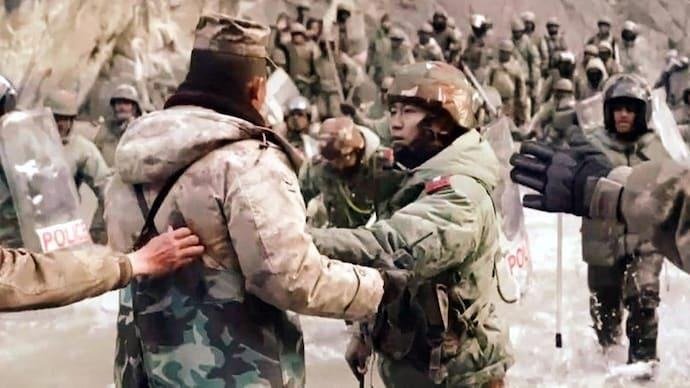
In the current proposal, the core government argument is that senior officers should not publish books discussing sensitive episodes of service until geopolitical contexts have shifted sufficiently. Implicit in this reasoning is that immediate post-retirement publication could affect current operations, reveal ongoing strategies, or influence diplomatic positions in unpredictable ways. This would be especially pertinent in volatile theatres such as the India-China border, where disclosures about decision-making during standoffs can be politically explosive.
Freedom of Expression and Democratic Accountability
The counter-argument rests on constitutional and democratic principles. Critics of the proposal assert that imposing a two-decade ban on writing is an extreme curtailment of freedom of expression and a disproportionate restriction on retired citizens. This is especially relevant in a democracy where transparency, debate, and historical analysis are core values.

Freedom of speech and expression under Article 19 of the Indian Constitution encompasses the right to publish one’s thoughts and experiences, provided they do not meaningfully compromise national security. Many argue that instead of blanket bans, a case-by-case vetting mechanism, rooted in clear legal criteria and time-bound review, is more consistent with democratic values.
Proponents of the 20-year rule argue that senior officers have access to classified, operationally sensitive, and policy-level information during their service. The question is whether retirees, who possess accumulated strategic insight and institutional knowledge, should also face a measured delay to prevent inadvertent or deliberate disclosures that could compromise security or diplomatic relations
Pushparaj Deshpande, a public policy expert, has described proposals like this as potentially consigning “transparency and accountability to the dustbin of history.” He argues that delaying publication until individuals are in their eighties would effectively erase the possibility of meaningful public debate about decisions made under their watch.
Similarly, public commentators warn against broad and open-ended interpretations of national security that could be misused to suppress honest reflection or inconvenient truths. There is also concern that this proposal could be selectively applied, affecting only narratives that are critical of current policy or government, while shielding other perspectives.
Military Memory and Historical Scholarship
The military profession has a rich tradition of self-documentation. In global military studies, firsthand accounts provide indispensable insight into decision-making, command dilemmas, logistical constraints, and the human dimension of war. Institutional histories, memoirs, and analytical works by practitioners are foundational sources for researchers, historians, and future commanders.
Examples from global military literature illustrate this point:
Field Marshal Sam Manekshaw’s legacy is documented extensively by others, even though he himself did not write a memoir. His leadership in the 1971 war remains a subject of academic analysis.
In Western contexts, officers like General David Petraeus (USA) and Field Marshal Bernard Montgomery (UK) produced memoirs and analytical works that became key source material for defence studies and strategic curricula.
Consider the works of Brigadier John Dalvi, whose Himalayan Blunder on the 1962 war provided one of the earliest candid accounts of operational failures, contributing to future doctrinal reflections and strategic reassessment.
Indeed, most leading militaries have structured, however, rigorous review processes for early publication of sensitive content — not outright bans. They balance transparency with classification obligations. A 20-year cooling-off rule is atypical compared with norms in many democracies, where the focus is on clearance and vetting, not indefinite suppression.
In India as well, several former military leaders have published books or contributed to anthologies and journals, enriching scholarship on conflicts such as the 1965 and 1971 wars, Kargil, and counter-insurgency campaigns. These works help researchers, historians and analysts understand doctrinal evolution, strategic choices, inter-service cooperation, and policy outcomes. Delaying such contributions for 20 years curtails the availability of contemporary firsthand material that is often most valuable to scholarship.
Civil–Military Relations and Institutional Trust
The proposal to impose a prolonged cooling-off period also has implications for civil-military relations. In democracies, the military is subject to civilian control; openness about defence affairs post-service contributes to mutual understanding between society and the armed forces. Restrictions that appear punitive or overly restrictive — particularly in response to a single high-profile controversy — may erode trust.
Unlike some Western militaries with structured declassification timelines, Indian war records and operational archives often remain classified for decades. A 2019 policy on declassification recommended that records older than 25 years should be appraised by experts before transfer to the National Archives, illustrating how long official-level information tends to remain sensitive
Serving and retired officers may perceive such policies as signals of distrust, discouraging engagement with public discourse. In turn, younger officers contemplating writing or academic careers post-retirement may be dissuaded from sharing insights that could benefit strategic thinking and doctrinal development.
Moreover, if the state treats critiques or honest reflections as threats, it could chill discourse and encourage self-censorship. The military community’s contributions to public understanding of security challenges, institutional evolution, and lessons learned from complex operations are essential for a mature national security culture.
Alternative Approaches: What Norms Exist Elsewhere?
A comparative perspective is instructive. Many democracies — including the United States, United Kingdom, Australia, and others — allow retired military personnel to publish memoirs and analyses, subject to review and redaction of classified content.
In the United States, for instance, former intelligence and military officials must submit manuscripts to review boards that can require modification or redaction of sensitive material. Once cleared, books can be published irrespective of time. There is no automatic 20-year cooling-off period; instead, the process focuses on safeguarding specific content rather than imposing arbitrary time limits.
Analogous models could be adapted in India:
Structured review framework with defined timelines and transparent criteria;
Redaction protocols rather than bans;
Appeal mechanisms for authors to challenge undue suppression;
Clear classification standards based on established policy, not ad hoc interpretations.
Such frameworks protect national security without stifling the voices that can enhance strategic culture and historical understanding.
The counter-argument rests on constitutional and democratic principles. Critics of the proposal assert that imposing a two-decade ban on writing is an extreme curtailment of freedom of expression and a disproportionate restriction on retired citizens. This is especially relevant in a democracy where transparency, debate, and historical analysis are core values
Likely Implications of a 20-Year Rule
If the proposal becomes law or policy, several implications warrant scrutiny:
Academic and Research Impact
A 20-year gap in publication will create a knowledge vacuum. Contemporary firsthand accounts of operations, command decisions, strategic debates, and institutional reforms will be scarce in the crucial years immediately following service. Researchers will have limited access to primary material, hindering scholarship on modern defence challenges.
Diminished Public Accountability
Military and defence policies are significant components of national governance. Restricting officers’ voices attenuates critical analysis of key decisions — not only at the tactical or operational level but also at the policy interface with civilian leadership.
Strategic Culture and Doctrine Development
Military organisations learn through reflection. Capturing insights shortly after service — when experiences are fresh — enhances doctrinal evolution. A long delay risks memory degradation and loss of nuance.
Civil Liberties and Legal Challenges
A ban of this nature may face constitutional challenges on the grounds of excessive restriction on free speech. Without clear statutory backing and narrowly tailored criteria, the rule could be struck down by courts as disproportionate.
International Perception
The policy could be perceived internationally as an attempt to suppress discussion rather than protect security. In a globalised information environment, other militaries continue to publish operationally insightful books, feeding into shared professional knowledge.
Rather than a blanket 20-year prohibition, a balanced approach should consider establishing a Defence Publication Board with fixed timelines (e.g., 120 days) to vet manuscripts, with articulated grounds for classification decisions, and allow publication with redactions or contextual expert commentary where necessary
Finding the Middle Ground: Policy Recommendations
Rather than a blanket 20-year prohibition, a balanced approach should consider the following:
Institutionalised clearance procedure: Establish a Defence Publication Board with fixed timelines (e.g., 120 days) to vet manuscripts, with articulated grounds for classification decisions.
Redaction and contextualisation: Allow publication with redactions or contextual expert commentary where necessary, instead of wholesale suppression.
Tiered restrictions: Differentiate between strategic content (sensitive), operationally dated material (older than a reasonable lead time), and personal reflexive narrative. Not all books pose identical security risks.
Sunset provisions: Rules should be periodically reviewed to align with changing security environments and legal norms.
Engagement with stakeholders: Include military writers, historians, legal scholars and security experts in rule-making to ensure legitimacy and practicality.
Conclusion
The reported proposal for a 20-year ban on military officers publishing books after service is rooted in legitimate national security concerns. However, its form — a lengthy, near-absolute cooling-off period — is disproportionate given the need for transparency, democratic discourse, and the enrichment of strategic scholarship.
Military writings by commanders and officers have contributed immeasurably to global understanding of warfare, strategy, institutional learning, and civil–military relations. Indian defence literature deserves a similar ecosystem — one where security is protected, but voices that can improve institutional practice and civic understanding are not silenced.
As debates unfold, policymakers must calibrate safeguards without extinguishing the light of critical reflection — a light that illuminates both history and the path ahead.

-The author retired as Major General, Army Ordnance Corps, Central Command, after 37 years of service. A management doctorate and expert on defence modernisation, he is the author of four books, including the Amazon bestseller “Breaking the Chinese Myth,” and a frequent media commentator. He is affiliated with several leading defence and strategic studies institutions in New Delhi. The views expressed are of the writer and do not necessarily reflect the views of Raksha Anirveda
