

Existing projects and new policy signals point to continued, and likely expanded, India-Israel cooperation on developing air and missile defence systems. The Barak-8/MRSAM family is already a co-development programme between DRDO and IAI, covering naval and land-based medium-range air defence for all three Indian services. Recent trials of the Barak MRSAM with the Indian Army were completed successfully, clearing the system for full tri-service operational deployment and cementing the industrial partnership around this line.
In late 2025, India and Israel signed defence technology MoUs that explicitly cover joint R&D, production, and advanced fields such as AI, sensors, and cyber, providing a formal umbrella for future cooperative projects. India’s ‘Make in India’ policy is being aligned with Israeli tech transfers and local production, with BEL, HAL and private industry brought into joint programmes and licensed manufacture of Israeli-developed systems.

According to Israeli sources, work on the evolving partnership highlights missile defence as a central area where Israeli innovation and Indian requirements intersect, with Barak-8 cited as a template for deeper cooperative development rather than imports.
India’s air defence systems against ballistic missiles primarily revolve around the indigenous Ballistic Missile Defence (BMD) Programme, supplemented by imported systems like the S-400. Phase 1 of the BMD, completed and awaiting full deployment approval, protects key cities such as Delhi and Mumbai from missiles with a range of up to 2,000 km
India’s Mission Sudarshan Chakra, an ambitious plan for an integrated air and missile defence architecture, is explicitly framed as an area that could leverage Israeli experience and technology. An Israeli source told Raksha Anirveda that the Israeli multi-tiered air defence system, which proved its capabilities in the war with Iran last year, will be the basis for the discussions with the Indian Prime Minister and his delegation. Given India’s sustained status as Israel’s largest defence export market and the shift from buyer–seller to co-development/production, further joint air defence projects — especially in extended-range, BMD, and integrated C2 — are a logical and politically supported next step.
India’s air defence systems against ballistic missiles primarily revolve around the indigenous Ballistic Missile Defence (BMD) Programme, supplemented by imported systems like the S-400. Phase 1 of the BMD, completed and awaiting full deployment approval, protects key cities such as Delhi and Mumbai from missiles with a range of up to 2,000 km.
India’s DRDO-developed two-tier BMD uses exo-atmospheric and endo-atmospheric interceptors. India has been using some locally developed air defence systems and is also using imported systems like the Russian S-400 Triumf: Three squadrons are deployed along borders, with a fourth by May 2026; intercepts ballistic missiles at high altitudes (up to 30 km terminal phase) using 40N6 missiles, complements BMD.

Pakistan’s ballistic missile capabilities pose a significant threat to India through short- and medium-range systems capable of delivering nuclear warheads. These missiles enable Pakistan to target all of India, offsetting India’s conventional superiority. Pakistan maintains about 170 nuclear warheads, many paired with these missiles for first-use options against conventional threats
According to Israeli sources, during negotiations with Israel, India in recent years expressed a growing concern over the Pakistani ballistic missile threat. Pakistan’s ballistic missile capabilities pose a significant threat to India through short- and medium-range systems capable of delivering nuclear warheads across the border. These missiles enable Pakistan to target all of India, offsetting India’s conventional superiority. Pakistan’s arsenal includes mobile, nuclear-capable ballistic missiles with ranges from tactical to strategic. Pakistan maintains about 170 nuclear warheads, many paired with these missiles for first-use options against conventional threats.
As recently reported by Raksha Anirveda, Israel is following every weapon system developed in a country that might export it to enemy countries like Iran. A new missile developed in Pakistan was part of Pakistan’s display in the recent Saudi defence exhibition. Israeli experts have analysed the SMASH missile and shared the details with Raksha Anirveda. The SMASH missile, developed by Pakistan’s GIDS (Global Industrial Defence Solutions) for the Navy, is a dual mission anti-ship and land-attack ballistic missile. It was first tested from a naval platform in November 2024, with a second successful flight on November 25, 2025.

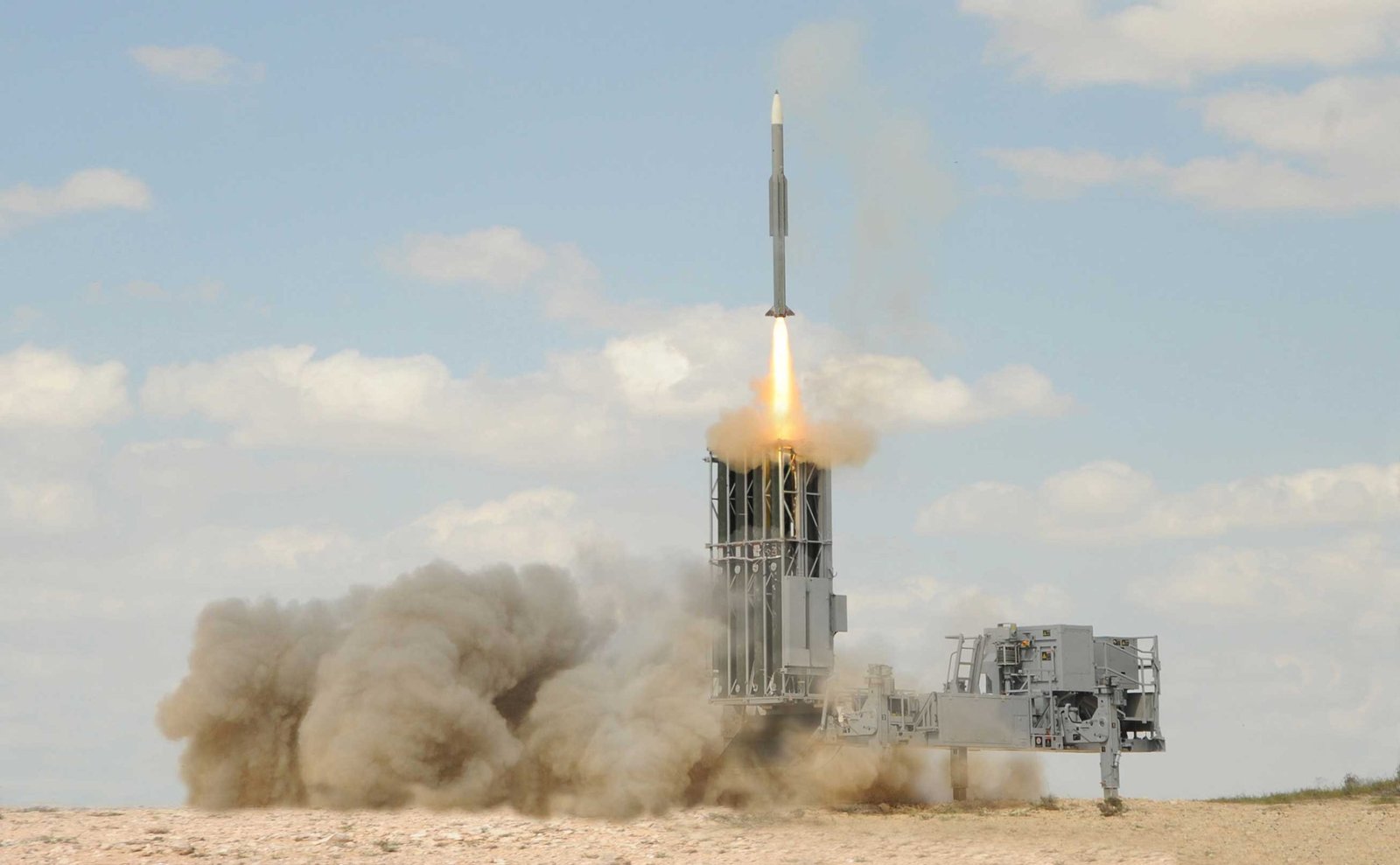
The missile shares similarities with the Pakistani Fatah-II ballistic missile. Pakistani authorities have labelled it hypersonic, but Western observers classify it as an ASBM. The missile is a single-stage, unified missile. No data on weight is available; estimations: up to 7.5 tonnes. The missile is 9 metres long and has a diameter of 0.85 to 0.9 metres. According to experts, the primary mission is to develop a ship-launched anti-ship ballistic missile (ASBM). The missile is powered by a single-stage solid rocket motor with 2 thrust levels. The missile trajectory is quasi-ballistic, along with complex manoeuvres at the endgame. Its impact speed is over 680 m/s.
The experts assess the range of the missile to be 350 km. The next model, SMASH 2, will have a range of 800 km and even beyond.
Pakistan has developed a new missile, SMASH, and displayed it in the Saudi defence exhibition. Israeli experts have analysed the missile. This missile, developed by GIDS (Global Industrial Defence Solutions) for the Navy, is a dual mission anti-ship and land-attack ballistic missile. It was first tested from a naval platform in 2024, with a second successful flight on November 25, 2025
The missile is armed with a 384-kilogram maritime unitary blast and blast-fragmentation. Navigation of the missile is made by a High-Precision Image Aided Inertial Navigation (HDGNS), which is a combined IMU with a GNSS receiver of Chinese origin. For the endgame, the missile uses an X-band RF seeker. The missile’s CEP is estimated to be between 10 and 15 metres. The SMASH system, according to experts, is central to Pakistan’s approach to improving anti-access/area-denial (A2/AD) operations in the Indian Ocean, aiming to deter adversary fleets.
According to experts, the SMASH land-attack features complicate air and missile defence, demanding both ‘soft’ and ‘hard’ responses. The semi-ballistic trajectory and high terminal speed call for advanced radar coverage, precise tracking, robust fire control, and capable interceptors. The experts say that regional nations will need to upgrade air defence networks to counter high-speed ballistic missiles, creating business opportunities for advanced naval air defence systems.
The experts said that Pakistan’s showcasing of SMASH at the World Defence Show 2026 highlights its export ambitions, particularly targeting the Middle East market. The system’s dual-role design appeals to countries seeking cost-effective solutions for both maritime denial and land-attack needs, streamlining procurement and training. However, international sales may encounter regulatory challenges and geopolitical sensitivities. Export success will depend on how well SMASH matches operational requirements and defence strategies.
Talks on the Israeli Iron Beam will likely be among the top issues during Prime Minister Modi’s visit. The Iron Beam system represents a global technological and engineering breakthrough. The system features an advanced laser source and a unique electro-optical targeting system, enabling the interception of a wide range of targets with maximum precision and superior efficiency
According to Israeli sources, threats like the SMASH will probably make the Israeli Arrow 4 ballistic missile interceptor the focus of talks. The Arrow 4 will be capable of intercepting threats, including Hypersonic missiles. The Arrow 4 will use the same infrastructure as the Arrow 3. The sources added that the Arrow 4 is designed to intercept at high altitudes inside the atmosphere.
Sources at the Ministry of Defence said talks on the Israeli Iron Beam will likely be among the top issues during the visit. The Iron Beam system represents a global technological and engineering breakthrough, a high-power laser system designed to counter various aerial threats. The system features an advanced laser source and a unique electro-optical targeting system, enabling the interception of a wide range of targets at an enhanced operational range, with maximum precision and superior efficiency – all at a negligible marginal cost, which constitutes the laser system’s primary advantage.

-The writer is an Israel-based freelance journalist. The views expressed are of the writer and do not necessarily reflect the views of Raksha Anirveda
