
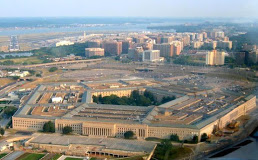
Washington: As Pentagon seeks billions of dollars in a future package to combat the Coronavirus pandemic, it looks like the next massive relief bill will be swamped in a partisan fight.

The Pentagon announced its seeking the funds to prop up the military’s network of suppliers following US$3 billion in new “progress payments” to increase cash flow to primary contractors and more vulnerable, smaller subcontractors. The details have yet to be disclosed as the Department of Defense works through them with the White House budget office.
But, Senate Majority Leader Mitch McConnell, said he wants to “push the pause button” on the next aid package and, because Democrats aim to centre it on bailouts for states hit hard by the pandemic, “move “cautiously.”
“You’ve seen the talk from both sides about acting, but my goal from the beginning of this, given the extraordinary numbers that we’re racking up to the national debt, is that we need to be as cautious as we can be,” McConnell said on April 21.
The Senate will reconvene in full on May 4 to work on Coronavirus aid legislation, said McConnell. It would mark the first time the chamber has been back in full since late March.

The prospects for a speedy compromise looked dim when House Speaker Nancy Pelosi, set herself at odds with McConnell last week, saying, “There will not be a bill without state and local” aid. Senate Minority Leader Chuck Schumer, and other congressional Democrats have added pressure on McConnell by pillorying the majority leader’s suggestion that states declare bankruptcy.
Cash flow for small defence contractors is continuing to suffer under the Coronavirus pandemic, according to a survey by the National Defense Industrial Association.

McConnell’s negotiating stance comes as the Congressional Budget Office projected that the federal budget deficit would quadruple to US$3.7 trillion, driven by the Coronavirus pandemic and a government spending spree on testing, health care, and aid to businesses and households.
According to the report, the 2020 budget deficit will explode after Congress passed and President Donald Trump signed four Coronavirus aid bills that promise to pile more than US$2 trillion onto the US$24.6 trillion national debt in the remaining six months of the current fiscal year.
Meanwhile, defence hawks are warm to a defence spending boost. Senate Commerce Committee Chairman Roger Wicker, has voiced support for an additional cash infusion for the defence industry.
“The federal government can play a vital role in keeping military suppliers afloat,” Wicker, a senior member of the Senate Armed Services Committee, said in his weekly newsletter to supporters. “Already the Department of Defense has announced it is spending US$3 billion to reimburse contractors affected by work delays and breaks in the supply chain.
Senator Tom Cotton, introduced legislation that calls for US$43 billion for military infrastructure and weapons as part of a larger effort to confront China in the Indo-Pacific region. That bill also calls for US$11 billion to mitigate pandemic-related cost overruns on weapons programmes and US$3.3 billion to mitigate COVID-19 impacts to the defence-industrial base.
But Cotton’s proposal is also loaded with new weapons purchases that would prove a boon to defence firms, albeit at a slower pace than a direct cash infusion. There’s an added General Dynamics and Huntington Ingalls Industries-built Virginia-class submarine; more Lockheed Martin-built F-35A jets; Boeing-built F-15EX fighter aircraft; a battery for the Terminal High Altitude Area Defence air defence system; and anti-ship/strike weapons.
Cotton’s bill follows a US$6.1 billion China deterrence package from the influential ranking member of the House Armed Services Committee, Rep. Mac Thornberry. That bill would fund an Indo-Pacific Deterrence Initiative, also favored in principal by HASC Chairman Adam Smith.