
For most of history, war was decided on battlefields. Armies marched on muscle and discipline. Fleets sailed on wind before they sailed on fuel. Oil mattered, but it was rarely spoken of as a strategy in itself. That illusion has ended. In the contemporary world, exhaustion is no longer imposed only by firepower. It is engineered through economic pressure, technological denial, financial isolation, tariffs, and sustained erosion of national power.
Wars are increasingly decided before soldiers meet, often without a single shot being fired. Control over oil flows, shipping insurance, pricing mechanisms, refinery access, and financial clearance has become as decisive as battlefield success once was. The modern contest for power is not only about territory. It is about endurance, and energy sits at the centre of that endurance.

The war in Ukraine has made this reality impossible to ignore. Russia has not been defeated militarily. Its armed forces continue to fight, adapt, and absorb losses. Yet Russia’s strategic freedom has shrunk steadily. Restrictions on energy exports, limits on shipping insurance, technology denial, financial isolation, and pressure on payment systems have steadily weakened the foundations of its power. This is a modern-day strategy of economic warfare.
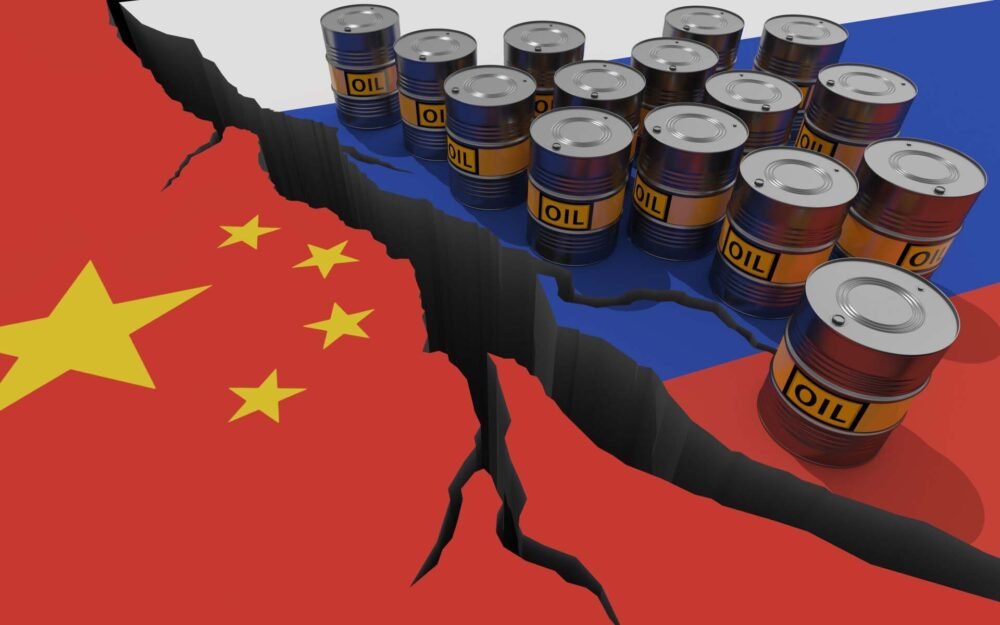
Russia’s economy depends on hydrocarbons. So does Iran’s. China, despite its industrial scale, remains deeply dependent on imported energy. This dependence creates leverage for those who can shape access, routes, and price
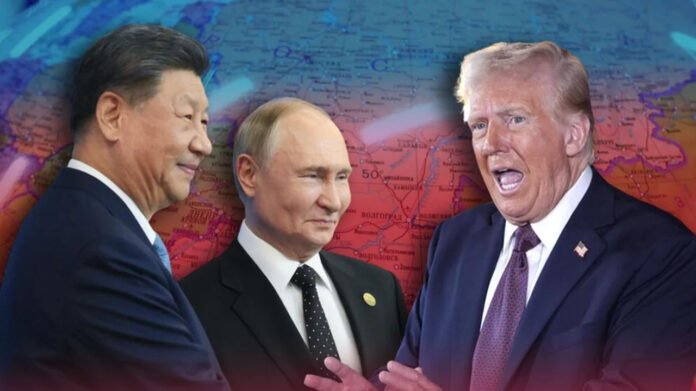
The United States and its allies have consciously chosen a model of conflict where the adversary is subjected to economic attrition rather than weapons annihilation. The objective is to make survival increasingly costly through economic coercion. Over time, the pressure compounds. Capital hesitates. Infrastructure decays. Political options narrow. The adversary remains standing, but weaker. This is the Monroe Doctrine readapted to Dontru doctrine, with economic strangulation and information warfare the primary means before brute power is unleashed.
What makes economic warfare particularly effective is its invisibility. There are no dramatic images, no declarations of war, no mobilisation orders. Instead, refineries struggle to finance upgrades. Shipping costs rise quietly. Insurance premiums spike. Currencies weaken. Public confidence erodes. States under sustained economic pressure lose freedom of action long before they lose armies.
Energy has become the new grammar of strangulation. Russia’s economy depends on hydrocarbons. So does Iran’s. China, despite its industrial scale, remains deeply dependent on imported energy. This dependence creates leverage for those who can shape access, routes, and price.

Secondary sanctions and maritime enforcement have extended pressure far beyond the primary target. Countries that buy sanctioned oil inherit uncertainty and risk. This is deliberate. The goal is not merely to reduce revenue for the sanctioned state, but to contaminate its entire energy ecosystem.
For India, this is not an abstract threat. Russian crude has helped stabilise domestic prices and cushion inflation. A tariff of this scale weaponises trade policy against third parties, forcing difficult choices between affordable energy and access to global markets. This is economic warfare conducted indirectly, but felt immediately
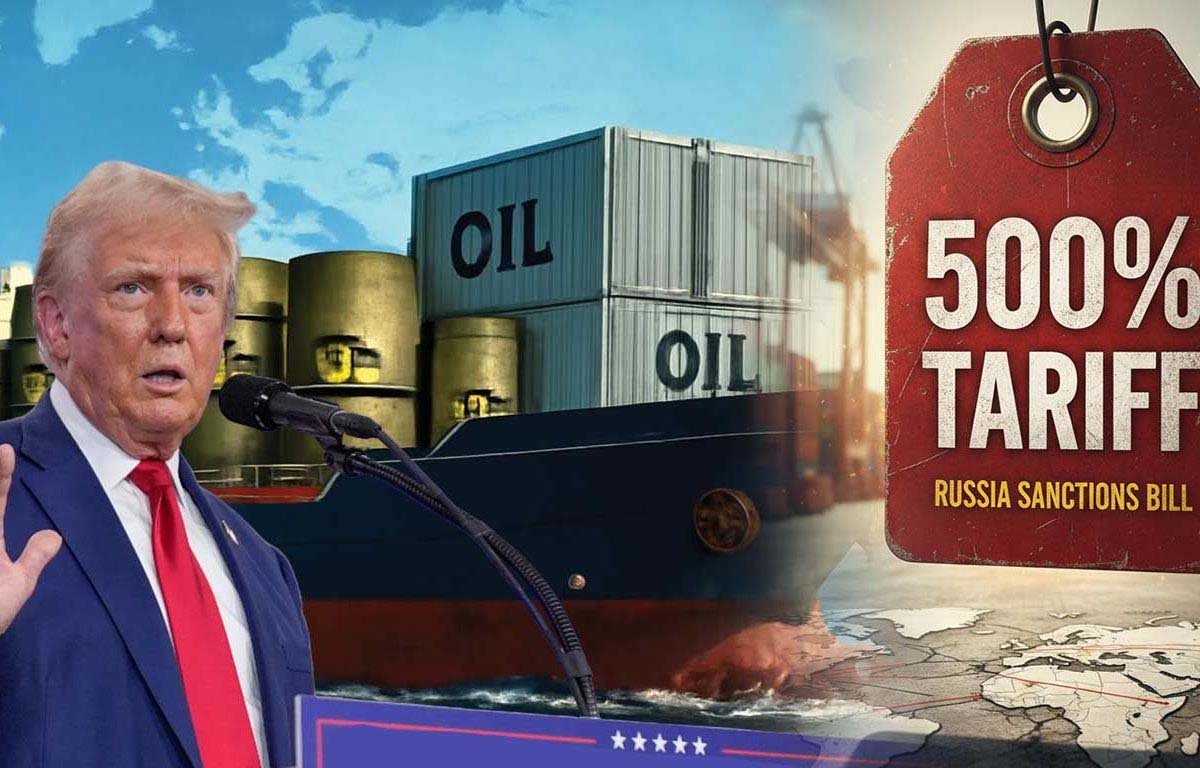
This strategy has entered a sharper phase with proposals approved by US President Donald Trump to impose a 500 per cent tariff on countries trading Russian oil. Such a measure is not aimed only at Moscow. It is a blunt warning to major energy importers, including India and China. Energy decisions, the message says, will carry political and economic punishment.

For India, this is not an abstract threat. Russian crude has helped stabilise domestic prices and cushion inflation. A tariff of this scale weaponises trade policy against third parties, forcing difficult choices between affordable energy and access to global markets. This is economic warfare conducted indirectly, but felt immediately.
China understands this logic perhaps better than anyone. No modern military power can function without assured energy supplies. Aircraft, ships, factories, and data centres do not run on ambition. Without fuel and electricity, military capability becomes symbolic. Energy vulnerability turns strength into fragility.
Even limited conflicts now reflect this reality. Iran’s periodic confrontations with Israel are monitored not just by intelligence agencies, but by markets. Energy prices respond within hours. Insurance costs rise. Capital flows shift. War today is observed from space, priced by algorithms, and punished economically in real time.
None of this diminishes the importance of military power. On the contrary, economic coercion works only when backed by credible force. Sanctions bite because escalation remains possible. Without deterrence, economic pressure loses its edge and becomes mere noise.
Energy security has become a question of national survival, not just a development issue. India’s energy posture must therefore rest on diversification of energy sources, safeguarding sea lanes, maintaining adequate strategic reserves, and steadily reducing exposure through domestic production and alternative sources
The lesson from modern great-power competition is that in the troika of defence, diplomacy and development, unless defence is respected as a deterrent, diplomacy loses its voice and development foundation remains weak. Economic tools are effective only when adversaries know there is a hard edge behind them. Hard power earns respect.
For India, these shifts are not theoretical. They define the reality of the strategic environment India faces in its trajectory to Viksit Bharat.
First, military credibility remains non-negotiable. Deterrence is not about seeking conflict. It is about preventing coercion. Investments in naval power, airpower, missile forces, space assets, cyber capability, and intelligence are what ensure that pressure cannot be applied cheaply.
Second, energy security has become a question of national survival, not just a development issue. India’s energy posture must therefore rest on diversification of energy sources, safeguarding sea lanes, maintaining adequate strategic reserves, and steadily reducing exposure through domestic production and alternative sources. These are no longer long-term aspirations. They are immediate strategic requirements.
Those who command energy command endurance, and those without it discover that national power can be throttled long before a shot is fired. Has the US, by its actions against Venezuela, weakened China, which is 70% dependent on its crude from Venezuela?
Third, economic resilience must be a core national security imperative. Supply chains, financial systems, technology access, and investor confidence are targets in modern conflict. Dependence creates leverage for others. Resilience denies it.
Fourth, India remains devoid of a stated National Security Strategy. Contemporary threats do not arrive in silos. Military coercion, economic sanctions, cyber intrusion, information manipulation, and energy leverage unfold together, often reinforcing one another. Without a unifying framework, responses remain fragmented, reactive and myopic.
Finally, India must safeguard strategic autonomy through strength, not distance. Autonomy is often misunderstood as standing apart from global systems. In reality, it means operating within them without losing freedom of action.
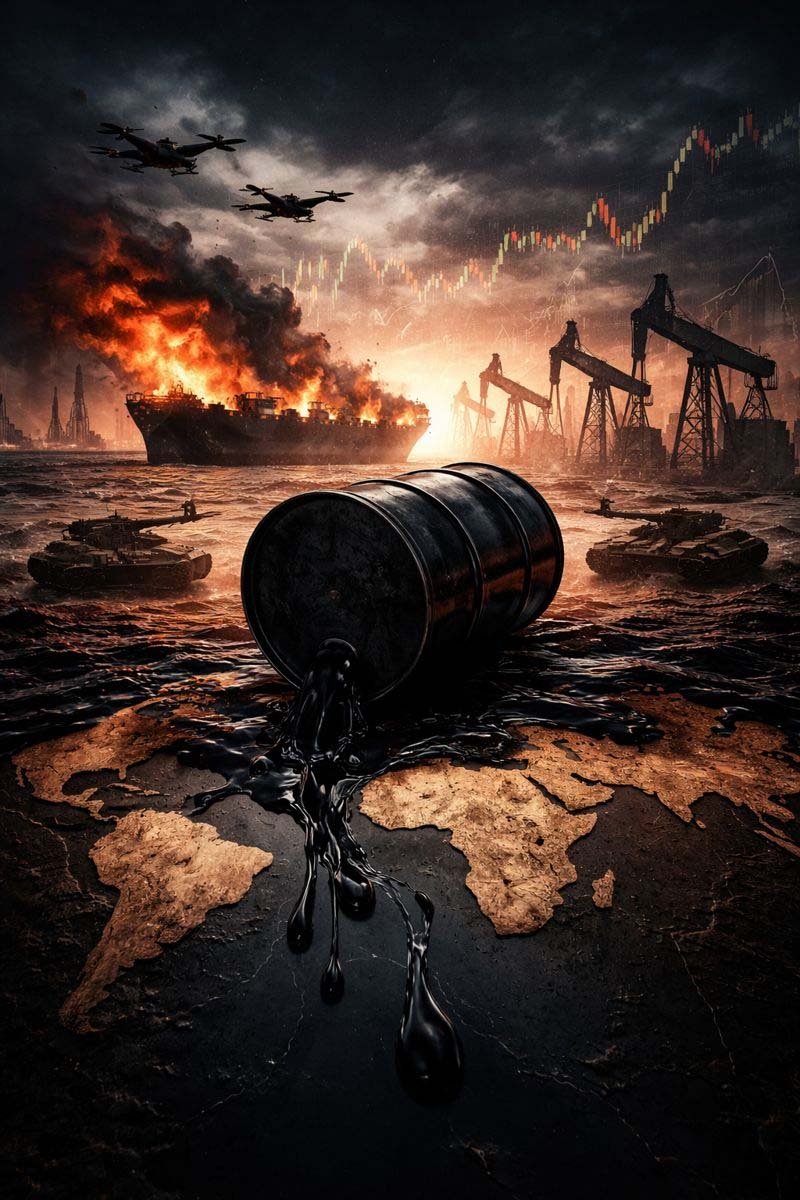
Wars today are rarely decided by sudden military defeat. They are settled through sustained erosion. Oil has become leverage. Sanctions have become weapons. Power now flows as much through energy markets as it does through armed force.
India’s challenge is not choosing between guns and growth. It is recognising that, in contemporary competition, growth itself must be defended.
Oil is Coercive Power – Strategy of Indirect Approach
In today’s conflicts, control over energy flows can weaken states more effectively than armies, eroding sovereignty through markets, sanctions, and dependency. Those who command energy command endurance, and those without it discover that national power can be throttled long before a shot is fired. Has the US, by its actions against Venezuela, weakened China, which is 70% dependent on its crude from Venezuela??

The author, a PVSM, AVSM, VSM has had an illustrious career spanning nearly four decades. A distinguished Armoured Corps officer, he has served in various prestigious staff and command appointments including Commander Independent Armoured Brigade, ADG PP, GOC Armoured Division and GOC Strike 1. The officer retired as DG Mechanised Forces in December 2017 during which he was the architect to initiate process for reintroduction of Light Tank and Chairman on the study on C5ISR for Indian Army. Subsequently he was Consultant MoD/OFB from 2018 to 2020. He is also a reputed defence analyst, a motivational speaker and prolific writer on matters of military, defence technology and national security. The views expressed are personal and do not necessarily carry the views of Raksha Anirveda
