
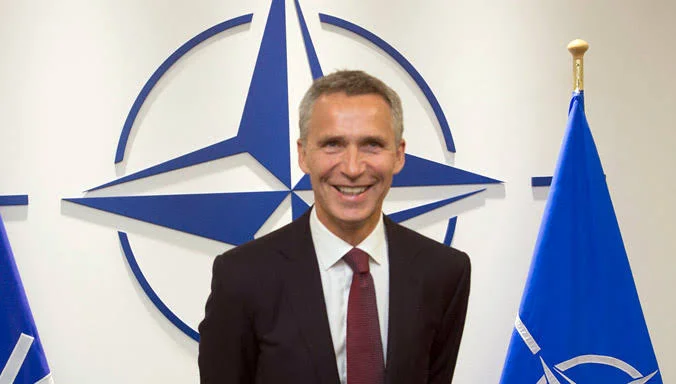
Cologne: In a move aimed at NATO playing a bigger role in international affairs, NATO Secretary General Jens Stoltenberg wants the alliance to help nations in the Asia-Pacific region contend with China’s rise.
“Military strength is only part of the answer,” Stoltenberg said in a speech during an online event organised by the Atlantic Council and the German Marshall Fund of the United States. “We also need to use NATO more politically.”

He said alliance member should adopt a more global approach to security issues, unlike the Europe- and North America-centric tack that has often shaped the alliance’s agenda. “This is not about a global presence, but a global approach,” he said.
“As we look to 2030, we need to work even more closely with like-minded countries, like Australia, Japan, New Zealand and [South] Korea, to defend the global rules and institutions that have kept us safe for decades, to set norms and standards in space and cyberspace, on new technologies and global arms control, and ultimately to stand up for a world built on freedom and democracy, not on bullying and coercion.”
As Stoltenberg put it, Beijing becoming militarily and economically stronger represents a “fundamental shifting” in the global balance of power in which the Western alliance should not be caught flat-footed.
Stoltenberg repeatedly invoked NATO cohesion as an organising principle for the alliance, imploring members to “resist the temptation of national solutions.”

His comments came as the Trump administration is reportedly considering what critics have called just that: a partial US troop reduction in Germany without consulting allies. The Pentagon previously portrayed its presence in Germany as a testament to America’s commitment to Europe, especially following Russia’s annexation of Crimea from Ukraine in 2014.
The NATO chief dodged a question on the report, first made public by the Wall Street Journal, instead trumpeting the US military’s deepening involvement in Europe.