
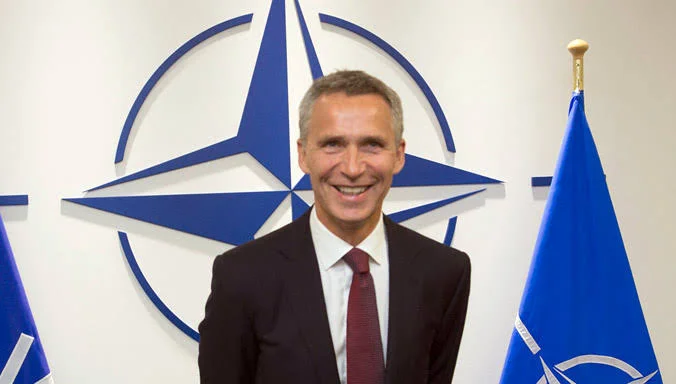
Cologne: NATO Secretary General Jens Stoltenberg has joined Germany’s fiery debate about the decades-old pledge to retain American atomic bombs in the European nation as a way of deterring Russia.
Stoltenberg argued that only sticking to the doctrine of “nuclear sharing” would ensure Berlin’s continued seat at the table of strategic decision-making within the alliance.

“NATO’s nuclear sharing is a multilateral arrangement that ensures the benefits, responsibilities and risks of nuclear deterrence are shared among allies,” he wrote in an op-ed.
“Politically, this is significant. It means that participating allies, like Germany, make joint decisions on nuclear policy and planning, and maintain appropriate equipment.”
The policy prescribes that a smattering of countries in Europe that don’t possess atomic weapons will host such arms on their territory and maintain the means to deploy them. In the case of Germany, there are 20 B61 bombs reportedly stored at Büchel Air Base in western Germany’s state of Rhineland-Palatinate.
If called upon, German Tornado pilots would fly the weapons into enemy territory and toss them at the targets in a lofting manoeuvre, releasing them during a sharp upward and backward turn to maximise bomb airtime.

Debate has flared up in recent weeks about Germany’s nuclear role, following the German Defence Ministry’s recommendation to purchase 30 F-18s for the job, as the Tornado fighter jets are expected to reach the end of their useful life by 2030.
German government cites US ties in choice of F-18 planes for nuclear, jamming missions.

Boeing has a foot in the door in Germany, but a final decision is still years away.
Led by Rolf Mützenich, the chairman of the Social Democrats in parliament, a group within the governing coalition’s junior party want to exit the NATO atomic arrangement, arguing that deal, too, has outlived its usefulness.
“While NATO views its own nuclear deterrent primarily as a political tool, Russia has firmly integrated its nuclear arsenal into its military strategy,” Stoltenberg wrote.
“It has placed nuclear-capable missiles in Kaliningrad, just 500 km from Berlin. It has threatened allies such as Denmark, Poland and Romania with nuclear strikes. Russia also forcibly and illegally annexed part of Ukraine, a country whose borders it had previously committed to respect in return for Ukraine giving up its own nuclear protection.”