

Prime Minister Narender Damodardas Modi’s embrace of President Vladimir Vladimirovich Putin at the airport, on December 4, 2025, during the latter’s state visit to New Delhi, marked an inflection point in India-Russia relations and a bold and unequivocal assertion of India’s strategic autonomy in an increasingly multipolar international system. The 23rd India-Russia Annual Summit, centred on the adoption of the India-Russia Economic Cooperation Programme 2030 and ratification of the Reciprocal Exchange of Logistics Support (RELOS) agreement, demonstrated that the bilateral partnership has evolved decisively beyond Cold War-era patronage into a robust multidimensional strategic relationship.
The summit was critically timed at the juncture wherein, the US, in conjunction with the UK and the EU, has been putting extraordinary pressure on India through punitive tariffs for purchasing Russian Oil. The visit and its optics therefore, conveyed a crucial message: India will not permit external coercion to override its sovereign assessment of national interest. In the succinct words of Ambassador Venkatesh Varma, the ex-Indian Ambassador to Russia, the ‘Looking-over-one’s-shoulder’ phase of India’s foreign policy is over.

Strategic Autonomy as A Defiant Choice
Trump administration has imposed 50 percent tariffs on Indian goods, including an additional 25 percent specifically targeting Russian crude oil purchases. By weaponizing its trade policy as sanctions enforcement, the US has put to risk the delicate relationship with India, a partnership meticulously cultivated over the past two decades. This attempt by the US to treat India as a subordinate partner, suggesting that New Delhi requires American approval for its energy procurement decisions, only serves to reinforce New Delhi’s conviction that its external partnerships must never compromise its sovereign decision-making.
India, as a rising power, is situated precariously at the intersection of global rivalries, navigating the US-China competition, its own tensions with China, and the growing Russia-China alignment. In such an unforgiving environment, absolute fidelity to any single great power would create unacceptable vulnerabilities. Furthermore, no single nation possesses the capacity to fully satisfy the diverse and voracious needs of a rising India. Therefore, India’s strategic posture of prioritizing flexible, issue-based coalitions over rigid, permanent alliance structures is seen as the optimal path to enable the maximum extraction of benefit from its various international engagements.
Energy Security: Beyond Transactional Purchasing
Energy security persists as the most immediately visible, yet politically contentious, dimension of India-Russia ties. India’s import of Russian oil has witnessed an extraordinary surge, increasing from less than one percent prior to 2022 to surpassing 30% by 2024, a shift estimated to have generated annual savings between $15–20 billion through discounted pricing. This calculated diversification has successfully served the dual objectives of insulating India’s domestic inflation from extreme oil price volatility and simultaneously reducing the concentration risk associated with Middle Eastern supply, thus providing a vital hedge against single-actor leverage.
The 23rd India-Russia Annual Summit firmly affirmed India’s strategic autonomy by adopting a long-term economic plan and ratifying a key military logistics pact, boldly pushing back against punitive measures from the West regarding Russian oil purchases, thereby signalling that external coercion will not dictate New Delhi’s national interests
Despite a recent reduction in India’s purchase of Russian oil following US sanctions on Russia’s largest oil firms, Lukoil and Rosneft, President Putin, during the summit, offered a compelling commitment to an “uninterrupted fuel supply”. This commitment provides profound strategic reassurance, unequivocally demonstrating that Russia views Indian energy security as a non-negotiable imperative within the bilateral relationship. Energy cooperation, encompassing crude oil, refining, petrochemicals, liquefied natural gas, and upstream technologies, was designated as a “significant pillar” in the joint statement.

Furthermore, both sides agreed to accelerate negotiations for long-term crude supply contracts, establish robust investment protection mechanisms, and actively work to resolve the persistent logistics complications arising from sanctions regimes. In a pivotal move aimed at enhancing India’s Nuclear Power production capacity to reach 100 GW by 2047, the nations agreed to accelerate life-cycle support for the operational Kudankulam reactors and crucially, identified a second site for the future deployment of Russian-designed reactors.
Both parties also committed to accelerating technical and commercial discussions on the VVER (Voda Vodyanoi Energetichesky Reactor, a Russian-designed Pressurised Water Reactor), along with research and joint development of Nuclear Power Plants, localisation efforts, and the joint manufacturing of nuclear equipment and fuel assemblies. These far-reaching initiatives are designed to strategically position both nations at the forefront of next-generation nuclear technology, carrying significant implications not only for energy security but also for their global technology leadership aspirations.

RELOS: Military Reach and Operational Flexibility
The Reciprocal Exchange of Logistics Support (RELOS) agreement, formally ratified by Russia’s State Duma days before President Putin’s arrival, stands out as one of the summit’s most profoundly significant strategic outcomes. This transformative pact establishes mutual access to the military facilities, ports, airbases, and extensive logistical infrastructure of both nations for essential support functions such as refuelling, repairs, and broader operational support. The agreement is strategically designed to provide India with an unprecedented level of operational reach across multiple theatres, while simultaneously offering Russia crucial warm-water access in the Indian Ocean, vital for its own power projection capabilities.
For India, RELOS effectively enables three critical and transformative capabilities. Firstly, it grants Arctic access through the utilisation of Russian facilities in Murmansk and other Arctic ports, thereby enabling India to actively participate in polar shipping routes and Arctic resource development. Secondly, the agreement provides crucial Pacific logistics reach through access to bases near Vladivostok and Petropavlovsk-Kamchatsky, extending the Indian naval presence into waters increasingly contested by Chinese expansionist activities. Thirdly, and of significant continental importance, it enables Central Asian deployments by leveraging Russian infrastructure networks, providing invaluable operational flexibility in a region critical to India’s continental security calculus. It is important to note that this agreement serves to complement, rather than merely duplicate, the logistics arrangements India has already concluded with the United States, France, Japan, and Australia. Unlike those existing arrangements, RELOS operates without demanding interoperability or imposing alliance expectations, thus allowing India the sovereign freedom to construct overlapping military partnerships that are meticulously calibrated to achieve specific geopolitical objectives.
While energy security remains vital, the partnership is deepening through a Russian commitment to “uninterrupted fuel supply” and agreements to accelerate the expansion of India’s nuclear power capacity to 100 GW by 2047, including life-cycle support for Kudankulam and identifying a second reactor site
Economic Diversification: Target 2030
India presents a market to Russia that is unparalleled, offering a powerful avenue for Moscow to substantially reduce its significant over dependence on China. The strong signal of intent from Moscow was clearly visible, with more than half a dozen Cabinet ministers and hundreds of delegates attending the Business Forum. Presently, the Indo-Russia bilateral trade stands at approximately $68.7 billion, but this is characterised by a colossal imbalance that generates vulnerabilities for the Indian economy. India imports nearly $64 billion—primarily crude oil, fertilisers, and defence equipment—while exporting less than $5 billion worth of goods to Russia.
The newly adopted India-Russia Economic Cooperation Programme 2030, which boldly targets a $100 billion bilateral trade figure by 2030, explicitly addresses these concerns through a commitment to sectoral diversification. Pharmaceutical cooperation received particular emphasis during the summit, with President Putin directing an increase in Russian purchases and both sides agreeing to institutional collaboration in medical education and extensive scientific research.
India, recognised as one of the world’s largest generic manufacturers, possesses cost-competitive capabilities that align perfectly with the requirements of Russia’s healthcare system, currently strained by demographic decline and sanctions-related disruptions. To further this goal, both sides also unveiled another landmark “Labour Mobility Agreement,” which is specifically designed to facilitate Indian skilled workers to take up employment in Russia, where manpower shortages for an estimated three million jobs are expected by the end of the decade. Additional export opportunities were identified in agricultural trade, processed foods, and marine products. A significant outcome was the Food Safety Standards Authority agreement reached at the summit, which will streamline regulatory alignment, thereby reducing the non-tariff barriers that have historically constrained agricultural commerce between the two nations. Engineering goods, encompassing automotive components and precision machinery, also present valuable opportunities for Indian manufacturers to gain access to the wider Russian and Eurasian Economic Union markets.
In the critical domain of rare earth elements and strategic minerals, both sides agreed to cooperate on the exploration, processing, and recycling of these resources to collectively address their shared vulnerability to China’s near-monopoly in these critical domains. The potential for joint ventures in rare earth processing, possibly leveraging India’s advanced chemical engineering capabilities, is viewed as a mechanism to forge genuine strategic interdependence while simultaneously reducing both nations’ supply chain vulnerability.
Reforms to the financial architecture clearly signalled a commitment to sustain trade in non-dollar terms. With over 90% percent of bilateral transactions already being conducted in rupees and rubles, both sides agreed to explore the integration of Russia’s SPFS messaging system (the Russian equivalent of the SWIFT financial transfer system) with Indian financial platforms and to establish central bank digital currency interoperability.
Defence Cooperation: From Buyer to Co-Developer
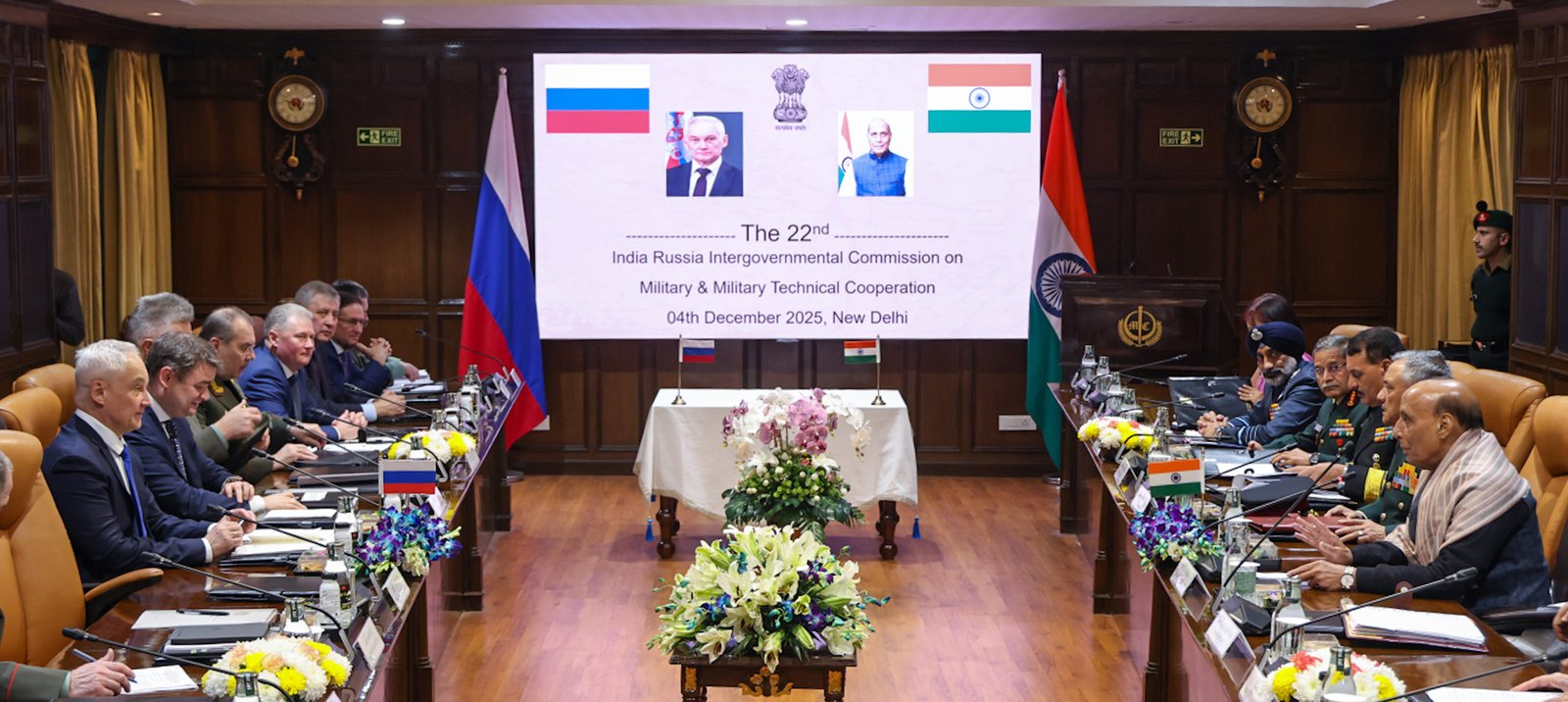
Défense cooperation traditionally constitutes the fundamental backbone of the Indo-Russian partnership. This relationship is now gradually but decisively ‘reorienting’ towards a model of co-production and co-development, systematically repositioning itself away from the long-established traditional buyer-seller dynamic. While the summit did not result in the expected inking of fresh, large-scale defence deals, discussions were held regarding India’s plan to procure another five squadrons of the S-400 system, alongside the ‘Pantsir’ and man-portable ‘Verba’ surface-to-air missile systems, and the ‘R-37/RVVBD’ air-to-air missile systems.
The summit strongly reaffirmed the centrality of existing platforms and committed both nations to work towards establishing joint ventures designed to aggressively expand the joint manufacturing of spare parts, components, and assemblies for Russian-origin equipment under the umbrella of India’s Make-in-India framework. This strategic move is intended to directly address the longstanding complaints regarding supply delays and the detrimental production dependence. This domestic localisation effort, in addition to enabling significant cost reduction, is designed to transform India into a crucial industrial partner capable of meeting the sophisticated needs of the Indian armed forces and subsequently being in a position to “export to mutually friendly third countries”.
The ratification of the Reciprocal Exchange of Logistics Support (RELOS) is a significant strategic outcome, granting India unprecedented operational access to Russian military facilities in the Arctic, the Pacific near Vladivostok, and Central Asia, which complements existing agreements without imposing alliance restrictions
The BRAHMOS supersonic cruise missile serves as an exemplary model of this desired co-development paradigm: a joint venture with a 50.5 percent Indian and 49.5 percent Russian equity split, which notably enables India to subsequently export the system to friendly nations, thereby generating strategic leverage while yielding substantial commercial returns. Discussions between the two defence ministers also included the joint production of advanced and lightweight variants of the BrahMos Supersonic missile, specifically designed to be mounted on light weight fighters.
Western Response: Calibrated Pressure Without Rupture
Days before President Putin’s arrival, a rare joint op-ed was published by the ambassadors from the United Kingdom, France, and Germany, which criticised Russia’s conduct in Ukraine and implicitly questioned India’s engagement with Moscow. The Indian Ministry of External Affairs responded with sharpness, characterizing the initiative as “unusual” and “not acceptable diplomatic practice,” thereby signalling a firm and unequivocal rejection of external counsel regarding India’s bilateral relations with third parties. This episode brought several underlying dynamics into sharp relief.
The coordinated European approach strongly suggested consultation among NATO’s core European members, yet the inherent European diplomatic leverage over India remains significantly constrained when compared to Washington’s power to deploy tariff instruments. Ultimately, the op-ed served primarily to satisfy European domestic political constituencies demanding visible criticism of Russia, rather than reflecting any serious expectation of materially altering India’s sovereign behaviour.
The approach adopted by the Trump administration proved even more counterproductive. By explicitly framing Indian oil purchases as financing “Putin’s war,” Trump administration officials utilised moralistic language that failed to resonate in India, where strategic communities readily recognised the double standards in the enforcement of these policies. As analysts acutely noted, European LNG imports from Russia actually increased in 2025 without attracting comparable U.S. punishment, an observation that exposed the selective application and undercut the sanctions architecture’s fundamental claims of universality.
The China Dimension and Multipolar Architecture
Managing the China factor undoubtedly represents perhaps the most intricate and challenging dimension of India-Russia relations. China’s overarching strategy has been to separate the US and Russia as much as possible, to progressively draw Russia ever closer into its orbit, and to prevent Sino-US relations from deteriorating too rapidly as the balance of power between the two continues to narrow.
Conversely, India, with its strong and enduring partnership with Russia, harbours a determined ambition to assert itself as a top-tier power, actively aspiring to exert influence across Asia, a region where China intends to carve out an exclusive Sinocentric sphere. The deepening strategic alignment between Russia and China, famously encapsulated by their “no-limits partnership,” stands in structural tension against the backdrop of India’s protracted military standoff with China along the Line of Actual Control.
Yet, both India and Russia appear to fully recognise and respect each other’s geopolitical compulsions and seem to view their enduring partnership as a crucial mechanism for managing, rather than simply ignoring, the dynamics posed by China. From Moscow’s vantage point, India provides essential leverage to guard against an overdependence on Beijing, offers diversification of its Asian partnerships, and provides access to valuable markets and capital that China cannot unilaterally furnish.
From New Delhi’s perspective, Russia remains absolutely essential for high-end defence procurement, Central Asian engagement, and for providing a vital counterbalance to a potential U.S. and/or China duopoly, which would severely constrain the influence of middle powers. India’s active and continuous engagement with multilateral platforms such as BRICS, the Shanghai Cooperation Organisation (SCO), and RIC (Russia-India-China) magnifies the logical force of this strategy. India strategically utilises these diverse forums to substantially expand its diplomatic options, actively promote alternative development financing models, and critically, to ensure that the emerging Eurasian architecture remains genuinely multipolar rather than allowing it to drift into a Sino-centric structure.
India’s Ukraine Positioning: Equidistance as Strategy and European Dilemma
Prime Minister Modi’s carefully calibrated messaging on Ukraine throughout the summit was designed to meticulously preserve India’s equidistant posture—a stance committed to peace without exerting pressure on either Russia or Ukraine. Modi firmly reiterated that “a solution cannot be found on the battlefield” and that India “stands for peace,” while simultaneously emphasizing that India is “not neutral” on the conflict. There is a prevailing sentiment that any long-term solution to the Ukraine conflict will necessarily require foundational commitments to rebuild a European security architecture that successfully restores a balance between the US/NATO bloc and Russia.
The India-Russia Economic Cooperation Programme 2030 targets a $100 billion bilateral trade goal by diversifying beyond the current unbalanced $68.7 billion trade, focusing on sectors like pharmaceuticals and rare earth elements, while defence cooperation shifts decisively towards joint manufacturing and co-development models like the BrahMos missile
As articulated in the latest US National Security Strategy, “Managing European relations with Russia will require significant US diplomatic engagement, both to reestablish conditions of strategic stability across the Eurasian landmass, and to mitigate the risk of conflict between Russia and European states,”. The document further notes the internal discord, adding that the “Trump Administration finds itself at odds with European officials who hold unrealistic expectations for the war perched in unstable minority governments, many of which trample on basic principles of democracy to suppress opposition,”.
Bottom Line
The Modi-Putin summit unequivocally demonstrated that India-Russia relations have successfully adapted and evolved from the outdated Cold War-era patron-client models into a reciprocal, interest-driven partnership that is firmly embedded within a fluid multipolar international architecture. For India, this partnership remains supremely crucial for its energy and defence security needs, for the necessary expansion of its operational reach into Eurasia and the Arctic and as a powerful demonstration that strategic autonomy remains a viable and effective policy under intense great-power pressure.
The visit served as a clear and unambiguous signal that neither punitive U. tariffs nor coordinated European diplomatic pressure will succeed in compelling India to abandon partnerships that it deems absolutely essential for the advancement of its national interest. As both nations navigate an international environment that is increasingly contested and complex, their recalibrated partnership offers a powerful and relevant model of how middle powers can effectively maintain strategic flexibility while simultaneously constructing durable institutional frameworks for deep cooperation.

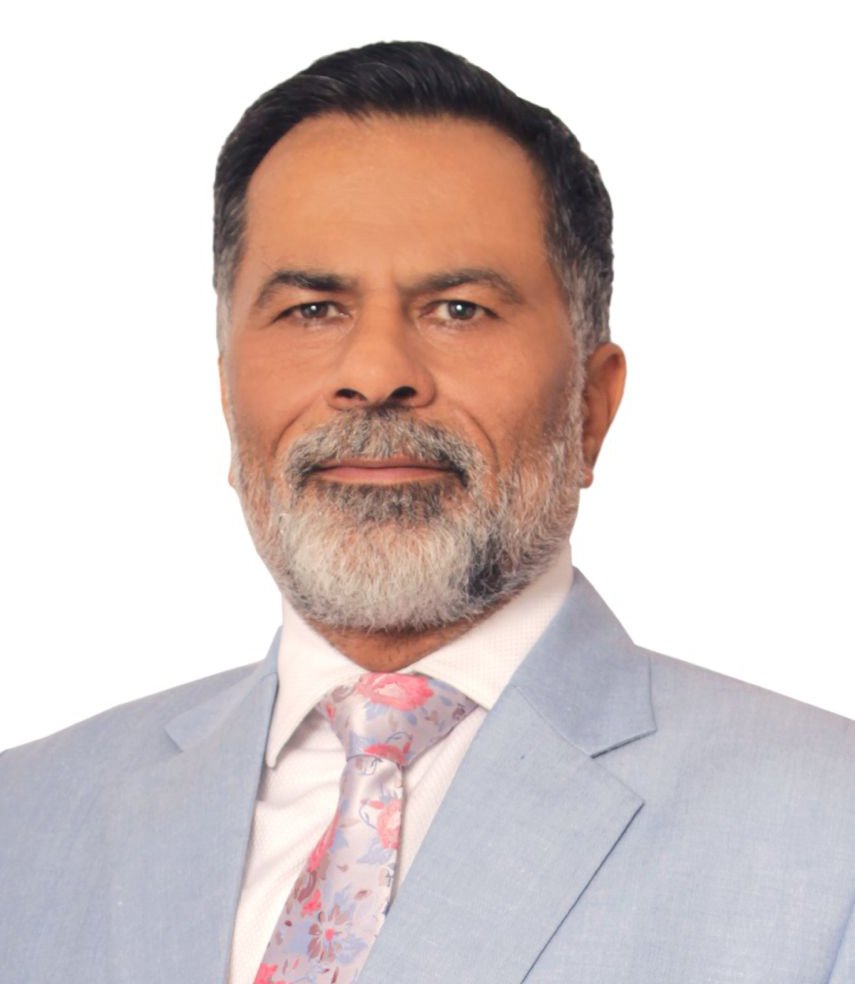
The writer, Kirti Chakra, AVSM, VSM, is an Indian Army veteran. He has also served as the Indian Military Attaché in Moscow. He is the Founding Director and CEO of ThorSec Global. An accomplished scholar, he specialises in Geopolitics with a focus on Russian Studies and is currently pursuing his PhD in the field, further enriching his depth of knowledge and global perspective. He can be reached at deepakmehra67@yahoo.co.uk and deepak.mehra@thorsecglobal.com
