

Tel Aviv. The dramatic growth in demand for power sources for drones and Unmanned Aerial Vehicle (UAV) has brought Israeli companies to accelerate their efforts to develop new power packs.
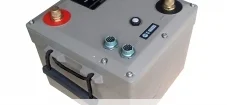
Israeli company Epsilor, a globally-recognised manufacturer of smart batteries and chargers, has won several contracts valued at over US$5 million to provide thousands of Li-Ion batteries and hundreds of battery chargers to several international unmanned aerial systems (UAS) programs.

According to the company, Epsilor’s batteries and chargers will incorporate several sophisticated capabilities that improve battery performance, reliability and controllability, making them fit to operate in demanding defense applications, as well as in civil airframes where safe operation is of the highest importance.
One of the batteries has been designed for a miniature loitering weapon system enabling its operators to conduct precision pinpoint strikes in complicated warfare zones. This battery is designed to offer extremely high power within a small tactical pack while maintaining high safety standards required both in munition systems and urban operations.
Another battery and charger will support a multi-rotor UAS, designed for long surveillance missions within a wide flight envelope. This large format battery has a sophisticated mechanical design and a smart battery management system supporting the special multi-rotor mission profile.
In another program that will be delivered within the upcoming months, Epsilor has developed an airborne battery system to be installed onboard a Medium-Altitude Long Endurance (MALE) unmanned aircraft. This battery is fully certified by civil aviation authorities to operate in general airspace. This battery system supports operation in extremely cold temperatures at high altitudes of over 30,000 ft.

“We are witnessing a tremendous maturing process in the unmanned aerial systems industry,” said Alex Stepansky, General Manager of Epsilor.
“Today, all of our batteries for UAS are undergoing rigorous military standards tests and aviation safety tests. Until recent years, most small drones were equipped with batteries and chargers that were originally designed for RC models that failed to meet the performance and reliability requirements for today’s military drone applications. Today, when drones fly in complicated military missions and over populated cities, higher standards are becoming a must,” Stepansky added.

-The writer is an Israel-based freelance journalist

-The writer is an Israel-based freelance journalist. The views expressed are of the writer and do not necessarily reflect the views of Raksha Anirveda
