

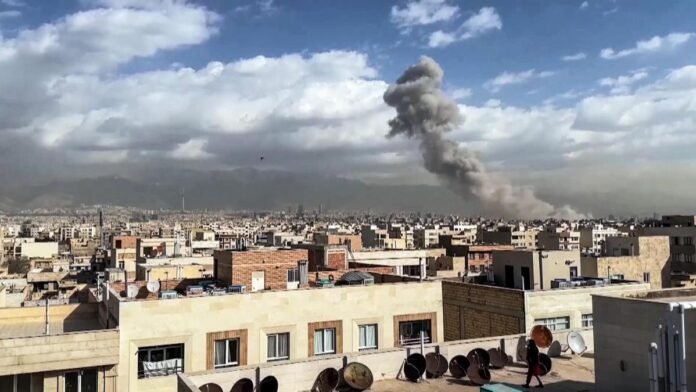
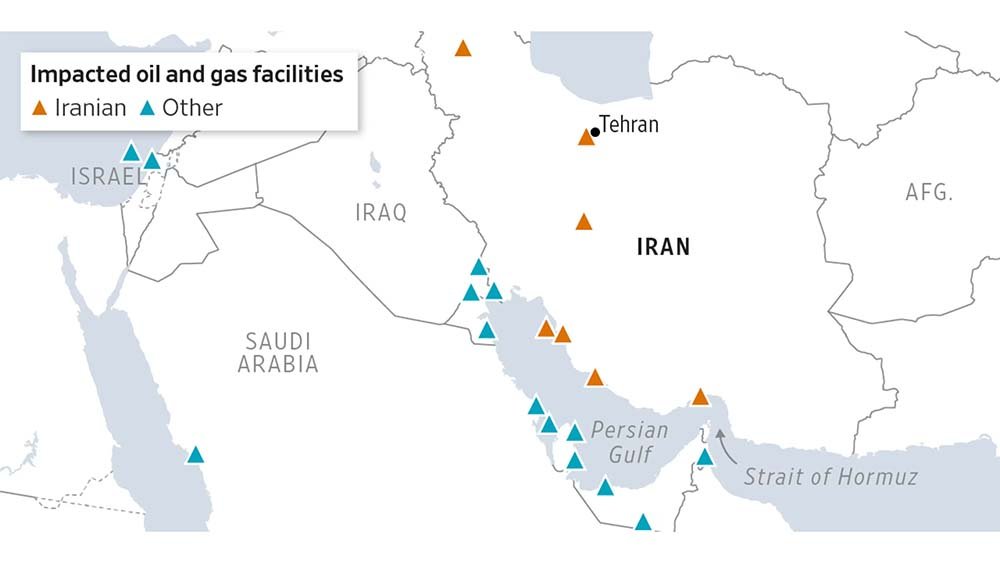
The US and Israel’s February 28 attack on Iran and the consequent retaliation by Iran spelt doom for the region, and its repercussions have been felt not only in the adjoining areas but at the global level. Apart from the security and safety concerns, the conflict has posed non-traditional security threats to the regional countries. With the GCC countries coming under direct attack, the grim consequences are reflected in energy security, and are likely to affect food, human and environmental security.
Energy Security
Energy security has been severely affected by supply chain disruptions caused by the closure of the Strait of Hormuz. The impact is being felt more in energy-import-dependent countries. The European Union is considering reviving its 2022 energy crisis measures, and the UK is reconsidering plans to raise fuel duty by August 2026. Asian countries, on the other hand, are increasingly using polluting fuels to meet their requirements. Apart from that, countries are taking austerity measures to manage with the reduced supplies; for instance, Tasmania and Victoria in Australia have made public transport free, discouraging the use of private vehicles, and Egypt has urged restaurants, shops and cafes to close by 9 pm and street lights to be dimmed to save energy. Countries such as the Philippines, Pakistan, Sri Lanka, Egypt and Myanmar are promoting work-from-home. Moreover, the Philippines has declared a national emergency, Myanmar has introduced rationing of public vehicles, and Pakistan has put a guest capping of 200 in wedding parties. The snack and tourism industry in Japan has been negatively impacted, and Bangladesh is seeking external financing of $2.5 billion for energy imports. Also, Vietnam has scrapped the value-added tax on fuel.

Disruptions to supply chains due to the closure of the Strait of Hormuz have severely affected energy security. The impact is being felt more in energy-import-dependent countries. The EU is considering reviving its 2022 energy crisis measures, and the UK is planning to raise fuel duty. Many countries are taking austerity measures to manage with reduced supplies
Food Security
The conflict is also impacting food security, exacerbating existing scarcity in the region due to disruptions in the export of fertilisers; 20% of the world’s fertiliser supply originates in the Persian Gulf. The conflict will negatively impact fertiliser supply as 46% of global urea supply comes from the Gulf and half of the globally traded urea passes through the Strait of Hormuz. The US and EU will feel the pinch with farmers planting fewer crops during the February to May sowing season, leading to a price rise and a shortfall in the latter part of this year. Countries that depend on imports for food security, especially in the Middle East and Sub-Saharan Africa, will be significantly affected. Within the Gulf, 60 million people will face the shocks induced by food price inflation as they import 77% rice, 89% corn, 95% soyabean, and 91% vegetable oil. Taking the inflation into account, global food prices will exceed those of the 1970s energy crisis. According to the World Food Programme (WFP), an additional 45 million people would be pushed to face acute hunger. Iran already faced food price inflation of 40%. The region will pay the price as it has high wheat consumption, and speculations are being made for the weaponisation of aid for food in the future.
Environment security
The conflict is also impacting environmental security in one of the most water-stressed regions. The destruction of civil, military and energy infrastructure leads to air and water pollution with aerosol emissions and toxins released into water bodies. Release of toxic waste and heavy metals into water due to attacks on marine infrastructure is another reason for concern. Sea mines in the Hormuz can lead to marine pollution, harming coral reefs, seagrass and sensitive marine flora and fauna. Also, the strategic move of targeting desalination plants, such as those in Kuwait and the threat by Iran to attack Saudi and Emirati desalination plants, is inconsiderate and inhumane, creating scarcity of potable water in a water-scarce region.
Countries that depend on imports for food security, especially in the Middle East and Sub-Saharan Africa, will be badly affected. In the Gulf, 60 million people will face the shocks caused by food price inflation as they import 77% rice, 89% corn, 95% soyabean, and 91% vegetable oil. Taking the inflation into account, global food prices will exceed those of the 1970s energy crisis
The demolition of concrete structures leads to the emission of harmful gases such as nitrogen dioxide, sulphur dioxide, hydrocarbon particles in the air, and the incomplete combustion leads to the release of carbon monoxide in the air. Within a few hours of the attack on Iranian facilities, there was black acidic rain in Tehran, coating the buildings and roads with a sticky oily substance. For Tehran, the consequences can be aggravated as it has been facing serious water scarcity consequent of the droughts since the last five years and the existing air pollution due to the use of low-quality heating oil called ‘Mazut’. Considering the implications, Iran called Israeli targeting of its oil depots and fuel infrastructure as ecocide – a wanton act of environmental destruction.
Human Security
Furthermore, the Iran conflict is impacting human security negatively in a massive way. Close to 3,000 people have been killed, with more than 26,000 injured. Apart from the loss of human lives, the conflict is impacting the lives of those alive, and the repercussions will be felt more in the near future. The region’s economy could lose more than $194 billion in a month, and its gross GDP will decrease by 3.7% to 6%, according to UNDP. Inflation and a surge in food prices will erode purchasing power, and according to the WFP, an additional 45 million people could be pushed into acute hunger if the conflict persists. Poor people will be hit hardest, as 50-70% of their budget is spent on food, and they do not have the buffer for the expected 10% rise in food prices. Haiti, Afghanistan, the Central African Republic and Somalia are extremely vulnerable, and Sudan, Yemen and Lebanon will see a significant rise in poverty with the highest baseline vulnerability.

Apart from the economic issues, the destruction of medical infrastructure, delay in pharmaceutical delivery due to disruption of supply chains, shortage of inventory and staff will disrupt the health services. Targeting more than 20 health facilities in Iran reflects the poor concern for humanitarian issues. Poor sanitation facilities with irregular upkeep, air and water pollution and the conflict-induced mental trauma will accentuate the need for health services, but destroyed health infrastructure will not be able to sustain the pressure.

The destruction of civil, military and energy infrastructure leads to air and water pollution with aerosol emissions and toxins released into water bodies. The release of toxic waste into water after attacks on marine infrastructure is a reason for concern. Sea mines in the Hormuz can lead to marine pollution, harming coral reefs, seagrass and sensitive marine flora and fauna
Along with that, the targeting of educational facilities is a major concern for human security. More than 600 educational facilities have been attacked, with around 250 teachers and students being killed in the Iran conflict. It is not only inhumane but a blatant violation of international humanitarian law. However, both sides seem immune to these concerns as the primary school in Minab was hit on February 28, leading to the death of 170 children, and Iran has warned to attack the Western universities in the Gulf countries.
Conclusion
Although considered ‘soft’ for their non-military origin, non-traditional threats have a multiplier effect and can be equally or more lethal than traditional security threats. With the advancement in science and technology and the emergence of sophisticated warfare, non-traditional security is being targeted by weak as well as strong states, and the Iran crisis is not an exception. The concern is that these non-traditional threats will incite the Iranians grieving the death of the Supreme Leader and might push some of them to form or join terror outfits. If it happens, this will be a case of blurring lines between non-traditional and traditional threats, or non-traditional threats leading to traditional threats.

Dr Lakshmi Priya is Associate Professor at Jawaharlal Nehru University, New Delhi. She is an expert in Middle East Studies with experience in policy-oriented think tanks in India. She has published several articles and contributes write-ups on the geopolitical and socioeconomic issues of the region frequently. Earlier she has worked as Research Fellow at the Indian Council of World Affairs, and was a research scholar at the Manohar Parrikar Institute for Defence Studies and Analyses.
