
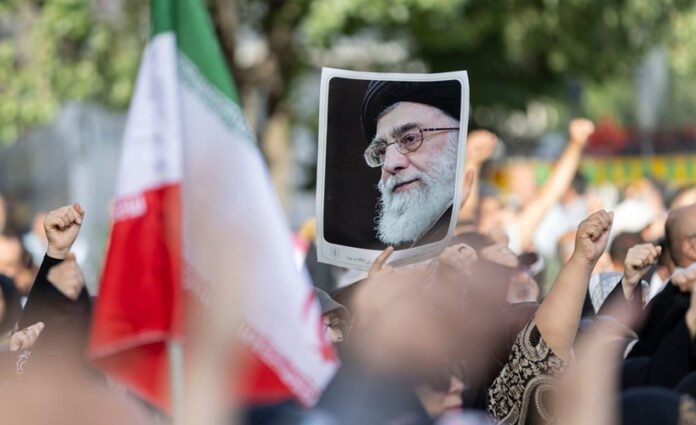
The pressures Iran faces today did not appear overnight. They represent the accumulated weight of long-standing structural weaknesses that have persisted alongside constant external pressures. The roots of the present situation lie in three closely connected trends. The first is an economic system that has grown increasingly shielded from public scrutiny and responsibility. The second is a style of governance that hesitates to acknowledge and correct its own failures. The third is a strategic approach that has focused heavily on projecting power beyond Iran’s borders while allowing domestic capability and public confidence to erode. Together, these factors have produced a deeper crisis: a growing gap between the state’s belief in its own authority and the public’s belief in its leadership.
Iran is therefore not dealing with a single crisis. It is confronting a slow, comprehensive erosion of trust in the state’s ability to govern effectively. What makes this moment distinctive is not protest alone; protests have appeared before and been contained. It is the gradual hollowing of legitimacy, visible not simply in political slogans but in daily life, economic choices, and the psychology of ordinary citizens.

Economic Authority without Economic Confidence
Iran’s economic strain is now embedded in lived experience. Inflation, currency volatility, and declining purchasing power are not abstract measures. They shape household decisions, personal futures, and perceptions of national direction. When a national currency loses credibility to such an extent that citizens instinctively seek refuge in dollars, gold, or property, the problem is no longer financial alone; it is existential. A currency represents trust in the state. When that trust weakens, it exposes something deeper; the belief that the system cannot protect personal security or stability.
The roots of this lie partly in sanctions, which have undeniably restricted access to financial networks, constrained oil revenues, and complicated trade. But sanctions alone do not explain the durability of hardship. The more fundamental issue is how Iran chose to adapt. Rather than treat pressure as a catalyst for reform, diversifying the economy, restructuring institutions, and imposing transparency, the state leaned into parallel economic arrangements: discounted oil trade, opaque financial channels, and dependence on a narrow group of buyers. These mechanisms provide revenue, but at the price of leverage. They sustain the state while narrowing its autonomy.
Iran is confronting a slow, comprehensive erosion of trust in the state’s ability to govern effectively. What makes this moment distinctive is not protest alone; protests have appeared before and been contained. It is the gradual hollowing of legitimacy, visible not simply in political slogans but in daily life, economic choices, and the psychology of ordinary citizens
At home, economic power remains heavily concentrated in entities anchored to political authority rather than market competency. Conglomerates and large clerical foundations that are Revolutionary Guard-associated control major sectors. Efficiency and innovation are not supported by this architecture. It entrenches privilege. Citizens experience this not as theory but as inequality, limited opportunity, and a sense that sacrifice is demanded from society while responsibility rarely flows downward.
Environmental Stress as a Governance Mirror
Iran’s environmental strain, especially its water crisis, is not simply the result of nature. Decades of over-exploitation of groundwater, political driven infrastructure decisions, unwillingness to undertake agricultural reform, and stubbornness to face hard reality have now come together to produce deep tensions. Making rivers dry, emptying aquifers, weakening the hydropower, and frequent blackouts are not only indicators of an environmental issue, they direct deficiencies in governance.

Ordinary citizens experience this not as an abstract policy issue, but as a daily reality: electricity that id erratic, water that is never fully assured, and public services that cannot be delivered with consistency. When basic stability weakens, state narratives lose plausibility. It becomes much harder for citizens to accept confident political messaging while daily experience communicates fragility.
Strength without Persuasion
Iran’s leadership still retains significant power. Its security apparatus remains disciplined. Political elites are not fractured in a way that suggests imminent collapse. From the standpoint of coercive capability, the system is durable. But durability is not synonymous with legitimacy.

Conglomerates and large clerical foundations that are Revolutionary Guard-associated control major sectors. Efficiency and innovation are not supported by this architecture. It entrenches privilege. Citizens experience this not as theory but as inequality, limited opportunity, and a sense that sacrifice is demanded from society while responsibility rarely flows downward
The response trend to unrest has been very similar to what was done in the past, which is recognition of unrest without extensive responsibility, minimal alleviation without institutional change, and constant dependence on surveillance and control as a way of preserving order. This stabilises the surface and leaves the core not settled. Public obedience persists, but belief weakens. The state continues to function, but confidence in its direction steadily drains.
This is the essence of Iran’s present condition: a state strong enough to enforce stability but increasingly unable to renew trust.
Power Projection vs. Domestic Competence
The sense of the geopolitical relevance has been enhanced by the Iranian regional policy, which is based on the strategic depth, proxy network, and ability to deter. But this public exhibition of power is relaxing ill against increasing domestic feebleness. One that projects a sense of confidence in other countries and whose people are subjected to an inflation, poor service delivery and shrinking economic opportunities risks breeding the attitude that the state is becoming more out of touch with the realities of life back home. In reality, it is not the sudden collapse that is the danger. It is gradual detachment.
Iran is not approaching an immediate revolutionary moment. Its risk is quieter and more persistent: institutional fatigue, declining administrative competence, and social withdrawal. States do not always fail explosively. Many drift into prolonged stagnation; structures remain, order exists, but the meaning behind them fades
Where this Trajectory Leads
Iran is not approaching an immediate revolutionary moment. Its risk is quieter and more persistent: institutional fatigue, declining administrative competence, and social withdrawal. States do not always fail explosively. Many drift into prolonged stagnation; structures remain, order exists, but the meaning behind them fades.
This is visible in younger Iranians in particular, many among the most educated generation the country has produced. Their future increasingly appears framed not by participation but by endurance or exit. That sentiment is telling. It does not signal imminent revolt. It signals diminishing emotional investment in the state as a project.
And yet, Iranian society itself remains resilient. The problem is not social weakness. It is political rigidity and pragmatic reforms over ideological power play.
The question confronting Iran is not revolution versus continuity. It is competence versus stagnation. Authority that refuses introspection may endure for a time, but endurance without renewal slowly empties power of its meaning. The risk before Iran is not that it will suddenly fall apart. It is that it will keep standing while the trust that gives a state its purpose slowly disappears
A Country that Endures, A State that Risks Shrinking in Meaning
Iran today stands in a narrow space between endurance and deterioration. Power remains. Institutions function. But credibility is thinner than authority, and legitimacy is more fragile than control. If this pattern continues, Iran’s future will likely not be defined by spectacular breakdown but by measured decline: a country that still operates, but increasingly without conviction in its governance.
That is the real danger Iran faces; not chaos, but resignation. A society that continues to live within the state while quietly detaching its belief in it. A political system that survives, but governs over progressively hollow ground.
In the end, the question confronting Iran is not revolution versus continuity. It is competence versus stagnation. Authority that refuses introspection may endure for a time, but endurance without renewal slowly empties power of its meaning. The risk before Iran is not that it will suddenly fall apart. It is that it will keep standing while the trust that gives a state its purpose slowly disappears.

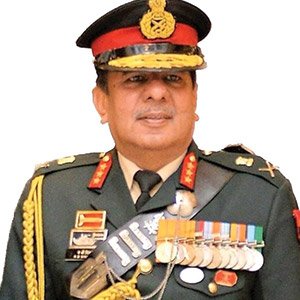
The author, a PVSM, AVSM, VSM has had an illustrious career spanning nearly four decades. A distinguished Armoured Corps officer, he has served in various prestigious staff and command appointments including Commander Independent Armoured Brigade, ADG PP, GOC Armoured Division and GOC Strike 1. The officer retired as DG Mechanised Forces in December 2017 during which he was the architect to initiate process for reintroduction of Light Tank and Chairman on the study on C5ISR for Indian Army. Subsequently he was Consultant MoD/OFB from 2018 to 2020. He is also a reputed defence analyst, a motivational speaker and prolific writer on matters of military, defence technology and national security. The views expressed are personal and do not necessarily carry the views of Raksha Anirveda
