


In recent times, Artificial Intelligence (AI) has emerged as an important component of India’s science and foreign policy initiatives. There is a growing and thoughtful emphasis on integrating AI into India’s bilateral arrangements with key international partners. Some important examples include India–Qatar AI Partnership (May 2025), decision to expand focus on AI during India and South Korea strategic ties meeting (August 2025), agreement reached towards enhancing cooperation in AI during the 11th India–Poland Foreign Office Consultations (December 2025) and some collaborations with agencies like Microsoft and few others.
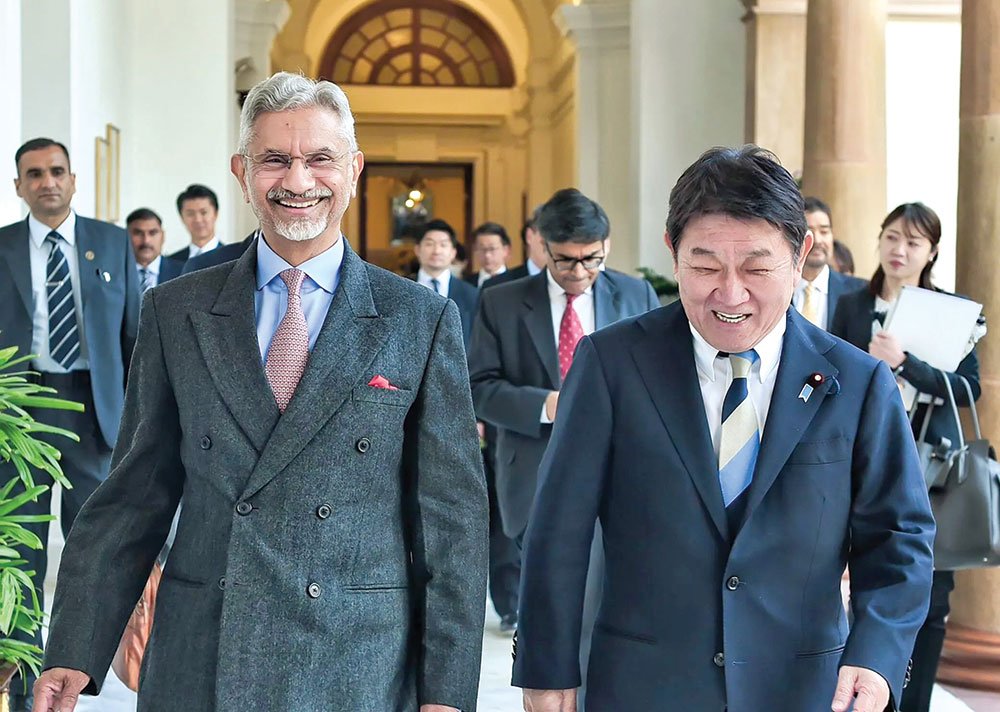
This momentum was reinforced during the 18th Japan–India Foreign Ministers’ Strategic Dialogue, held in New Delhi on January 16, 2026. During the dialogue, both the foreign ministers reaffirmed AI as a core pillar of the bilateral strategic partnership and agreed to advance cooperation through institutionalised mechanisms and concrete outcomes. India and Japan have significantly deepened their strategic partnership in AI, anchored in shared priorities of innovation, trust, and human-centric technology governance.

All these developments should be looked at the backdrop of the fourth AI Impact Summit which is being hosted at New Delhi from February 19-20, 2026. Japan has emphasised their commitment to contributing to the success of this February 2026 Summit. India’s AI policies have evolved against the framework of an expanding network of bilateral collaborations with a select group of partner states, reflecting a strategic effort to align domestic capability-building with international cooperation. Through such structured partnerships, India has sought to advance joint research, talent mobility, data governance, and the development of trustworthy and inclusive AI systems.

The fourth AI Impact Summit is of critical importance for India, as it provides an opportunity to position itself as a leader from the Global South in the global AI governance landscape. The summit can enable India to play a proactive role in shaping international AI norms, policies, and ethical frameworks. It is essential to ensure that AI technologies are deployed for inclusive development in key sectors such as health, education, climate action, and justice delivery. India must move beyond the conventional digital divide and actively prevent the emergence of an “AI divide” between developed nations and the Global South. Additionally, the summit should be leveraged to build AI-literate human capital, promote responsible and human-centric innovation, and strengthen institutional capacities. By showcasing its AI technological capabilities, India can attract global investments, deepen international cooperation, and reinforce its leadership in equitable and sustainable AI development.
The summit can enable India to play a proactive role in shaping international AI norms, policies, and ethical frameworks. It is essential to ensure that AI technologies are deployed for inclusive development in key sectors such as health, education, climate action, and justice delivery
Over the years, AI has shifted from a purely technical topic to one with implications for governance, national security and business. This had led governments, international agencies, industry groups and civil society to initiate debates, consultations, expert meetings and regulatory proposals. Global AI Safety Summits have been held since 2023. The first summit was held at Bletchley Park, United Kingdom (2023), followed by Seoul, South Korea (2024), and Paris, France (2025). India was the co-host for the Paris summit.
Early discussions on AI governance were catalysed by an “ethics boom” between 2016 and 2018, marking the beginning of sustained global engagement with AI policy issues that has now spanned nearly a decade. This surge was not coincidental, but was triggered by a series of high-profile global incidents that exposed the societal risks of algorithmic systems. These included documented cases of racial profiling and algorithmic bias, the first human fatality involving a self-driving vehicle, and the Cambridge Analytica scandal, which revealed the large-scale misuse of personal data without consent for algorithm-driven political micro-targeting. Collectively, these incidents underscored the urgent need for regulatory oversight, ethical safeguards, and accountability mechanisms in the development and deployment of AI technologies.

During May 2019, the United Nations Educational, Scientific and Cultural Organisation (UNESCO) released the Beijing Consensus on Artificial Intelligence and Education, which called for the use of AI to augment human capabilities while safeguarding human rights and fundamental freedoms. In the same year, the Organisation for Economic Co-operation and Development (OECD) became the first intergovernmental body to secure an AI-specific multilateral agreement.
Bletchley Park, United Kingdom (UK), hosted the first global summit on Artificial Intelligence (AI) safety, held on November 12, 2023 with participation form many countries and private organisations associated with AI research, policy making and business. The second summit was held in South Korea on May 21-22, 2024. During the summit, 16 leading tech companies made new voluntary commitments to promote the responsible development of advanced AI systems. From February 10-11, 2025, the third AI Action Summit was held in Paris. French President Emmanuel Macron and Indian Prime Minister Narendra Modi co-chaired this summit. During this summit Prime Minister Modi had argued that AI is rapidly reshaping humanity’s future, transforming political, economic, security, and social systems in ways unmatched by earlier technologies and hence there is a need for a concerted global cooperation to develop trusted governance frameworks that mitigate risks while promoting innovation.

The forthcoming New Delhi Global AI Impact Summit grounds its agenda within a framework that invokes Sutras and Chakras, making it culturally rooted and globally resonant. “Sutra” means “thread” or “aphorism,” referring to concise, memorable verses conveying deep spiritual knowledge. The word “chakra” (wheel) is about symbolising order and celestial bodies, with some references to energy points. The use of these specific terms is not merely rhetorical; it signals an intent to move the global AI debate from technological abstraction toward a language of coherence, alignment, and transformation.
Drawing inspiration from the seven energy centres of the human body in ancient Indian philosophical traditions, the Chakras symbolise different dimensions of life that must be harmonised to achieve holistic well-being. In the context of AI governance, these Chakras represent the critical areas required to shape AI as a global public good and to deliver tangible, outcome-oriented cooperation
India is focusing on the three Sutras namely People, Planet, and Progress; the idea is to frame AI as a force for inclusive human development, responsible innovation, and sustainable growth. Together, they emphasise people centred and trustworthy AI, alignment of technological progress with environmental stewardship, and the use of AI to advance impartial development through fair access to data and AI capabilities across sectors.
As articulated in India’s vision, the three Sutras are to be operationalised through seven interconnected domains of focused multilateral collaboration, referred to as Chakras. Drawing inspiration from the seven energy centres of the human body in ancient Indian philosophical traditions, the Chakras symbolise different dimensions of life that must be harmonised to achieve holistic well-being. In the context of AI governance, these Chakras represent the critical areas required to shape AI as a global public good and to deliver tangible, outcome-oriented cooperation. Each of the seven Chakras is supported by a dedicated working group tasked with examining key AI themes, generating policy-relevant insights, and, through multi-stakeholder engagement, identifying challenges, best practices, and actionable recommendations.
Seven Chakras involve Human Capital; Inclusion for Social Empowerment; Safe and Trusted AI; Resilience, Innovation and Efficiency; Science; Democratising AI Resources; and AI for Economic Growth and Social Good.
Since 2023, the AI summitry process has evolved from an initial emphasis on frontier-model safety at Bletchley, to institutionalising principles of safety, inclusion, and innovation in Seoul, and addressing socio-economic impacts in Paris. The upcoming AI Impact Summit in New Delhi is expected to advance the discourse from abstract principles to practical implementation, highlighting equitable development, “inclusion by design,” and India’s role in steering a more balanced and globally inclusive AI governance framework.
What is crucial for India is to leverage the summit to persuade major AI stakeholders to converge around a mutually acceptable policy framework, one that promotes the ethical and responsible growth of AI, reflects the priorities of the Global South, and simultaneously supports innovation and industrial advancement
Overall, expectations from the New Delhi AI Summit must remain realistic. Given the inherent complexity of AI technologies and the uncertainty surrounding the trajectory of technological innovation, rapid or binding outcomes are unlikely. In the domain of norm-building, progress is expected to be incremental, largely voluntary, and non-binding for both states and private actors. What is crucial for India is to leverage the summit to persuade major AI stakeholders to converge around a mutually acceptable policy framework, one that promotes the ethical and responsible growth of AI, reflects the priorities of the Global South, and simultaneously supports innovation and industrial advancement.

– The writer is a Deputy Director General with MP-IDSA, New Delhi. The views expressed are of the writer and do not necessarily reflect the views of Raksha Anirveda
