


In a world where maritime boundaries are increasingly blurred and the tempo of conflict is accelerating, the Indian Navy stands at a pivotal moment. From safeguarding vital sea lanes to countering new-age asymmetric threats, the Navy’s operational environment has become more complex, contested, and unpredictable than at any point in India’s history.
The rise of grey-zone warfare, the proliferation of unmanned systems, undersea sabotage attempts, cyber-physical disruptions, and sophisticated surveillance by state and non-state actors mean that traditional surveillance and command models are no longer adequate. The battle for maritime dominance will increasingly hinge on one decisive capability — the speed and accuracy of intelligence-led decision-making. This is where artificial intelligence, particularly the indigenous, designed for India’s operational realities, can radically elevate the Navy’s special operations, situational awareness, and overall decision superiority.

Enter Tardid Technologies, a Bengaluru-based deep-tech firm that is quietly setting new benchmarks in defence Artificial Intelligence (AI). Leveraging physics-driven digital twins, autonomous decision-making engines, and multi-domain sensor fusion, Tardid is demonstrating how the Indian Navy can integrate AI seamlessly into its existing infrastructure — without the need for expensive modernisation cycles or platform overhauls.
At a time when India is committed to building self-reliant defence capabilities, this indigenous innovation presents not just a technological opportunity but a strategic one.
A New Threat Landscape Demands a New Operational Philosophy
The oceans around us are changing. The Indian Ocean Region (IOR), home to critical maritime trade routes, is rapidly becoming a stage for geopolitical contestation. China’s expanding naval footprint, the emergence of maritime militias, suspicious fishing fleets, drone-based reconnaissance missions, narco-sub trafficking, piracy, and underwater sabotage attempts all signal a future where threats will be distributed, ambiguous, and fast-moving. Traditional surveillance systems were never designed to manage this scale and complexity. Most naval platforms generate enormous streams of data: radar tracks, sonar signatures, EO/IR imagery, AIS signals, ESM cues, UAV video, satellite feeds, and more. But this data remains fragmented, siloed across ships, coastal stations, and command centres. Human operators cannot process such a volume without fatigue or delay. AI changes the paradigm entirely.
AI aids by interpreting, correlating, predicting, and recommending actions, allowing humans to focus on judgement and mission execution. The Indian Navy doesn’t need futuristic hardware. It needs the intelligence layer that turns existing systems into a coherent, predictive, and agile operational network.

The rise of grey-zone warfare, the proliferation of unmanned systems, undersea sabotage attempts, and cyber-physical disruptions mean that traditional surveillance and command models are no longer adequate. The battle for maritime dominance will hinge on one decisive capability: the speed and accuracy of intelligence-led decision-making
The Power of Physics-Driven Digital Twins: A Unique Indian Advantage
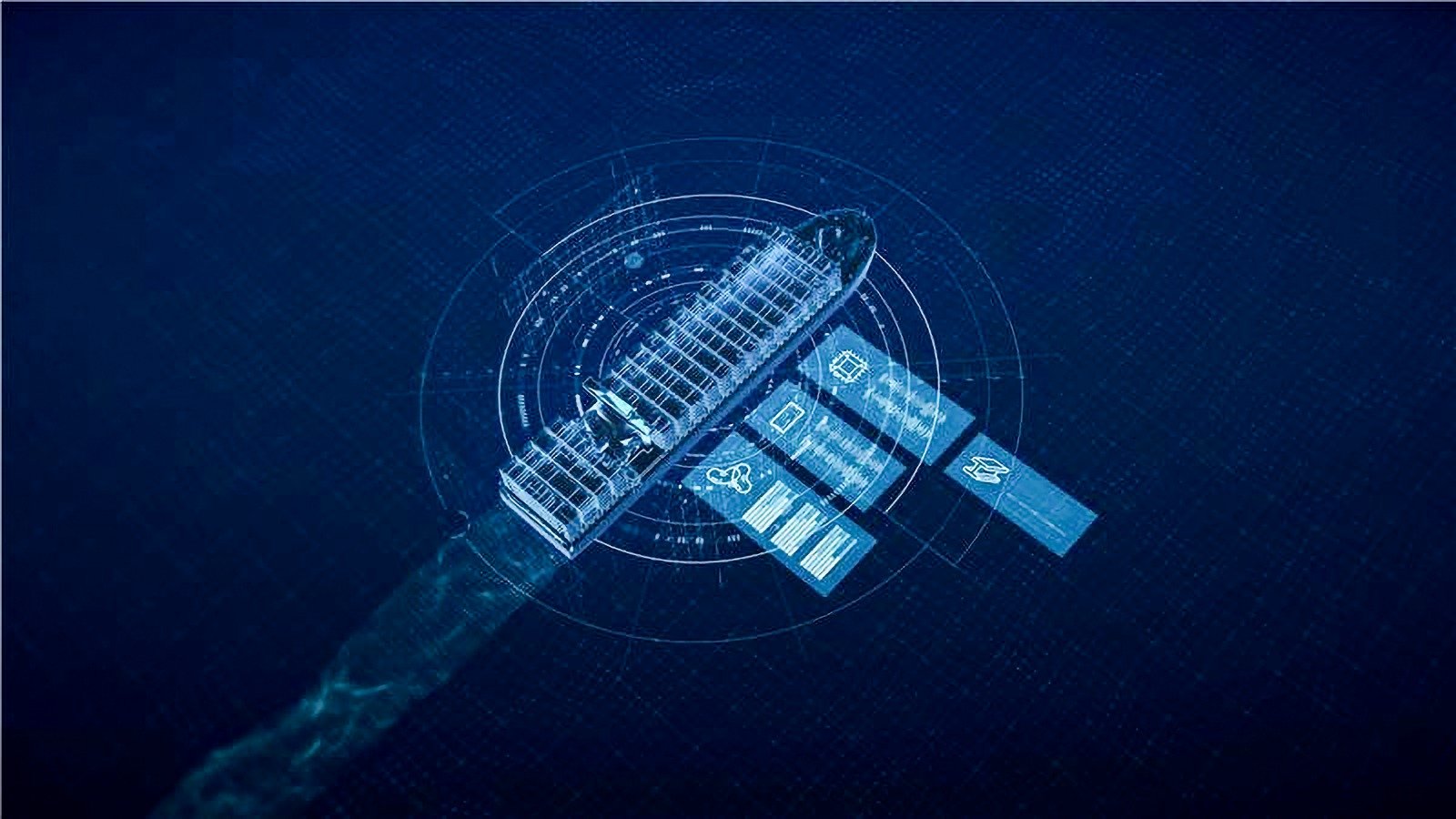
What makes Tardid’s approach distinctive is its use of digital-twin AI instead of conventional data-trained models. Most global AI products rely on massive datasets, something a naval environment rarely offers, especially in sensitive or denied scenarios. Digital twins, however, model:
- The ocean environment
- Vessel hydrodynamics
- Sensor behaviours
- Acoustic propagation
- Environmental disturbances
- Material fatigue
- Fluid dynamics around hulls
This allows the AI to forecast outcomes even with limited data, a critical requirement for the Indian Navy, where real-world datasets may be sparse, classified, or impossible to collect. This also means:

- The Navy’s legacy radars and sonars can get ‘AI superpowers’
- Predictive awareness becomes possible even in low-visibility conditions • Special operations teams receive real-time guidance even in GPS-denied zones • Ships and combat teams gain a unified, real-time operating picture
AI that ‘understands’ physics behaves predictably under stress, a trait conventional deep-learning models struggle with.
Special Operations: Operationalising Intelligence at the Edge
Special operations forces (SOF) operate in the most demanding environments, including nighttime littoral infiltration, clandestine surveillance, counter-sabotage missions, and rapid interdiction tasks. These teams need accuracy, stealth, and real-time intelligence that can adapt to fluid situations. AI can enhance SOF capabilities across the mission lifecycle:
- Mission Planning through Advanced Simulation
Digital-twin simulations allow planners to rehearse operations:
- Predict enemy patrol behaviour
- Evaluate infiltration routes
- Understand detection likelihood
- Model underwater thermal layers
- Assess environmental risk factors
- Calculate noise signatures specific to the mission craft
This gives Special Forces a “preview” of mission dynamics—reducing risk and increasing mission certainty.
- Stealth Navigation with AI-Based Threat Avoidance
Tardid’s multi-domain fusion engine analyses:
- EO/IR imagery
- Radar reflections
- Sonar echoes
- Diver/swimmer signatures
- UAV feeds
- Underwater acoustic anomalies
This allows SOF craft (RHIBs, SDVs, kayaks, swimmer-delivery systems) to navigate along low-exposure paths with real-time alerts.
AI aids by interpreting, correlating, predicting, and suggesting actions, allowing humans to focus on judgement and mission execution. The Indian Navy doesn’t need futuristic hardware. It requires the intelligence layer that turns existing systems into a coherent, predictive, and agile operational network
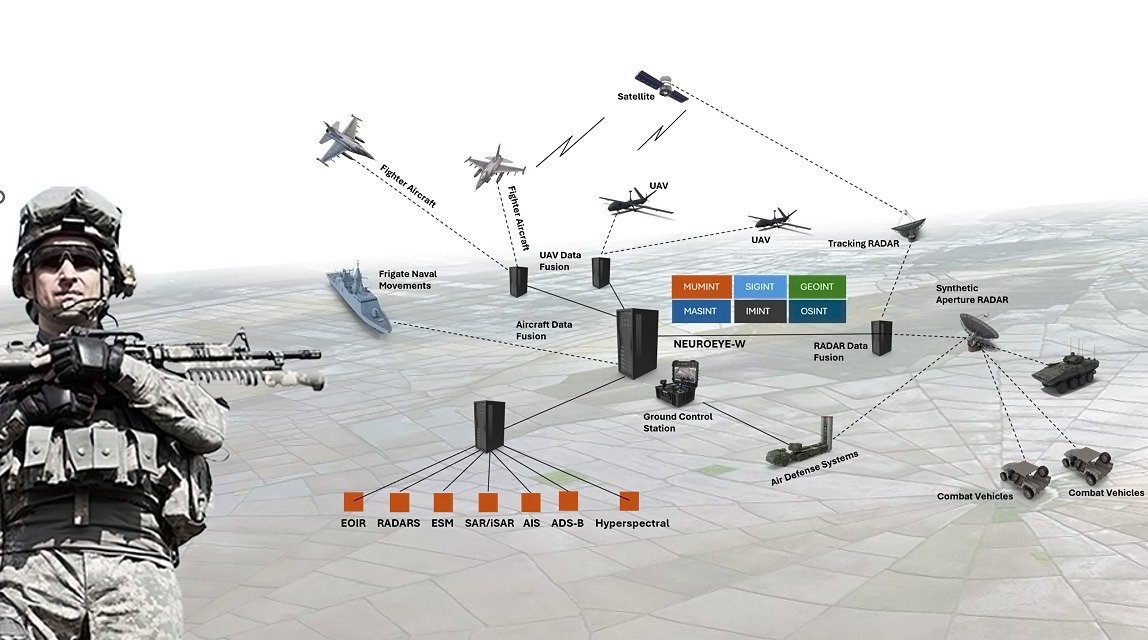
- Real-Time Intelligence from Existing Naval Infrastructure
Tardid’s systems are compatible with the Navy’s current architecture across: • Patrol vessels
- Torpedo launch craft
- Coastal radar stations
- UAVs/UAS
- Underwater intrusion detection grids
- Surveillance UAVs
- EO/IR turrets on warships
This ensures special operations teams always receive multi-domain intelligence without needing new hardware ecosystems.
- Decision Intelligence in Dynamic Combat
When conducting rapid interdiction or counter-infiltration missions, delays can be fatal. AI reduces reaction time by:
- Prioritising real threats
- Eliminating sensor noise
- Providing suggested manoeuvres
- Predicting adversary movement
- Updating the mission picture every second
AI becomes a cognitive partner, reducing workload and enhancing decision speed— crucial for time-sensitive SOF actions.
Underwater Superiority: AI where it Matters Most
Modern conflicts are shifting underwater. Subsurface sabotage, UUV intrusions, acoustic stealth missions, and covert diver operations require high-speed detection and interpretation.
Tardid’s AI capabilities include:
LOFAR-Based Automated Acoustic Intelligence
- Classifies diver vs. marine-life signatures
- Detects micro-UUVs
- Identifies anomalous acoustic behaviour
- Tracks underwater drones or saboteur divers
Environmental-Aware Intelligence
Digital twins can anticipate:
- How sound propagates through thermal layers
- Where acoustic shadows may hide intruders
- The optimal placement of underwater sensors
- Sorption and noise disturbances caused by enemy movement
Underwater operations are where decision intelligence is most urgently needed—and where Tardid provides a decisive edge.
Decision Intelligence: The Navy’s Greatest Opportunity
Sensor fusion alone is not enough. What the Navy needs is decision intelligence — systems that understand context, forecast risk, and assist command teams with the cognitive burden of high-stakes environments.
- Unified Operational Picture
Tardid’s system combines:
- Radar tracks
- Sonar patterns
- UAV visuals
- AIS/ADS-B data
- Thermal feeds
- HUMINT/OSINT insights
- Electronic intercepts into one continuously updated picture. This removes the guesswork and gives commanders a single version of the truth.
Special operations forces (SOF) operate in the most demanding environments, including nighttime littoral infiltration, clandestine surveillance, counter-sabotage missions, and handle rapid interdiction tasks. These teams need accuracy, stealth, and real-time intelligence that can adapt to fluid situations. AI can enhance SOF capabilities across the mission lifecycle
- Predictive Threat Engagement
AI can forecast:
- If a vessel’s behaviour is suspicious
- Whether a radar echo indicates a swarm attack
- Likely enemy interception points
- Equipment readiness and failure probability
- Optimal engagement moments for intercept craft
Humans still make the final decisions—but AI sharpens clarity.
- Drastically Lowering Operator Fatigue
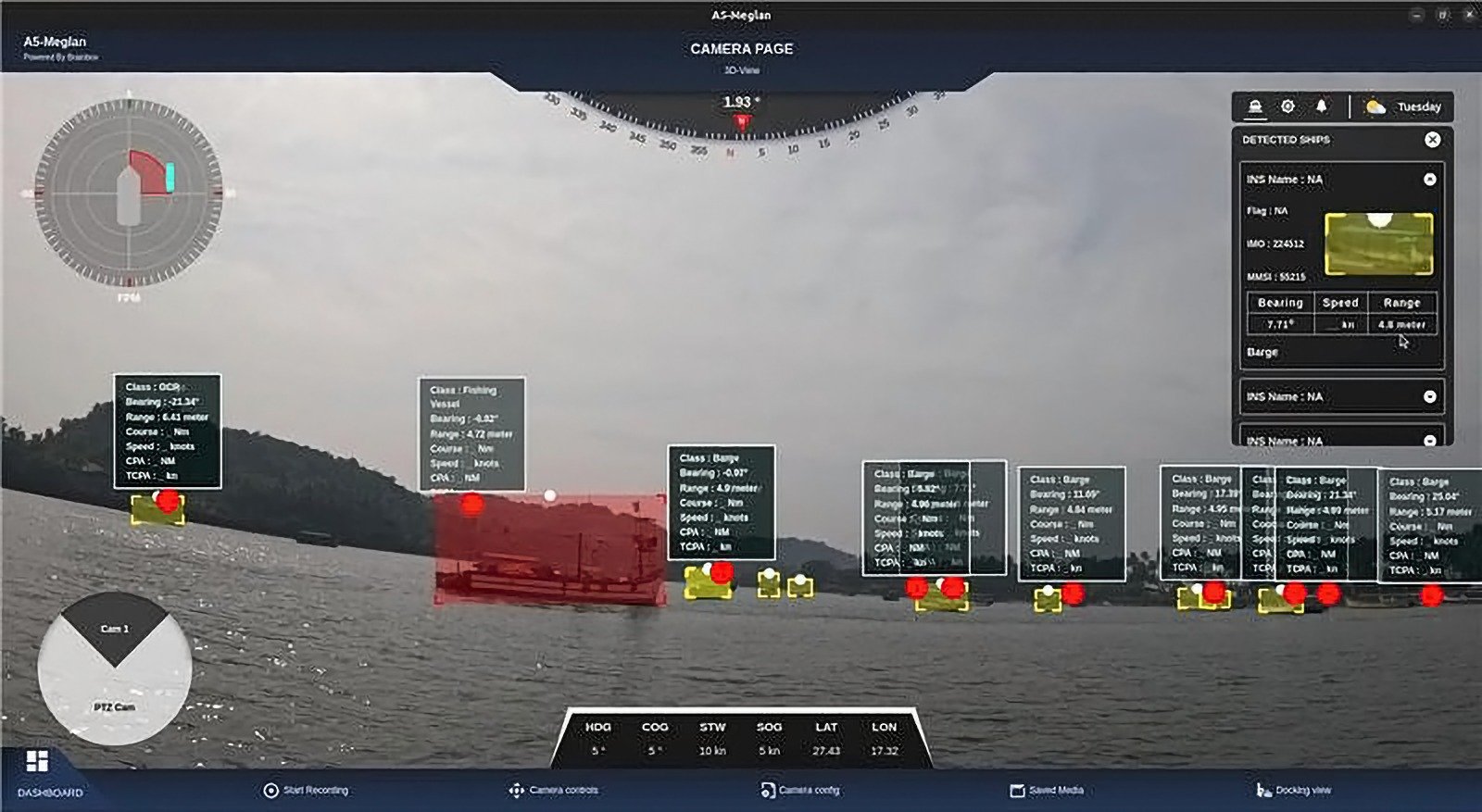
A naval operator often monitors tens of screens. AI reduces this chaos and highlights:
- Only priority anomalies
- Only real threats
- Contextual recommendations
- Predictive alerts before incidents occur
This leads to better outcomes with lower human strain.
Seamless Modernisation: Integration without Disruption
One of the biggest barriers to adopting advanced defence technology is infrastructure change. Tardid’s approach solves this.
Fully Integrable with Legacy Platforms
- No large-scale hardware changes
- No ship redesign
- No network restructuring
- No dependency on cloud
With indigenous AI systems like those from Tardid, India can leapfrog into a new era of maritime superiority, one defined not by the size of fleets but by the intelligence that drives them. The Navy that senses first, understands first, and acts first will dominate the oceans. AI is the enabler of that advantage
AI runs on small, edge-deployable devices that plug into existing naval systems. Rapid Deployment
Installations can be completed within weeks across:
- Ships
- UAV ground stations
- Command centres
- Coastal surveillance hubs
- Underwater detection nets
This is modernisation without disruption.
Modular and Scalable
Commanders can scale from:
- Single-vessel intelligence
- to group-level surveillance
- to theatre-level decision grids
—without structural changes.
This is the future of naval AI.
Strategic Significance for an Aatmanirbhar Navy
India’s strategic doctrine increasingly emphasises technological sovereignty. By adopting indigenous AI, the Navy strengthens operational independence, reduces foreign dependency, and builds the foundation for next-generation warfare capabilities. Tardid’s solutions are:
- Conceived, built, and manufactured in India
- Export-ready under Indian-origin certifications
- Compliant with naval-grade cybersecurity protocols
- Aligning with the MoD’s digital transformation roadmap
This places India on the map not only as a user of defence AI, but as a leader in developing it.
Conclusion
The Moment for AI-Enabled Naval Transformation is Now. The Indian Navy stands at the crossroads of strategic opportunity. The assets are already in place. The operational ecosystem is mature. The threats are evolving. The coordination challenges are real.
But with indigenous AI systems like those from Tardid, India can leapfrog into a new era of maritime superiority, one defined not by the size of fleets but by the intelligence that drives them. The Navy that senses first, understands first, and acts first will dominate the oceans. AI is the enabler of that advantage. And India is ready for it.

-The writer, a dynamic technocrat, is Chief Operating Officer at Tardid who expertly manages operations, partnerships, and sales. She is dedicated to unlocking the full potential of Tardid’s capabilities and innovation and driving its success. The views expressed are of the writer and do not necessarily reflect the views of Raksha Anirveda
