

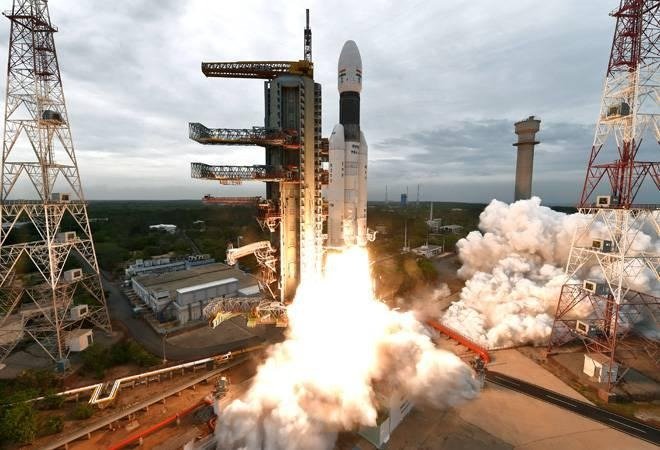
The successful launch of LVM3-M6 carrying the Blue Bird Block-2 satellite must be interpreted through the lens of space power doctrine, rather than as a standalone technological milestone. As strategic theorist Everett C Dolman argues in Astropolitik, “Whoever controls low Earth orbit controls near-Earth space; whoever controls near-Earth space dominates terrestrial politics.” India’s methodical ascent in launch capability directly aligns with this doctrinal understanding of space as a decisive domain of power.
India’s space programme, since its inception, has demonstrated what Colin Gray describes as “strategic patience combined with cumulative advantage.” The establishment of INCOSPAR in 1962 under Dr Vikram Sarabhai reflected a long-term vision that predated contemporary notions of space dominance. Sarabhai’s oft-cited assertion that “we must be second to none in the application of advanced technologies to the real problems of man and society” also implicitly acknowledged space as a strategic enabler of national power.

The early milestones — Thumba (1963) and Aryabhata (1975) — were foundational, but their true significance lay in what military historians would classify as capability incubation. As Alfred Thayer Mahan observed in a maritime context, “naval power is not built in a day; it is the product of national character, institutions, and sustained investment.” India’s space trajectory mirrors this logic precisely — space power accumulated through institutions rather than spectacle.
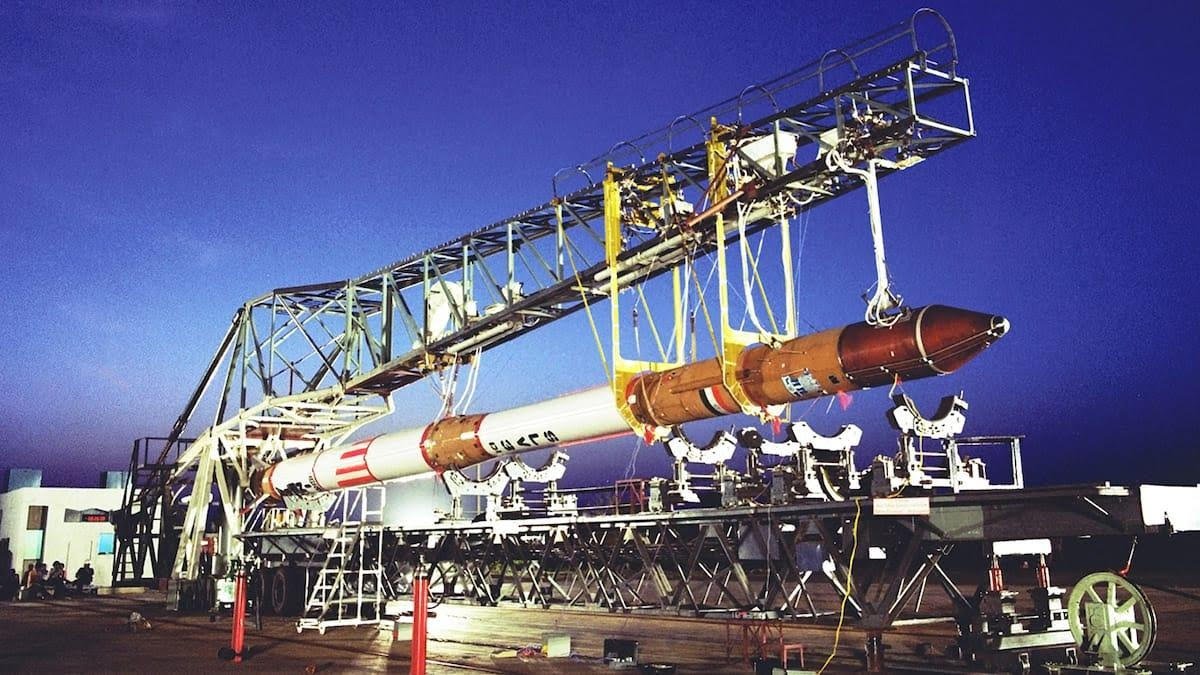
The 1980 SLV-3 launch of Rohini marked India’s entry into what contemporary doctrine calls “assured access to space” — a concept now central to the space doctrines of the US, China, and Russia. Without assured access, satellites become strategic liabilities rather than assets. India’s achievement placed it among a small group of states capable of overcoming what John Sheldon terms the “space denial trap.”
The ASLV phase, despite mixed operational success, exemplifies what modern military acquisition theory labels “learning through controlled failure.” As the US Space Force doctrine notes, “resilience is not the absence of failure, but the institutional capacity to adapt.” India’s willingness to absorb technical setbacks during ASLV directly enabled the later success of PSLV and GSLV.

The Mars Orbiter Mission (2013–14) and the 104-satellite PSLV launch (2017) marked India’s arrival as a credible space systems integrator. It reinforced what the Chinese PLA refers to as ‘systems confrontation’, the ability to manage complex, networked operations across multiple platforms and timelines
The advent of PSLV in the mid-1990s transformed India from a space participant into a space service provider. By achieving unmatched reliability, PSLV fulfilled what Clausewitz might call the culminating point of technological credibility. The vehicle’s success reinforced India’s position in what space economists describe as the “trusted launch ecosystem” — a prerequisite for both commercial and defence missions.
India’s struggles with cryogenic propulsion during the GSLV programme must be viewed doctrinally as a contest over a strategic chokepoint. Cryogenic engines are not merely technological artefacts; they are instruments of power denial and enablement. The successful indigenous cryogenic flight in 2010 represented what Dolman terms a “breakout from technological containment.”

The Mars Orbiter Mission (2013–14) and the 104-satellite PSLV launch (2017) marked India’s arrival as a credible space systems integrator. These achievements reinforced what the Chinese PLA refers to as “systems confrontation” — the ability to manage complex, networked operations across multiple platforms and timelines.
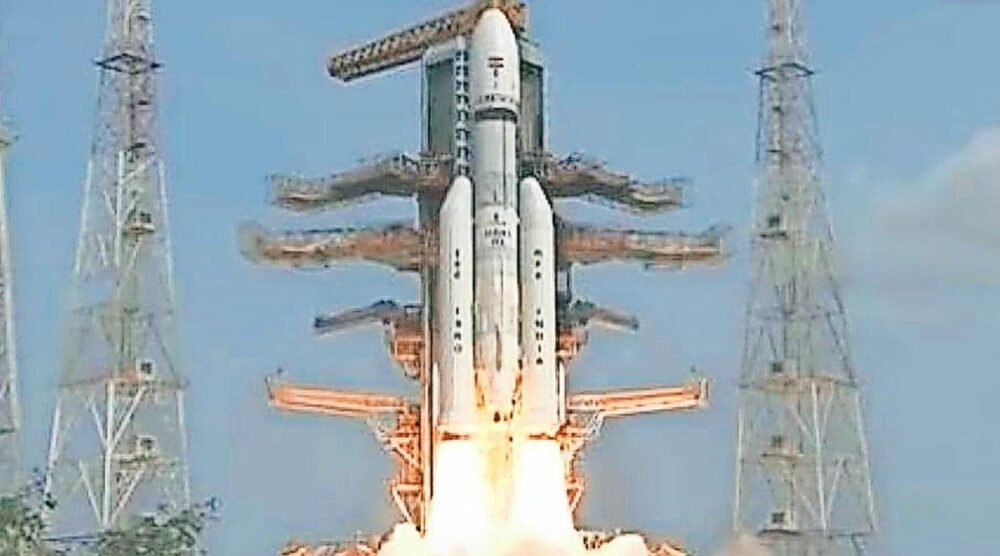
The maturation of LVM3 is best understood through the framework of heavy-lift deterrence. Modern space doctrine increasingly recognises that payload mass, orbit flexibility, and launch responsiveness are as critical as missile throw-weight was during the Cold War. The Gaganyaan human-rating process further placed India within what the International Institute for Strategic Studies identifies as the “first-tier space powers.”
India’s Chandrayaan-3 south pole landing in 2023 reinforced autonomous guidance and precision landing capabilities with obvious relevance to future on-orbit servicing, lunar infrastructure, and contested space operations. As US Space Command doctrine states, “precision and autonomy define freedom of action in space.”
India’s Chandrayaan-3 south pole landing in 2023 reinforced autonomous guidance and precision landing capabilities with obvious relevance to future on-orbit servicing, lunar infrastructure, and contested space operations. US Space Command doctrine states, “precision and autonomy define freedom of action in space”
It is against this doctrinal backdrop that the LVM3-M6 / Blue Bird Block-2 mission must be assessed. By launching the heaviest satellite ever from Indian soil (~6.1 tonnes) and inserting it precisely into low Earth orbit, India demonstrated not merely engineering competence, but space operational credibility. This aligns directly with NATO’s definition of space power as “the ability to project, protect, and sustain influence through and from space.”
The nature of the Blue Bird Block-2 satellite — direct-to-device broadband connectivity — further highlights the dual-use character of modern space systems. As the US Department of Defense notes, “commercial space capabilities are now integral to military advantage.” India’s ability to launch and support such systems places it squarely within this emerging paradigm of civil-military integration in space.
In strategic terms, LVM3-M6 marks India’s transition from space access to space assurance. This is the phase where a state can guarantee the deployment, replenishment, and protection of high-value orbital assets under both peacetime and crisis conditions. For defence planners, this capability underpins resilient C4ISR architectures, redundant communications, and strategic deterrence in an increasingly contested space environment.
By launching the heaviest satellite ever from Indian soil (~6.1 tonnes) and inserting it precisely into low Earth orbit, India demonstrated not merely engineering competence, but space operational credibility. This aligns directly with NATO’s definition of space power as “the ability to project, protect, and sustain influence through and from space”
As Everett Dolman concludes, “Space power will not be seized suddenly; it will accrue to those who build it patiently.” India’s space journey, culminating in the LVM3-M6 mission, exemplifies this doctrinal truth.
Concluding Strategic Assessment: LVM3-M6 and India’s Emergence as a Space Power
The successful LVM3-M6 launch of the BlueBird Block-2 satellite represents a decisive moment in India’s evolution from a space-capable nation to a space-assured power. This distinction is critical. Capability refers to the ability to perform discrete tasks; assurance denotes the confidence that these tasks can be executed reliably, repeatedly, and under strategic pressure. In contemporary doctrine, this transition marks the point at which space assets cease to be symbolic achievements and become integral instruments of national power.
From a strategic perspective, LVM3-M6 validates India’s position across the three core pillars of space power: access, sustainment, and influence. First, assured access to space has been conclusively demonstrated through India’s ability to launch the heaviest payload ever from its territory into precise low Earth orbit. Second, sustainment is reflected in India’s demonstrated capacity to support complex, high-mass missions for international partners—an indicator of robust industrial depth, quality assurance, and mission continuity. Third, influence accrues from India’s growing role as a trusted launch partner within the global space economy, translating technological competence into diplomatic and strategic capital.
The LVM3-M6 mission should be viewed as a strategic inflection point, not a terminus. It strengthens the foundation for future initiatives, including crewed missions, space station modules, lunar infrastructure support, and responsive launch systems tailored to defence requirements
In defence terms, the implications are profound. Modern military operations depend on space-based capabilities for communications, intelligence, surveillance, navigation, and network-centric warfare. The success of LVM3-M6 underscores India’s ability to deploy and replenish such assets, a requirement explicitly identified in global military doctrines as essential for resilience in contested space environments. The heavy-lift capability demonstrated by LVM3 enables rapid constellation augmentation, responsive launch options, and redundancy—all of which are central to deterrence stability in the space domain.
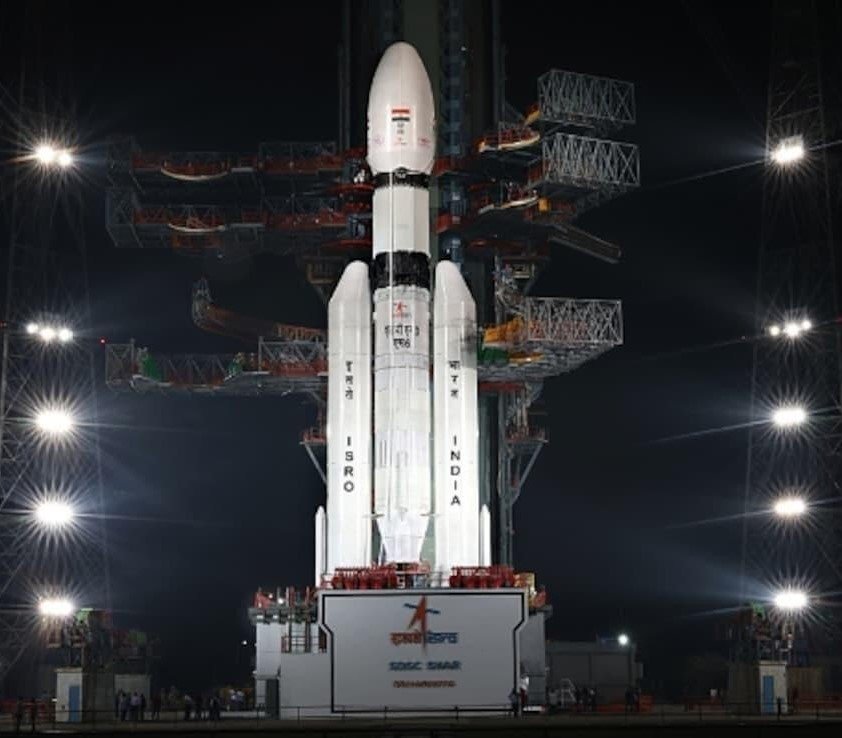
The nature of the BlueBird Block-2 satellite further highlights the convergence of commercial innovation and military utility. Direct-to-device satellite communication architectures exemplify the dual-use systems that now dominate the space domain. As leading defence doctrines note, future conflicts will hinge on the integration of civilian and military space assets, making launch sovereignty and mission reliability strategic necessities rather than industrial luxuries. India’s demonstrated ability to launch such advanced platforms places it firmly within this emerging paradigm.
Equally significant is the institutional dimension. The maturation of LVM3 reflects not just engineering success but the effectiveness of India’s space governance ecosystem, encompassing ISRO, NewSpace India Limited, private industry, and emerging defence space structures. This integrated model aligns with best practices observed in leading space powers, where civil, commercial, and military space efforts are coordinated rather than siloed.
India has achieved what Clausewitz might describe as the culmination of preparatory effort, the point where accumulated capability translates into enduring strategic advantage. The LVM3-M6 mission stands not merely as a triumph of rocketry but as a manifestation of India’s arrival as a credible, responsible, and consequential space power in the 21st century
Looking ahead, the LVM3-M6 mission should be viewed as a strategic inflection point, not a terminus. It strengthens the foundation for future initiatives, including crewed missions, space station modules, lunar infrastructure support, and responsive launch systems tailored to defence requirements. More importantly, it signals to both partners and competitors that India possesses the technological depth, institutional resilience, and strategic intent required to operate effectively in space as a contested and competitive domain.
In classical strategic terms, India has achieved what Clausewitz might describe as the culmination of preparatory effort — the point at which accumulated capability translates into enduring strategic advantage. The LVM3-M6 mission thus stands not merely as a triumph of rocketry but as a manifestation of India’s arrival as a credible, responsible, and consequential space power in the 21st century.

-The author retired as Major General, Army Ordnance Corps, Central Command, after 37 years of service. A management doctorate and expert on defence modernisation, he is the author of four books, including the Amazon bestseller “Breaking the Chinese Myth,” and a frequent media commentator. He is affiliated with several leading defence and strategic studies institutions in New Delhi. The views expressed are of the writer and do not necessarily reflect the views of Raksha Anirveda
