

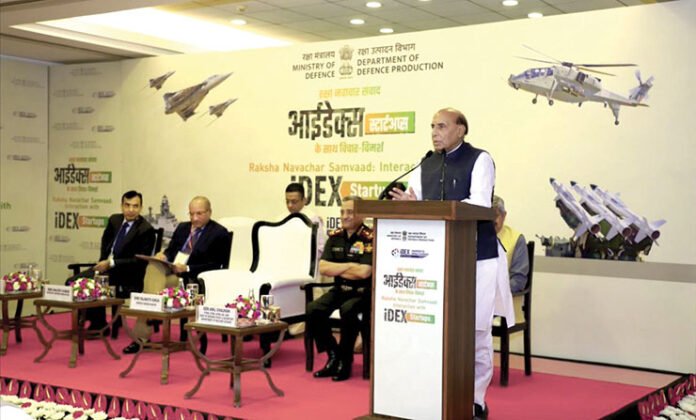
For decades, India was defined by the paradox of being a top-tier global power with a bottom-tier reliance on foreign weaponry. However, the year 2025 has officially been declared the “Year of Reforms” by the Ministry of Defence (MoD), marking the definitive moment when India pivoted from a “buyer” to a “builder.” This shift is not merely a change in procurement policy; it is the culmination of the Aatmanirbhar Bharat (Self-Reliant India) vision, supported by record-breaking production figures and structural overhauls that have rewritten the country’s strategic destiny.
In the annals of India’s military history, 2025 will be remembered as the year the nation finally decoupled its strategic security from the whims of global supply chains. For decades, India’s defence posture was characterised by a “supermarket approach” — a patchwork of fragmented foreign platforms that created a logistical nightmare and a dependency trap.

The 2025 reforms have effectively shuttered this era, replacing the vulnerability of “just-in-case” imports with the resilience of “just-in-time” domestic manufacturing. By treating defence not merely as a procurement expenditure but as a primary engine for industrial growth, India has transformed its Aatmanirbharta mission from a rhetorical aspiration into a hardened, kinetic reality, signalling to the world that the “Sleeping Giant” of defence manufacturing has finally found its own voice — and its own teeth.
The Arithmetic of Autonomy: Record Production and Budgets
The most striking evidence of this transformation lies in the data. In 2025, India’s annual defence production soared to an all-time high of ₹1.51 lakh crore (approximately $18 billion) for FY 2024-25. This represents a robust 18% growth over the previous year and a staggering 90% increase since FY 2019-20.
Behind these numbers is a deliberate budgetary strategy. For the 2025-26 fiscal year, the government allocated ₹6.81 lakh crore ($81 billion) to the MoD. Crucially, now the focus has shifted toward modernisation.
In the annals of India’s military history, 2025 will be remembered as the year the nation finally decoupled its strategic security from the whims of global supply chains. For decades, India’s defence posture was characterised by a “supermarket approach” — a patchwork of fragmented foreign platforms that created a logistical nightmare and a dependency trap
A significant portion of the budget is now ring-fenced for domestic procurement. In 2025 alone, the Defence Acquisition Council (DAC) accorded “Acceptance of Necessity” (AoN) for proposals worth over ₹2.5 lakh crore, with nearly 92% of these contracts earmarked for the “Buy (Indian-IDDM)” category.

Of the 193 contracts signed in the latest cycle, 177 were awarded to domestic industry, injecting over ₹1.68 lakh crore directly into the Indian economy.

Structural Reforms: From Bureaucracy to Business
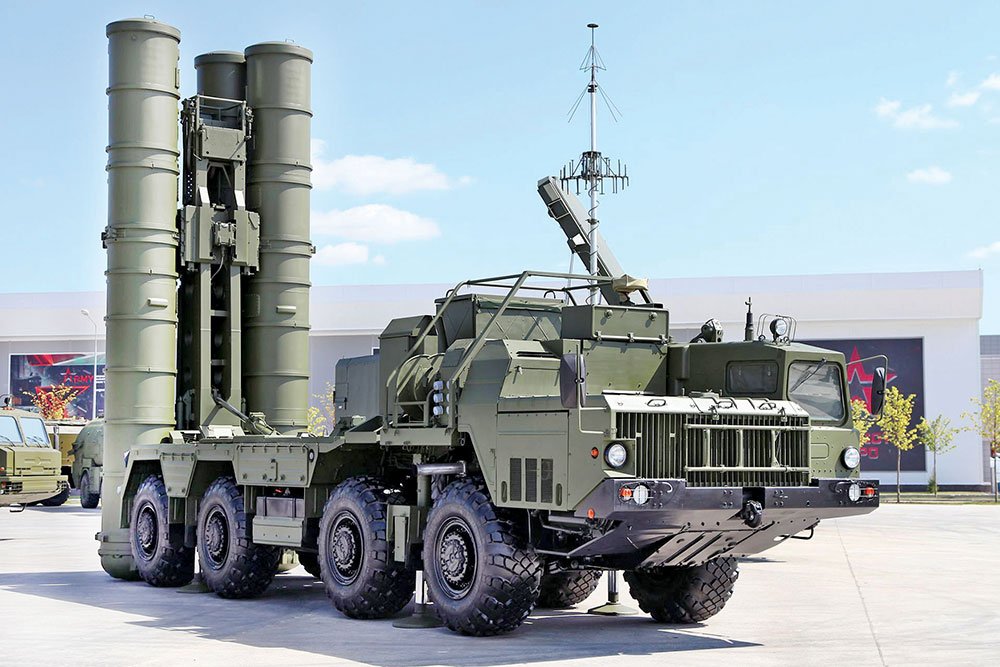
The “Year of Reforms” in 2025 introduced the Defence Procurement Manual (DPM) 2025, which became effective on November 1. This manual is a landmark in “Ease of Doing Business,” simplifying revenue procurement worth approximately ₹1 lakh crore. By standardising procedures across the Army, Navy, and Air Force, the DPM 2025 has slashed bureaucratic delays that previously sidelined domestic MSMEs.
Furthermore, the operational architecture of the Indian Armed Forces is undergoing its most significant change since independence: the transition to Integrated Theatre Commands. By establishing commands in Jaipur (Western), Lucknow (Northern), and Coimbatore (Maritime), India is synchronising its tri-service resources to be more “joint” and “integrated” – a move that directly supports the domestic industry by creating unified equipment requirements.
The Rise of the Private Sector and Startups
2025 has witnessed the breaking of the public-sector monopoly. While Defence Public Sector Undertakings (DPSUs) still account for 77% of production, the private sector’s share has climbed to 23%. This growth is fuelled by:
- Defence Industrial Corridors (DICs): The corridors in Uttar Pradesh and Tamil Nadu have attracted investments exceeding ₹9,145 crore, with over 289 MoUs signed to unlock potential opportunities worth ₹66,423 crore.
- iDEX and ADITI: The Innovations for Defence Excellence (iDEX) initiative has engaged over 16,000 MSMEs and startups. For 2025-26, the government allocated ₹449.62 crore to iDEX and the ADITI scheme to foster “Acing Development of Innovative Technologies”.
- Positive Indigenisation Lists (PILs): By 2025, the government has placed over 5,000 items under an import embargo, forcing a “domestic-first” mindset for everything from simple components to complex weapon systems like the Nag Missile System Mk-II and Arnala-class anti-submarine ships.
“Make for the World”: The Export Surge
Perhaps the most “pontificating” achievement of Aatmanirbhar Bharat is India’s emergence as a global defence exporter. In FY 2024-25, defence exports reached a record ₹23,622 crore ($2.8 billion), a 12% increase from the previous year and a massive 34-fold jump from a decade ago.
India now exports to over 100 countries. Key highlights include:
- Top Destinations: The United States (components and sub-systems), France, and Armenia (Pinaka rockets and Akash missiles).
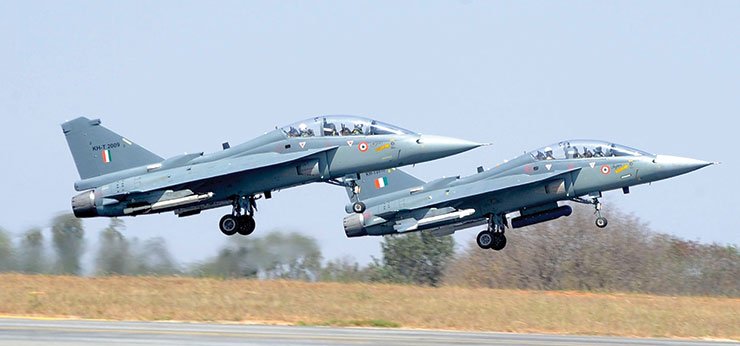
- Key Platforms: Major exports now include the BRAHMOS supersonic cruise missile, Tejas LCA components, Dornier-228 aircraft, and Advanced Towed Artillery Gun Systems (ATAGS).
- The Private Edge: Remarkably, the private sector contributes nearly 64% of total exports, proving that Indian companies are now globally competitive in price and technology.
The operational architecture of the Indian Armed Forces is undergoing its most significant change since independence: the transition to Integrated Theatre Commands. By establishing commands in Jaipur (Western), Lucknow (Northern), and Coimbatore (Maritime), India is synchronising its tri-service resources to be more “joint” and “integrated” – a move that directly supports the domestic industry by creating unified equipment requirements
Technological Frontiers: Operation Sindoor and Beyond
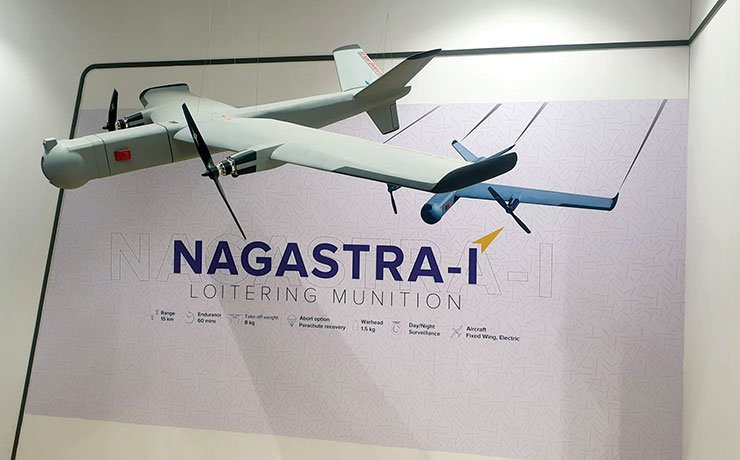
2025 was also the year India validated its indigenous tech in the battle field. Operation Sindoor served as a combat-validation milestone for home-grown drone warfare, layered air defence, and electronic warfare systems. The launch of Mission Sudarshan Chakra by Prime Minister Modi on Independence Day 2025 further emphasised this focus. This mission aims to build a “nationwide security shield” using AI-enabled systems, loitering munitions, and indigenous microprocessors like the DHRUV64. India is no longer just manufacturing foreign designs; it is designing original solutions for modern, net-centric warfare.
Limitations and challenges
While the 2025 reforms have fundamentally shifted the defence landscape, a critical analysis reveals that Aatmanirbharta remains a journey of high-tech hurdles rather than a completed destination. The primary limitation lies in the persistent “Technology Gap” in core propulsion and material sciences. Despite the success of the Tejas and various missile programmes, India still lacks an indigenous aero-engine (the Kaveri project remains a cautionary tale), forcing a continued reliance on GE’s F414 engines for the LCA Mk-II.
Furthermore, while the domestic share of production has reached 75% for modernisation, this often translates to the local assembly of systems that still depend on imported high-end semiconductors, precision electronics, and specialised alloys. This “assembly-centric” indigenisation risk creates a facade of self-reliance that could be vulnerable during prolonged supply chain disruptions or “sanction-heavy” geopolitical shifts.
Structural and bureaucratic challenges also persist as a friction point against rapid innovation. The “Legacy Procurement Mindset” often prioritises the established, risk-averse Defence Public Sector Undertakings (DPSUs) over agile private startups, despite the private sector now contributing 21-23% of production. Private players frequently cite a “lack of a level playing field,” where long gestation periods and unpredictable order pipelines make heavy R&D investment a financial gamble.
Additionally, the DRDO’s share of the budget — standing at roughly 3.94% — is widely viewed by experts as insufficient for the “quantum leap” required in directed energy weapons, hypersonic, and stealth technology. To truly transcend these barriers, the next phase of reforms must move beyond “Make in India” (manufacturing) to “Design in India” (Intellectual Property), ensuring that the sovereignty of the software and the core hardware, i.e. the “brain” is as Indian as the steel that encases it.
However, the year 2025 stands as the moment India’s defence sector finally shed its “import-dependent” skin. Through a combination of aggressive policy reforms, record-high capital investment, and a flourishing private ecosystem, Aatmanirbhar Bharat has transitioned from a slogan to a measurable, credible reality. India is now not just securing its own borders with “Made in India” steel, but is increasingly providing the world with the tools of modern security.

–The writer is Assistant Professor, ICFAI School of Liberal Arts, ICFAI University, Jaipur. The views expressed are of the writer and do not necessarily reflect the views of Raksha Anirveda
