


India has always been a maritime civilisation. Its geography, stretching along a 7,500-km coastline with island territories dotting the Indian Ocean, has long dictated its destiny. For centuries, the subcontinent’s prosperity, security, and strategic clout have been tied to the seas. Yet, for much of independent India’s history, maritime awareness remained a footnote in policy debates. The Indian Navy (IN), though professional and courageous, often had to do more with less — operating ageing ships, relying heavily on imports, and constrained by the slow pace of bureaucratic decision-making.
That paradigm is changing decisively. Today, the Indian Navy is undergoing one of its most dynamic transformations since Independence. No longer a ceremonial adjunct or a coastal guard, it is evolving into a mission-ready, technologically empowered, and combat-proven force. This evolution is not just about hardware—it’s about mindset, strategy, and national willpower.

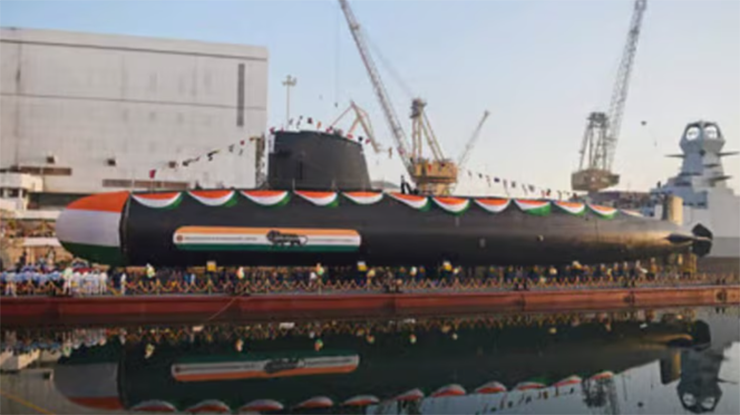
At the heart of this transformation lies India’s pursuit of Atmanirbharta — self-reliance in defence. The Indian Navy’s shift from being a “Buyer’s Navy” to a “Builder’s Navy” captures the essence of this journey. Nearly two-thirds of the current fleet has been designed and constructed in Indian shipyards—a remarkable reversal from just two decades ago when foreign designs dominated the order books.
The Navy’s self-reliance roadmap rests on three pillars: indigenous design, industrial collaboration, and technological innovation. The Directorate of Naval Design, one of the most sophisticated in Asia, is now spearheading next-generation projects that cover everything from stealth destroyers and aircraft carriers to advanced support vessels and unmanned underwater systems. Shipyards in Mumbai, Kochi, and Visakhapatnam have become engines of innovation, building 66 advanced warships and submarines at various stages of construction.
The Navy has also embraced a new kind of partnership—one that goes beyond contracts and procurement. Through initiatives like iDEX (Innovations for Defence Excellence), TDF (Technology Development Fund), and SPRINT (Supporting Pole-Vaulting in R&D), it is pulling in start-ups, academic institutions, and small enterprises. The goal is clear: to create a domestic ecosystem where cutting-edge maritime technologies are conceived, developed, and deployed by Indians.
Nearly two-thirds of the Indian Navy’s current fleet has been designed and constructed in Indian shipyards, reflecting a radical shift from import dependency to domestic strength. This transformation highlights not only industrial progress but also India’s strategic autonomy in defence production
This transformation symbolises more than industrial growth—it marks strategic independence. Every indigenously built platform adds a layer of resilience, ensuring that India is never held hostage to external supply chains or shifting geopolitical winds.

A Force That Looks Beyond the Horizon
The Indian Navy’s operational posture reflects a deep understanding of the changing strategic landscape. The Indo-Pacific has become the world’s geopolitical epicentre—a theatre of competition, cooperation, and confrontation. Great power rivalries, regional flashpoints, and grey-zone warfare have made the seas more contested than ever before.
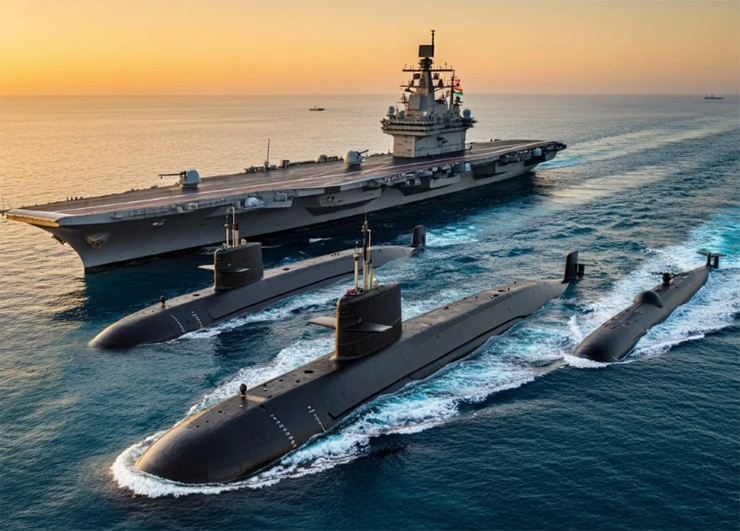

In response, the Indian Navy has evolved into a mission-deployed, combat-ready force—always on the move, always prepared. Its doctrine of “Mission Deployed, Combat Ready” means ships are positioned in critical regions across three concentric layers:
- Within the Exclusive Economic Zone (EEZ): The Navy protects territorial waters and offshore installations, countering threats like terrorism, smuggling, and trafficking while ensuring the security of seabed assets.
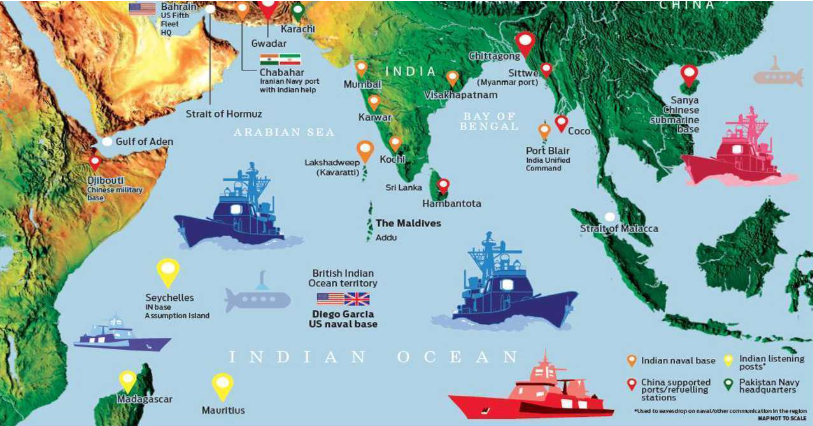
- Across the Wider Indian Ocean Region (IOR): It safeguards sea lanes of communication (SLOCs), deters hostile actions, and maintains persistent presence in areas like the Gulf of Aden, the Arabian Sea, and the Bay of Bengal.
- Beyond the IOR: Through long-range missions extending to the Western Pacific, the Mediterranean, and the African coast, it projects power, builds partnerships, and reinforces India’s image as a stabilising force.
This three-tiered deployment model allows the Navy to operate seamlessly across vast distances, from evacuations in war zones to anti-piracy operations, humanitarian assistance, and disaster relief (HADR). In the last two decades, Indian ships have led rescue missions in Yemen, Sudan, and Lebanon; evacuated stranded citizens from conflict zones; and delivered aid to neighbours struck by natural calamities. These actions speak louder than words—they signal capability, intent, and compassion.
The Maritime Combat Edge
Power at sea is multidimensional—it’s about platforms, technology, coordination, and above all, readiness. The Indian Navy’s combat edge rests on its ability to operate effectively across all three dimensions of modern warfare.
Sea Control through Carrier Battle Groups
INS Vikramaditya and the indigenous carrier INS Vikrant form the backbone of India’s sea control strategy. Together, they project India’s reach deep into the Indian Ocean and beyond. With plans to acquire new deck-based multi-role fighters, integrate unmanned aerial systems, and enhance carrier aviation capabilities, these platforms ensure that India’s naval power is not confined to its shores but extends to critical global waterways.
Sub-Surface Dominance
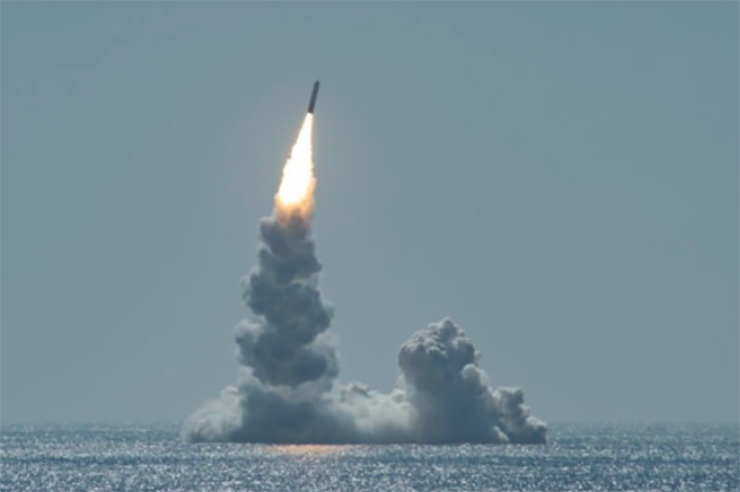
The Navy’s submarine arm is undergoing quiet but profound growth. Projects 75(I), 76, and 77—encompassing nuclear-powered and conventional submarines—will significantly expand India’s second-strike and deterrence capabilities. The integration of Air Independent Propulsion (AIP) systems, advanced torpedoes, and Unmanned Underwater Vehicles (UUVs) signals a shift toward prolonged endurance and enhanced lethality under the surface.
Submarines remain the ultimate symbol of silent strength, and India’s investments in this arena are ensuring that its deterrence posture is credible and sustained.
The Navy’s three-tiered deployment strategy enables seamless operations across the Indian Ocean, from anti-piracy patrols to humanitarian aid and evacuation missions. Its constant presence in critical maritime zones projects both capability and compassion
Surface Warfare and Stealth Technology
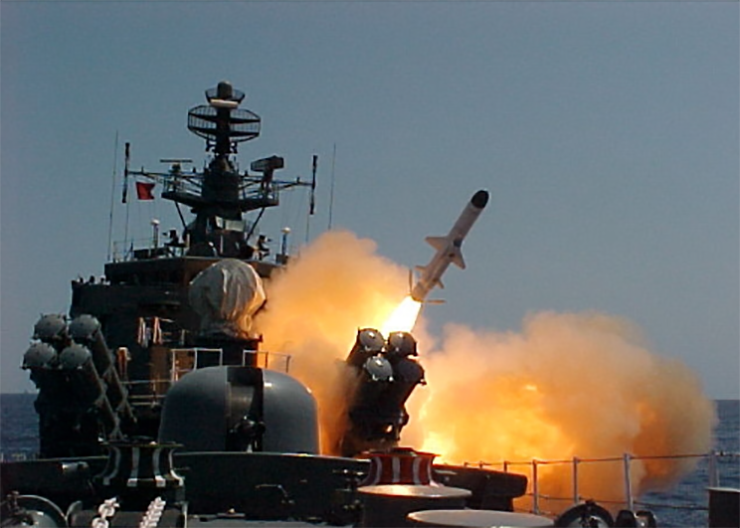
On the surface, new generations of stealth destroyers (Visakhapatnam-class), frigates (Project 17A), and corvettes are redefining naval power projection. These platforms integrate indigenous missile systems like BrahMos, sophisticated radar networks, and electronic warfare suites, offering simultaneous anti-submarine, anti-air, and anti-surface warfare capability.
The Navy’s collaboration with DRDO, BEL, and private manufacturers has resulted in indigenous sonar systems, sensors, and combat management systems that rival international standards. The shift is not just about platforms—it’s about autonomy in every critical subsystem.
Aviation, Space, and Cyber Integration
The future of naval warfare lies in integration across domains. The Navy’s aviation branch, equipped with long-range maritime patrol aircraft, shipborne helicopters, and UAVs, is being linked through secure networks and satellite communication systems. Cyber warfare cells, C4ISR grids, and space-based reconnaissance are being developed to create a resilient, multi-layered defence posture.
Partnerships and Presence: Building Trust in Troubled Waters
No nation can secure the seas alone. India’s maritime strategy increasingly relies on partnerships built on trust, transparency, and shared interests.
The Indian Navy acts as a “net security provider” in the Indian Ocean—a responsibility that extends beyond national boundaries. It trains foreign navies, supplies equipment, and assists smaller island states in developing maritime domain awareness. The Information Fusion Centre–Indian Ocean Region (IFC-IOR) has become a key node for regional cooperation, facilitating information sharing among partner nations.
Joint exercises—MALABAR, VARUNA, AUSINDEX, and MILAN—serve both tactical and diplomatic purposes, deepening interoperability with allies such as the United States, Japan, France, and Australia. These engagements amplify deterrence while promoting a shared vision of a free, open, and inclusive Indo-Pacific.
Beyond hard power, India’s maritime diplomacy plays an equally vital role. The Navy’s humanitarian and disaster relief missions—ranging from the 2004 tsunami to the COVID-19 pandemic—demonstrate its capacity to lead with empathy, not just enforcement.
Training, Technology, and Transformation of the Human Element
Even the most advanced fleet is only as strong as the people behind it. The Indian Navy continues to prioritise human capital, blending tradition with technology. Its personnel are trained not merely to operate platforms but to innovate, adapt, and lead.
Modern training academies, simulation centres, and specialised schools are grooming officers and sailors for the complexities of 21st-century warfare. The emphasis on jointness with the Army and Air Force ensures seamless coordination under emerging theatre command structures. New courses in AI, robotics, and cyber warfare are equipping the next generation of sailors to think beyond conventional horizons.
Integration of Air Independent Propulsion systems, advanced torpedoes, and Unmanned Underwater Vehicles marks a leap in the Navy’s sub-surface endurance and lethality. These advancements position India among the few nations with credible underwater deterrence
Leadership development and continuous education have become integral to the Navy’s ethos. The triad of Duty, Honour, and Courage remains its moral compass, now complemented by an unrelenting focus on learning and innovation.
A Maritime Vision for 2047
As India approaches Amrit Kaal 2047, the Navy’s ambitions align with the country’s aspiration to become a leading global maritime power. This vision isn’t rooted in vanity but in necessity. Ninety percent of India’s trade by volume travels by sea. Its energy lifelines pass through volatile waters. Protecting these arteries is central to national security.
A strong, self-reliant, and mission-ready Navy underpins not only India’s defence but also its economic resilience, diplomatic credibility, and technological confidence. The Indian Navy’s evolution—driven by indigenous innovation, operational readiness, and strategic foresight—ensures that India is no longer a peripheral player in maritime geopolitics but a shaping force.
A strong, self-reliant, and mission-ready Navy forms the backbone of India’s defence and maritime identity. It safeguards not only the nation’s borders but also its economic lifelines and diplomatic credibility
The future seas will be crowded, contested, and complex. Yet, with every new ship launched, every indigenous system commissioned, and every partnership forged, the Indian Navy is asserting a new maritime narrative: India will not just sail the seas—it will shape them.
(The author is a former Indian Navy Submarine Officer and specialist in Anti-Submarine Warfare, underwater weapons, and missiles. An alumnus of Naval Academy Goa and DSCSC Mirpur, he has served on Kilo Class submarines and taught at the Defence Services Staff College, Wellington. He is a member of national think tanks including STRIVE, USI, and Chakra Dialogues Foundation, and an active advocate for India’s UUV/AUV program.)

–The writer is a former Indian Navy Submarine Officer. He is an underwater weapons and missile specialist and a deep sea diver. An alumni of DSCSC Mirpur, Dhaka, he has been Directing Staff of the prestigious DSSC, Wellington, Tamil Nadu and instructor at the Submarine Training Centre, INS Satavahana, Visakhapatnam. He regularly writes on military strategy, warfare and technologies. He is an active member of the Strategic Think Tank USI, STRIVE and the Chakra dialogues foundation. The views expressed in the paper are personal. He can be reached at sumit12in@gmail.com
