


The Indian Navy (IN) is undertaking an ambitious modernisation drive fuelled by its expanding area of operations and growing global geopolitical tensions. With advancements in indigenisation proving to be the key factor, the Indian Navy is on track to become a fully self-reliant blue-water naval force by 2035.
The IN is a growing navy, which has a lot of stress on Aatmanirbharta (self-reliance) and the Warship Design Bureau (WDB) is playing an all-important role in giving shape to the next generation of warships from planning to the construction stage.

The IN has been focusing on developing indigenous platforms, systems, sensors, and weapons as part of the nation’s modernisation and expansion of its maritime forces. As of December 2024, the Navy has a strength of over 130 warships and 251 aircraft and helicopters while the force plans to have between 155–160 warships by 2030 and between 175–200 warships by 2035. In real terms it translates into the fact that India has transformed from a buyer’s navy to a builder’s navy.
As of 22 September 2025, 54 ships of the Indian Navy are under construction in various stages (early fabrication to sea trials) with 10 ships expected to be commissioned this year itself and the rest scheduled to enter service by 2030.
These contracts have a combined value of around ₹99,500 crore (US$12 billion). The ships are being constructed in India across 6 shipyards, while the last Indian warship of foreign origin, INS Tamal, from Russia was commissioned in July 2025.
The IN has been focusing on developing indigenous platforms, systems, sensors, and weapons as part of the nation’s modernisation and expansion of its maritime forces. As of December 2024, the Navy has a strength of over 130 warships and 251 aircraft and helicopters while the force plans to have between 155–160 warships by 2030 and between 175–200 warships by 2035. In real terms it translates into the fact that India has transformed from a buyer’s navy to a builder’s navy
The Acceptance of Necessity (AoN) for 74 additional warships, worth ₹2.35 lakh crore (US$28 billion), have been accorded by the Defence Ministry’s Defence Acquisition Council (DAC).

The Navy is expected to have a fleet of 150–160 warships by 2030, which will further expand to over 200 naval vessels by 2035. The Navy’s force level could reach up to 230 surface combatants and submarines by 2037 against today’s 140 ships including 17 diesel-electric submarines and 2 nuclear ballistic missile submarines.
In April 2025, the Indian Navy also signed a contract to procure 26 Dassault Rafale M fighter aircraft for its aircraft carriers to enhance its Naval Air Arm, with deliveries scheduled to be completed by 2030.

The increasing interest of the Chinese People’s Liberation Army Navy in the Indian Ocean region has led the Indian Navy to invest more in anti-submarine ships, such as the Kamorta-class corvette, long-range maritime reconnaissance aircraft such as the Boeing P-8I Neptune and ships such as the Saryu-class patrol vessel and unmanned aerial vehicles such as the IAI Heron-1.
However, the lack of a strong submarine fleet has diminished its capabilities to some extent. Post-Chinese intrusions into Ladakh in 2020, it has been announced that the Indian Navy plans to upgrade the military facilities in the Andaman and Nicobar Islands on the eastern seaboard as well as Lakshadweep on the western seaboard, with the aim of having a network of island airbases in both the Arabian Sea and the Bay of Bengal which provides an infrastructure which will guarantee freedom of navigation and overflight to all Indian territories.
The Navy is expected to have a fleet of 150–160 warships by 2030, which will further expand to over 200 naval vessels by 2035. The Navy’s force level could reach up to 230 surface combatants and submarines by 2037 against today’s 140 ships including 17 diesel-electric submarines and 2 nuclear ballistic missile submarines
On September 5, 2025, the Ministry of Defence published the Technology Perspective and Capability Roadmap 2025. The document unveiled plans for the Indian Navy to operate at least 10 nuclear-propelled surface ships including an aircraft carrier, INS Vishal.
As far as indigenisation or Aatmanirbharta is concerned, the IN is following the “Roll-on Plan for 2023-26” while the progress is being monitored by Centre for Indigenisation & Self Reliance (CISR) at Coimbatore. The CISR has two Indigenisation Units (IUs) with one at Visakhapatnam, whose area of responsibility includes the Eastern Naval Command & Andaman and Nicobar Command and the other at Mumbai to supervise the Western Naval Command.
Three aspects are recognised for evaluating the indigenous content of a ship which includes Float (Hull and its related fittings and components), Move (Engines, Complete propulsions systems, etc.) and Fight (Sensor suites and Weapon systems) categories. As of October 2024, 90%, 60% and 50% of these respective categories have been indigenised.
The Navy also plans to increase the indigenous content on already-commissioned frontline warships like INS Vikramaditya, Kalvari-class submarine, Talwar-class frigate, and Deepak-class fleet tanker. The IN is also planning to acquire the HAL TEDBF, an indigenous fighter aircraft currently under development, for its aircraft carriers in the 2030s.
On July 1, 2025, the Indian Navy commissioned its last warship of foreign origin, INS Tamal, in Russia. But all future warships will be constructed indigenously at Indian shipyards. Additionally, the Navy also plans a fleet of 13 destroyers and 20 frigates equipped with over 300 BrahMos Supersonic cruise missiles combined by 2030.
While each of the new destroyers are equipped with 16 BrahMos launchers each, except for four of six Delhi class and Rajput-class destroyer which are equipped with eight BrahMos launchers each and INS Rana (D52) and INS Mysore (D60), each of the 20 frigates will be equipped with eight BrahMos launchers. Meanwhile, the latter two of the Talwar-class frigates belonging to the first batch are being upgraded with BrahMos systems.
As far as indigenisation or Aatmanirbharta is concerned, the IN is following the “Roll-on Plan for 2023-26” while the progress is being monitored by Centre for Indigenisation & Self Reliance (CISR) at Coimbatore. The CISR has two Indigenisation Units (IUs) with one at Visakhapatnam, whose area of responsibility includes the Eastern Naval Command & Andaman and Nicobar Command and the other at Mumbai to supervise the Western Naval Command
The Indian Navy’s future destroyer is Project 18 (P-18), a next-generation stealth destroyer that will be significantly larger and more capable than current destroyers, with an estimated displacement of 13,000 tonnes. Key features include 144 Vertical Launch System (VLS) cells for a wide array of missiles, advanced long-range radar and electronic warfare systems, and a high degree of indigenous content. The first ship is expected to enter service between 2035 and 2040.
To strengthen its underwater combat arm, India is negotiating for six diesel-electric submarines with AIP and land-attack cruise missiles. The Rs 70,000 crore deal will be executed by Mazagon Dock Shipbuilders in partnership with Germany’s Thyssenkrupp Marine Systems.
Recently, the Government of India approved the construction of two indigenous SSNs (Submersible Ship, Nuclear-powered Attack Submarine), with the first of the two boats is planned to be handed over to the IN by 2036-2037 and the second soon thereafter.
India is following a 30-year submarine plan, which envisages the construction of 24 submarines. To break this down further, under Project 75i, India envisions the manufacturing of six indigenous diesel-electric submarines, all of which are almost ready for commissioning.
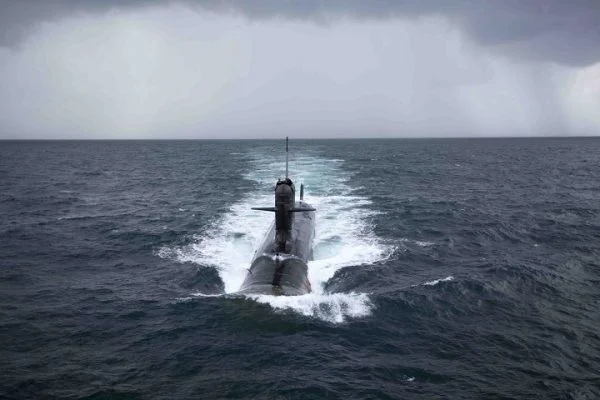
Five of them have already joined the Indian Navy, while the sixth, named Vagsheer, is slated to be commissioned soon. In addition, Project 76 focuses on the development of six indigenous conventional submarines equipped with air-independent propulsion (AIP).
In addition, an Acceptance of Necessity (AoN) has been given for six SSNs, two of which have had their construction approved. Apart from these, India’s S-5 class SSBN programme intends to build the next generation of SSBNs with capacity to launch intercontinental ballistic missiles (ICBMs).
It is worth noting that as per a report by GlobalData Aerospace, Defence and Security, a military industry intelligence platform, India is set to invest $31 billion in enhancing its fleet of submarines over the next few decades.
Meanwhile, the construction of six Next-Generation Missile Vessels (NGMVs) would not only boost the local shipbuilding industry but also ensure that India can maintain and upgrade its fleet independently, Indian Navy veteran Manan Bhatt highlighted in a conversation with Sputnik India.
India is following a 30-year submarine plan, which envisages the construction of 24 submarines. To break this down further, under Project 75i, India envisions the manufacturing of six indigenous diesel-electric submarines, all of which are almost ready for commissioning
The ‘Builder’s Navy’ is marching towards the ultimate goal of 100% self-reliance. The delivery of these NGMVs, being built by the state-run Cochin Shipyard Limited (CSL), is set to commence in 2027.
These vessels are designed for anti-surface warfare and will be equipped with advanced stealth features, high-speed capabilities, and potent offensive weapons like the BrahMos missiles. Their construction will generate significant employment and involve numerous Indian manufacturers, reinforcing the Aatmanirbhar Bharat initiative. The NGMVs will be equipped with BrahMos supersonic cruise missiles, which can hit targets over long distances.
The IN’s acquisition of 15 maritime patrol aircraft, including nine Medium Range Maritime Reconnaissance (MRMR) aircraft, will enhance its surveillance and anti-submarine warfare capabilities. These aircraft will provide comprehensive maritime domain awareness, crucial for monitoring and securing the vast Indian Ocean Region.
Furthermore, the Defence Research and Development Organisation (DRDO) is working on a new missile called the Naval Anti-Ship Missile–Medium Range (NASM–MR) or Medium Range Anti-Ship Missiles (MRAShM). These missiles are designed to be lightweight and will serve as the main offensive weapon on future warships.
Platforms like the C-295-based maritime patrol aircraft significantly enhance maritime domain awareness and anti-submarine warfare capabilities, while the development of MRAShM reflects India’s advancing technological prowess in precision strike capabilities, naval historian and author Aritra Banerjee echoed.
Plus, the Defence Procurement Board (DPB) approved the Indian Navy’s proposal for building a second Indigenous Aircraft Carrier (IAC-2) at an estimated cost of $4.8 billion. The proposal is currently awaiting a go-ahead from the government.
The Indian Navy’s future destroyer is Project 18 (P-18), a next-generation stealth destroyer that will be significantly larger and more capable than current destroyers, with an estimated displacement of 13,000 tonnes. Key features include 144 Vertical Launch System (VLS) cells for a wide array of missiles, advanced long-range radar and electronic warfare systems, and a high degree of indigenous content. The first ship is expected to enter service between 2035 and 2040
Initially, IAC-2 was planned to be much larger than IAC-1 but it is now expected to have a displacement of 45,000 tonnes. One of the key features of IAC-2 will be its advanced Integrated Electric Propulsion System (IEPS), powered by Rolls-Royce MT-30 gas turbines. This next-generation propulsion system will improve efficiency, provide greater flexibility during operations, and significantly reduce noise, making the ship quieter and more effective for naval missions.
India is steadily working towards becoming a 175-warship Navy by 2035, with a strong focus on strengthening its submarine fleet. Currently, the Indian Navy operates around 150 ships and submarines, including approximately 130 medium to large vessels. To achieve its goal, the Navy plans to expand its fleet to 155-160 warships by 2030 and further to 170-175 by 2035.

-The writer is a New Delhi-based senior commentator on international and strategic affairs, environmental issues, an interfaith practitioner, and a media consultant. The views expressed are personal and do not necessarily carry the views of Raksha Anirveda
