


The SAGAR vision launched in March 2015 was the first explicit articulation of India’s responsibilities in the Indian Ocean region. It created a comprehensive matrix connecting maritime security, domain awareness, coastal capacity building, and neighbourhood partnerships. One of SAGAR’s most significant outputs was the establishment of the Information Fusion Centre for the Indian Ocean Region (IFC-IOR). With links to more than 50 international maritime agencies and daily inputs from over 1,000 commercial vessels, the IFC-IOR integrates Automatic Identification System (AIS) feeds, coastal radar chains, satellite monitoring systems, and white shipping data to produce real-time operational intelligence. This single platform has dramatically expanded maritime domain awareness and generated a reliable flow of maritime data, weather analytics, and anomaly detection that now directly support the operational logic of emerging connectivity corridors. SAGAR also enabled India to build logistical nodes across its maritime neighbourhood, including Duqm port in Oman, Chabahar port in Iran, and coastal facilities across Seychelles, Mauritius, Sri Lanka, and Bangladesh. These nodes have matured into strategic enablers and are now potential IMEC-linked logistics junctions.
SAGAR enabled India to build logistical nodes across its maritime neighbourhood, including Duqm port in Oman, Chabahar port in Iran, and coastal facilities across Seychelles, Mauritius, Sri Lanka, and Bangladesh. These nodes have matured into strategic enablers and are now potential IMEC-linked logistics junctions
The transition from SAGAR to MAHASAGAR reflects India’s expanding maritime horizon and the infusion of advanced technologies into maritime governance. MAHASAGAR, initiated in March 2025, integrates AI-driven maritime analytics, satellite-supported weather modelling, high-resolution bathymetric mapping, and wind vector assessments to refine navigational planning. Institutions such as the Indian National Centre for Ocean Information Services and the National Oceanographic Data Centre produce more than 3 million data points annually, generating granular insights into ocean behaviour, monsoon patterns, sea surface conditions, and shipping density. These datasets improve route optimisation, enhance cargo safety, reduce insurance risk, and support predictive modelling for maritime traffic. MAHASAGAR also aligns Indian port modernisation with sustainability goals by aiming to reduce port-related carbon emissions by almost 30 per cent by 2030. Under Sagarmala and Maritime India Vision 2030, Indian port capacity is planned to exceed 3,000 million tonnes annually, logistics costs are targeted to fall below 7 per cent of GDP, and coastal shipping is expected to grow to 10 per cent of domestic freight. These efforts collectively create the domestic readiness required for India to anchor large-scale trans-regional corridors.

It is in this context that IMEC acquires strategic relevance. IMEC’s design is frequently described as multimodal, but its operational backbone is maritime. Almost 70 per cent of the corridor’s projected freight movement in its early phases will occur through maritime routes. The eastern corridor connecting Indian ports to key Gulf ports is fundamentally a maritime highway, while the western corridor connecting ports in the Gulf to Haifa and to the ports in Europe is equally dependent on maritime shipping. And if in the future, IMEC extends in the east and west, encompassing Southeast Asian nations and North America, the maritime component will further dominate. The rail and road components located between these maritime stretches act as connective segments rather than the principal mode of transport. IMEC promises to reduce transit time between India and Europe from 36 days through the Suez route to nearly 22 days, depending on cargo and routing efficiencies. It is projected to reduce carbon emissions by up to 40 per cent due to superior routing and technological optimisation. Therefore, for IMEC to become a reliable corridor, maritime predictability is crucial. This is where SAGAR and MAHASAGAR become the essential scaffolding. Their data streams on ocean conditions, predictive weather analytics, high-fidelity wind assessments, maritime surveillance feeds, and AI-enabled anomaly detection directly support IMEC’s operational resilience. Without these systems, IMEC’s maritime segments cannot achieve efficiency or sustainability.
The Mutual and Holistic Advancement for Security and Growth Across Region (MAHASAGAR) reflects India’s expanding maritime horizon and the infusion of advanced technologies into governance. Initiated in March 2025, it integrates AI-driven maritime analytics, satellite-supported weather modelling, high-resolution bathymetric mapping, and wind vector assessments to refine navigational planning
The Indo-Med initiative also builds on this logic by creating a maritime bridge between the Mediterranean region and the Indo-Pacific. The Mediterranean carries 21 per cent of global seaborne trade and acts as Europe’s principal maritime entry point. The Indo-Pacific accounts for more than 60 per cent of global maritime traffic. Linking these two systems through cooperative security frameworks, digital maritime platforms, blue economy partnerships, and improved trans-shipment efficiency creates a continuous trade arc from the western Mediterranean to the Indian Ocean. Indo-Med is therefore a natural complement to IMEC. While IMEC provides the India-Gulf-Levant-Europe axis, Indo-Med situates India within a wider Mediterranean maritime ecosystem. Both initiatives depend heavily on maritime connectivity, and both benefit from the institutional base created through SAGAR and MAHASAGAR.
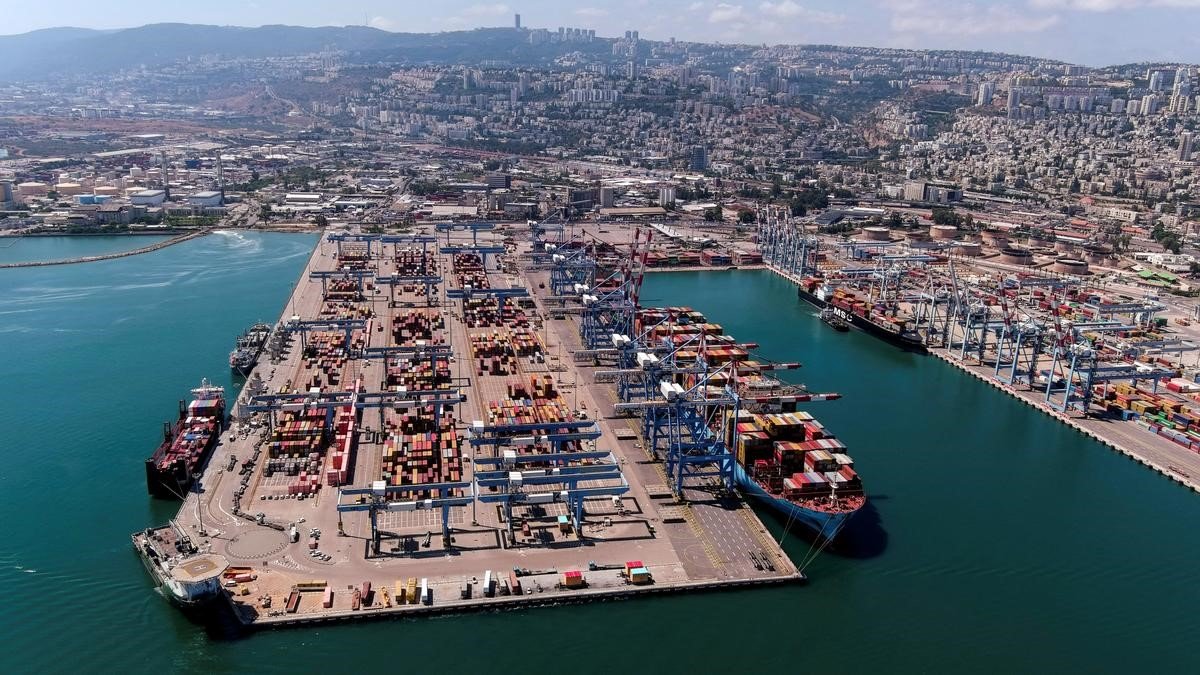
The complementarity between IMEC and Indo-Med is also evident in their strategic timelines and functional requirements. Both require advanced maritime domain awareness to counter risks related to piracy, drone attacks, disruptions in the Red Sea, and instability around the Gulf of Aden. SAGAR has already established India as a net security provider, and MAHASAGAR extends this security umbrella into wider maritime theatres. This strengthens the operating environment for IMEC vessels. Both IMEC and Indo-Med require digitally integrated maritime systems for cargo tracking, weather modelling, and route planning, which Indian institutions already provide. Both initiatives depend on port-led industrialisation, and the Maritime India Vision 2030 offers that foundation. Under this plan, cruise tourism is expected to grow sixfold by 2035, shipbuilding capacity will increase by 10 per cent annually, and the blue economy is projected to contribute at least 4 per cent to national GDP by 2030. These capacities enhance India’s role not only as a participant but as a central facilitator of intercontinental maritime corridors.

Under Sagarmala and Maritime India Vision 2030, Indian port capacity is planned to exceed 3,000 million tonnes annually, logistics costs are targeted to fall below 7% of GDP, and coastal shipping is expected to grow to 10% of domestic freight. These efforts collectively create the domestic readiness required for India to anchor large-scale trans-regional corridors
This combined maritime architecture aligns fully with India’s Viksit Bharat strategy, which prioritises supply chain resilience, green logistics, clean energy transitions, high-value manufacturing, and integration with the global economy. The maritime domain connects these objectives by offering efficiency, sustainability, and strategic depth. IMEC diversifies India’s global connectivity options, reducing dependence on existing chokepoints such as the Suez Canal; while Indo-Med links India with European industrial and maritime ecosystems, expanding India’s strategic reach. SAGAR and MAHASAGAR ensure that India possesses the maritime capabilities, technological readiness, and infrastructure required to support such large-scale corridors. Together, they position India as the principal connective power linking Asia, West Asia, Africa, and Europe.
Thus, India’s evolution from SAGAR to MAHASAGAR and its participation in IMEC and Indo-Med mark the emergence of a truly integrated maritime strategy. India’s geographic location is an innate advantage, but it acquires strategic value only when supported by maritime capability, digital maritime infrastructure, and coordinated diplomatic engagement. The fusion of AI-enriched oceanographic intelligence, resilient and diversified sea-based connectivity corridors, port-led industrialisation, and collaborative partnerships across the Indo-Pacific and the Mediterranean defines the maritime dimension of Viksit Bharat. By building on the foundations laid since 2015, India is positioned to transform the Indian Ocean into the fulcrum of its economic influence and strategic ascent by 2047.


The writer focuses on contemporary Middle Eastern affairs and is the author of 'India and the Gulf: A Security Perspective'. She is also a subject matter expert at the Centre for Joint Warfare Studies.
