

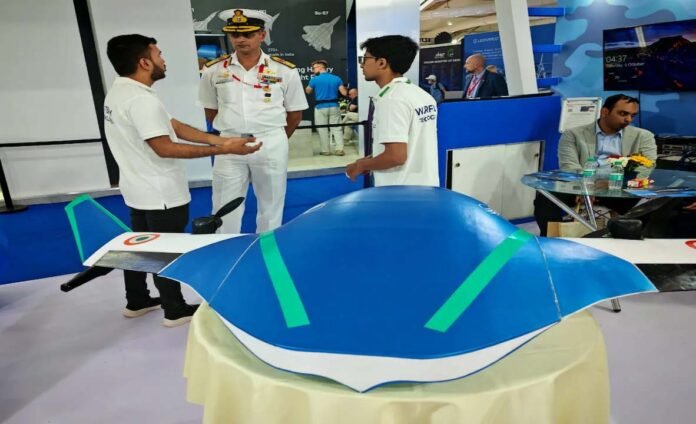
New Delhi: Waterfly Technologies, an IIT-Madras-incubated start-up, is developing electric sea gliders, also known as Wing-In-Ground (WIG) craft, as a sustainable alternative to traditional air and ferry travel. The company plans to transform transportation across coastal regions. Waterfly Technologies showcased its design at Aero India 2025 in Bengaluru. A prototype is expected by the end of 2025.
These sea gliders are designed to take off from the water and fly at an altitude of around four meters, maintaining that height by leveraging ground effect for efficiency. The craft can fly up to 150 metres. Their flatter design improves aerodynamic efficiency. The sea gliders are expected to reach speeds of up to 500 km/h, combining the speed and comfort of aircraft with the affordability and manoeuvrability of boats.

Waterfly Technologies’ co-founder and CEO, Harish Rajesh, stated that traveling from Kolkata to Chennai via WIG craft would cost ₹600 per seat for the 1,600 km journey, which is cheaper than an AC three-tier train ticket.
Waterfly plans to develop a 100 kg prototype by April 2025, followed by a one-tonne prototype later in the year. A full-scale version with a 20-seat capacity and four-ton payload is expected by next year.
The initial battery-powered sea gliders will have a 500 km range, with a hydrogen-electric variant capable of traveling up to 2,000 km. The “E-flying boat” aims to offer zero-carbon travel. These crafts are safer than conventional aircraft in emergencies because they can land on water.
Waterfly Technologies plans to sell these aircraft to airline operators while focusing on manufacturing. The company envisions future routes such as Chennai-Singapore, with a larger version capable of intercontinental travel by 2029, including a Dubai-Los Angeles route.

Waterfly Technologies is targeting certification from the Indian Register of Shipping (IRS) under the International Maritime Organisation (IMO) by 2026. Waterfly Technologies is currently receiving grants from IIT-Madras and is exploring defence funding to support its full-scale prototype and applications in cargo and surveillance.
The concept of ground-effect vehicles dates back to the 1960s, when the Soviet Union developed ekranoplans for military use. Waterfly claims its sea gliders are designed with a focus on efficiency and commercial viability. Waterfly’s team has experience in developing high-performance electric vehicles, having previously built the first electric race car at IIT-Madras.


