

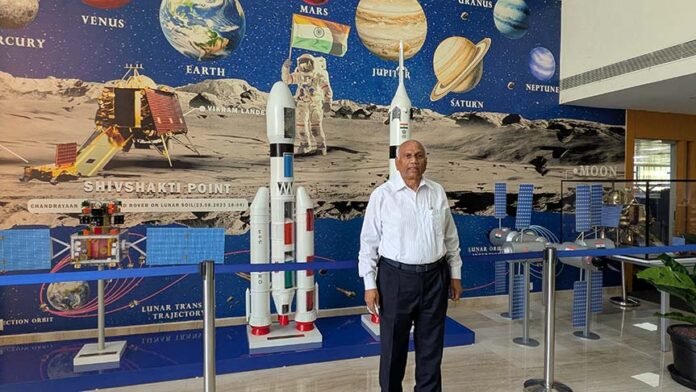
Over the past 40 years or so the Indian space-tech ecosystem has evolved from a one where everything was bought from overseas to a one which has become self-sufficient in many related sectors. Today, due to the pioneering work started by several old and new firms, India stands at a place where it is able to offer its own manufacturing prowess to other nations. Among the many companies in the Indian space sector, a few Hyderabad-based firms stand out for their commitment to India’s vision of a truly Aatmanirbhar Bharat in the space domain.
Ananth Technologies: Early Mover and Pioneer
Hyderabad-based Ananth Technologies is one of the oldest companies focusing on space-tech in city. Ananth was started in 1992 to support the growth of the Indian economy through leveraging aerospace technologies. The company specialises in two key areas: the production of essential aerospace systems and the delivery of high-value geospatial services. These offerings have earned global recognition, with certifications including AS 9100D, ISO 9001:2015, and SAMAR LEVEL-4.

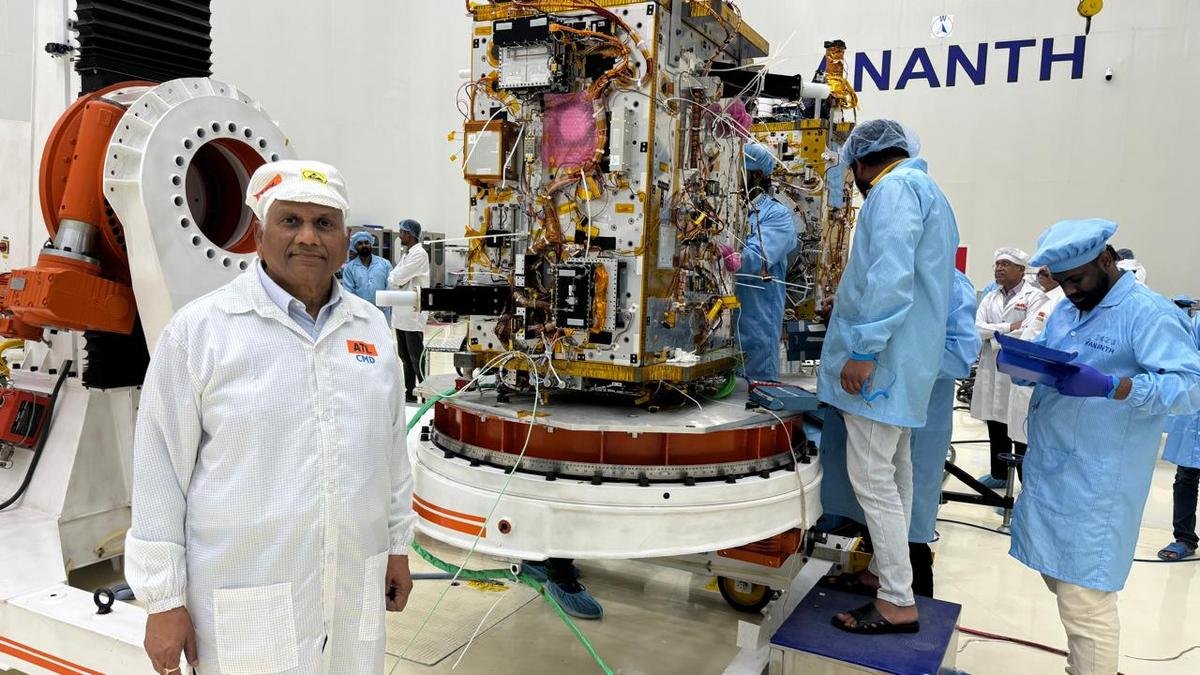
Ananth is a strong and reliable partner in both the local and global aerospace supply chains. Its systems have been integral in about 88 launch vehicles and close to 105 space crafts. In addition, Ananth’s Geospatial services enable activities across the spectrum from town planning to infrastructure building. Expertise, Quality, and Focus are the guiding principles at Ananth.
Ananth is a strong and reliable partner in both the local and global aerospace supply chains. Its systems have been integral in about 88 launch vehicles and close to 105 space crafts. In addition, Ananth’s Geospatial services enable activities across the spectrum from town planning to infrastructure building. Expertise, Quality, and Focus are the guiding principles at Ananth
Ananth provides electronic systems engineering and manufacturing with both build-to-print and build-to-spec approaches. It combines its design expertise around Digital, Analog, RF/Microwave, Lasers, FPGA, Power and Embedded Software with its comprehensive manufacturing (SMT lines) and testing facilities to produce sophisticated systems. Its robust design and production lines make possible both small batches and mass manufacturing of reliable, space-grade systems.
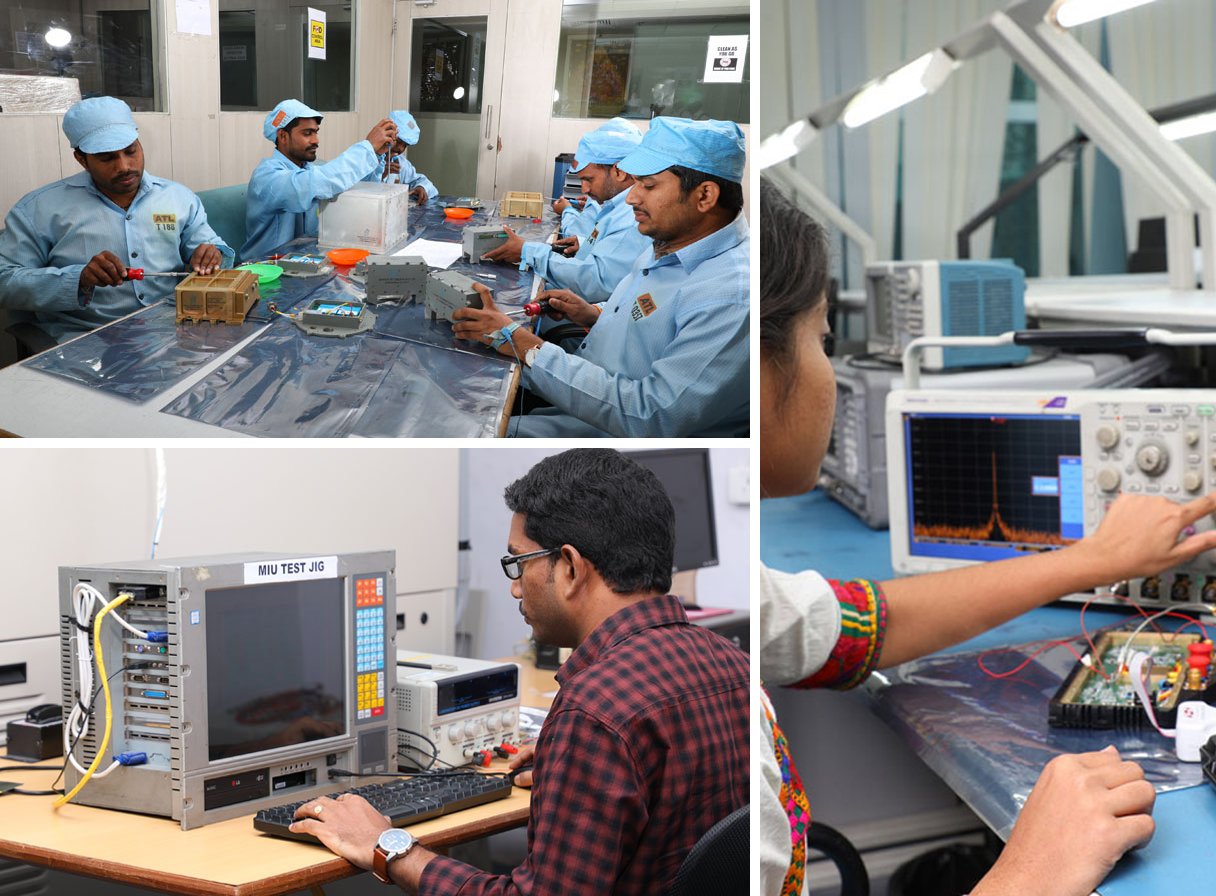
Additionally, Ananth Geospatial services span Remote Sensing, Photogrammetry, and Navigational Maps, to LiDAR. Its targeted solutions lay the foundation for urban planning, infrastructure build out, agricultural forecasting, forestry, and land use. Based on the client’s specific use-case Ananth GIS engineers’ source relevant satellite data, cross-reference/enhance, develop analytics, and create insightful and actionable studies.

Commenting on the journey of India’s space sector over nearly 30 years, Dr Subba Rao Pavuluri, Chairman of Ananth said that during this time span, the space ecosystem in the country has moved from a centralised ISRO-dominated model to a more liberalised, multi-organisational approach involving private industry and country’s defence sector. Additionally, the main changes include moving from working only for ISRO and a single organisation to working for the entire country, the ability to make and launch our own satellites to meet national requirements, and the expansion of opportunities in defence and part of the global supply chains.
Dr Subba Rao commenting on the satellite revolution in India, and whether the private sector is confident enough to take responsibility in the space sector’s progress, said that the government has created a level playing field through reforms, enabling private sector participation. The private sector is expected to come forward to meet demand in communication and other sectors, leveraging India’s strong entrepreneurship culture
Dr Subba Rao was of the view that liberalisation and reforms have made it easier for the space sector to deal with different government agencies, allowing multiple organisations to participate beyond just ISRO, enabling private sector involvement and broader national engagement. He further said that India has developed PSLV and SSLV launch vehicles, with technology transferred to HAL for manufacturing. Start-ups are also working on launch vehicles, and heavy satellites can be launched from India using LVM-3.

Commenting on the role which the government play in supporting technology development in the space sector, Dr Subba Rao said that the present government is proactive and provides funding for technology development, but more support is needed to spread funding across various areas and make technology development more viable for startups and mid-size companies. He further said that the government has created a level playing field through reforms, enabling private sector participation. The private sector is expected to come forward to meet demand in communication and other sectors, leveraging India’s strong entrepreneurship culture.
On the issue of Indian armed forces possessing sufficient communication infrastructure for their future needs, Dr Subba Rao was of the view that the dynamic and increasing demand means more opportunities and needs enhanced communication for creating digital Highways for education and health sectors etc. and many surveillance satellites in the defence sector.
Dr Subba Rao commenting on the satellite revolution in India, and whether the private sector is confident enough to take responsibility in the space sector’s progress, said that the government has created a level playing field through reforms, enabling private sector participation. The private sector is expected to come forward to meet demand in communication and other sectors, leveraging India’s strong entrepreneurship culture.
“Yes, India has many entrepreneurs, and with government encouragement and a level playing field, the private sector is confident and capable of developing new products and technologies in the space sector. The greatest strength of India is more on the entrepreneurship side, and every individual is an entrepreneur by himself in the country, which offers great potential for them to grow,” concluded Dr Rao.
Dhruva Space: Accelerating the Transformative Leap
Meanwhile, Dhruva Space, led by its young CEO and Co-founder, Sanjay Nekkanti was started in 2012, after Sanjay finished his ECE Engineering degree from the SRM University and the Erasmus Mundus Spacemaster dual Masters programme in Europe. AT SRM, where he worked on India’s first student nanosatellite project in partnership with ISRO – was the catalyst for him to start his own private Space Tech startup.
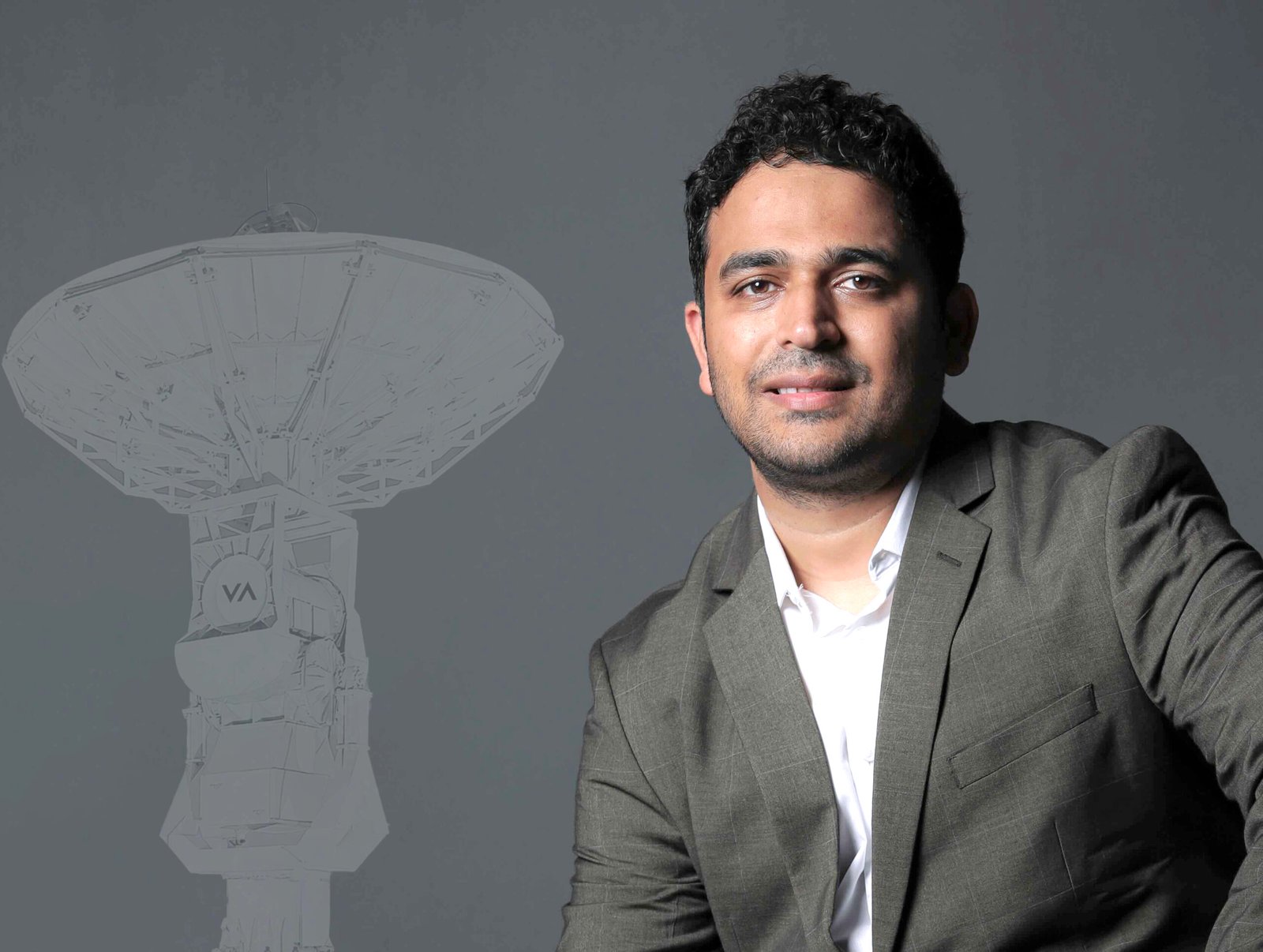
In those early years, Sanjay had pondered, “As a country we have achieved a lot in the Space sector over the last 40-50 years, and currently we have our own reputed rocket programme. We’ve built missions that have gone to the Moon, Mars, the Sun, and now are planning a mission to Venus. But India still does not have its own private sector-led Space industry, why?” He added that many skeptics openly mentioned that the private sector was not positioned to manufacture satellites.
However, he noticed that the Government had never stopped anybody from making satellites and that development of satellites at the private sector level did not exist in India at the time. Thus, he decided to work in this niche area, driven by an enduring love for his country and a desire to help catalyse the private sector.
Dhruva Space, led by its young CEO and Co-founder, Sanjay Nekkanti was started in 2012, after Sanjay finished his ECE Engineering degree from the SRM University and the Erasmus Mundus Spacemaster dual Masters programme in Europe. AT SRM, where he worked on India’s first student nanosatellite project in partnership with ISRO – was the catalyst for him to start his own private Space Tech startup
Over the years, Dhruva has doubled down on its thesis as a full-stack space engineering solutions provider, active across Space, Launch, and Ground segments. The company provides satellites, ground stations, and launch services – either together as a complete package or individually – to help power a wide range of Space-based applications. Dhruva caters to a wide gamut of customers, be it Defence and Government, enterprise, or research institutes.

In the Space segment, Dhruva offers scalable, modular satellite platforms ranging from under 1 kilogram to 500 kilograms. These platforms support commercial, defence, and scientific missions in Low Earth Orbit (LEO) and beyond, comprising the P-DoT cubesat; the P-30, a compact and modular 20-50 kg microsat; and the P-Nu microsat available up to 500 kg. Dhruva Space also designs and develops Space-grade solar panels, which are seeing traction from New Space companies worldwide, as well as Government and Defence customers. In addition, Dhruva Space’s Launching Expeditions for Aspiring Payloads (LEAP) series of missions offers a full hosted-payload solution for in-orbit validation for a variety of customers.
In the Launch segment, Dhruva manufactures satellite orbital deployers for both cubesats and microsats and launch facilitation. These separation systems, compatible with any launch vehicle around the world, have been validated in orbit over the last three years and are seeing growing customer traction. Launch integration is another key service offered by Dhruva, where the satellite and separation system are interfaced with the launch vehicle. The company’s LEAP-1 mission, launched aboard SpaceX Falcon 9, marked a major technical milestone, making Dhruva the first private Indian company to perform this integration entirely in-house.
In the Ground segment, Dhruva Space’s Ground Station solutions are designed for precise satellite tracking, seamless command, and reliable communication, specifically optimised for Low Earth Orbit missions. Teamed with Dhruva’s proprietary mission operations software ISOCS, these stations can track multiple satellites at once, ensuring optimal efficiency and uptime. Dhruva Space also partners with global players across Australia, Europe, and the Americas.
Over the years, Dhruva has doubled down on its thesis as a full-stack space engineering solutions provider, active across Space, Launch, and Ground segments. The company provides satellites, ground stations, and launch services – either together as a complete package or individually – to help power a wide range of Space-based applications. Dhruva caters to a wide gamut of customers, be it Defence and Government, enterprise, or research institutes
Dhruva Space’s AstraView is a commercial imagery‑service built on a constellation of over 200 Earth Observation satellites from aggregated strategic partners – spanning optical, SAR, RF, and Hyperspectral sensors. The product is designed around three core principles: resolution, revisit, and cost, giving users a flexible, high-resolution, and quick-turnaround option. AstraView allows near-continuous access to data from many satellites, making it a valued solution for organisations working in Geospatial analysis, planning, and operations.
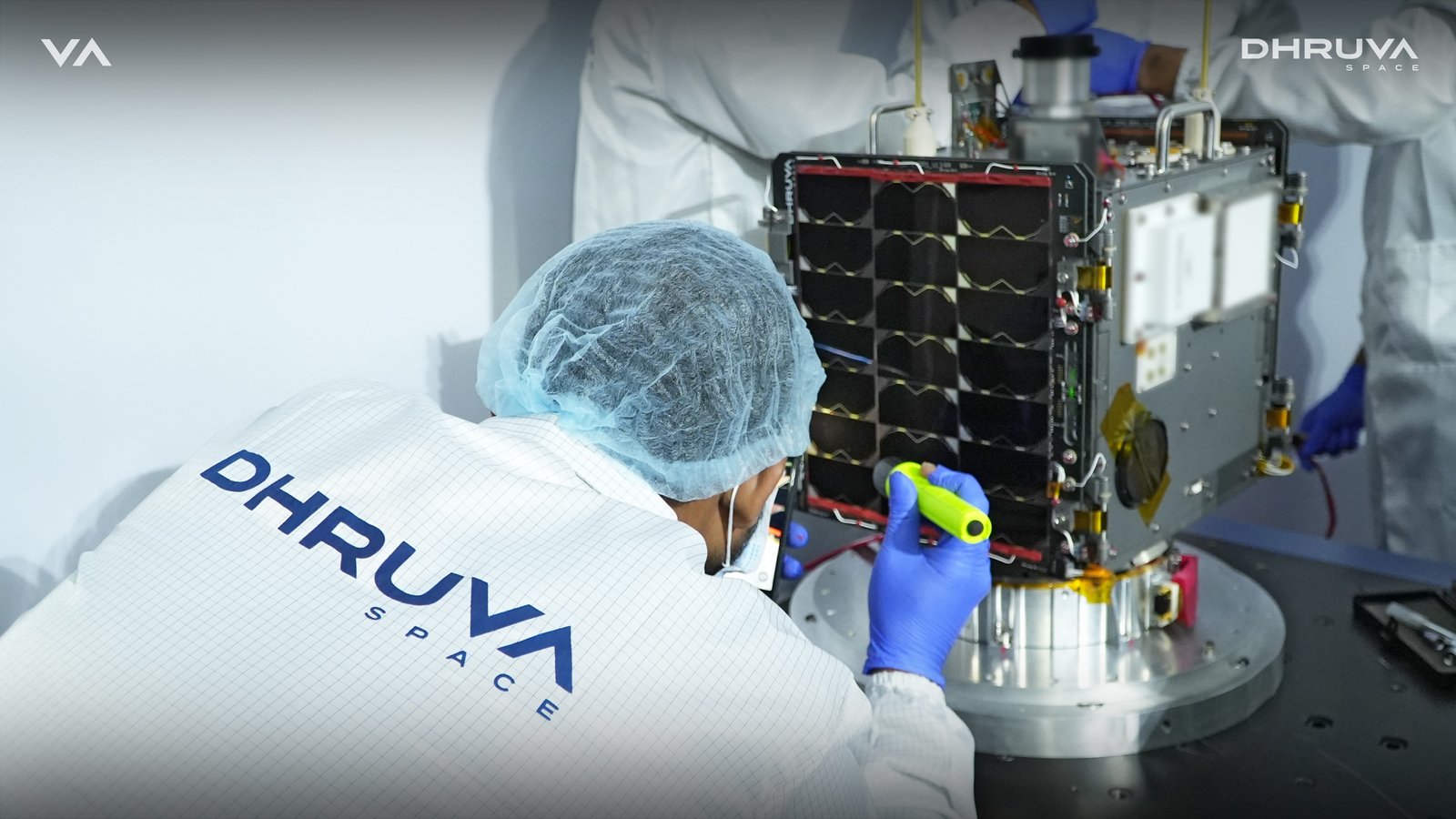
In its mission to drive reliable, frequent and cost-effective access to Space, Dhruva Space has deployed 10 Space missions across 5 rocket launches in just a span of 3 years – a record feat for the Indian private sector; and the company is currently looking at an order book of around 30 satellites as well as the ongoing construction of a 280,000 square-foot spacecraft manufacturing facility in Hyderabad to meet the growing demand for satellites and satellite-enabled services.
The success and commitment demonstrated by forward-thinking companies like Ananth Technologies and Dhruva Space shows that India is truly set on its path to become an Aatmanirbhar Bharat
The success and commitment demonstrated by forward-thinking companies like Ananth Technologies and Dhruva Space shows that India is truly set on its path to become an Aatmanirbhar Bharat. With considerable support from the government the space-tech ecosystem in the country has evolved to a level where many Indian companies offer their expertise and facilities to many other countries, too. This is a testament to their commitment and proper hand holding by the government.

-The writer is a New Delhi-based senior commentator on international and strategic affairs, environmental issues, an interfaith practitioner, and a media consultant. The views expressed are personal and do not necessarily carry the views of Raksha Anirveda
