

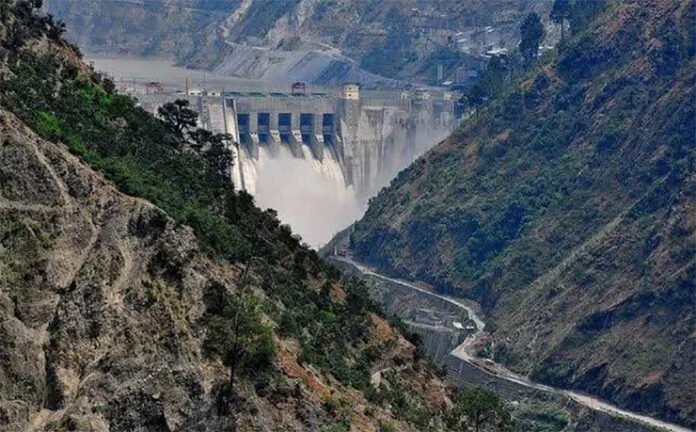
In a decisive move that underscores India’s unwavering commitment to self-reliance, sustainable development, and long-term energy security, the government has recently granted environmental clearance for the ambitious 260 MW Dulhasti Stage-II hydropower project situated on the majestic Chenab River in Jammu and Kashmir’s Kishtwar district. This pivotal approval, arriving merely two months after the green signal for the colossal 1,856 MW Sawalkot project on the same river, unequivocally signals a renewed and vigorous momentum in harnessing the region’s immense hydroelectric potential.
With the Indus Waters Treaty (IWT) now formally held in abeyance since April 2025, in direct response to Pakistan’s unrelenting sponsorship of cross-border terrorism and destabilising activities, India is at last empowered to expedite a series of long-stalled infrastructure initiatives. These projects not only promise a surge in clean, renewable energy production but also catalyse robust economic growth, job creation, and bolstered national security. Far from being a routine infrastructure endeavour, this represents a profound and bold assertion of India’s sovereign prerogative to fully utilise its abundant natural resources, ensuring they serve the greater good of its burgeoning population and contribute to a resilient, self-sufficient nation.

The suspension of the IWT in April 2025 marked a watershed moment, a long-overdue and resolute response to years of escalating security threats and diplomatic impasses. Signed in 1960 under the auspices of the World Bank, the treaty allocated the waters of the eastern rivers (Sutlej, Beas, and Ravi) to India and the western rivers (Indus, Jhelum, and Chenab) to Pakistan, with India permitted limited usage on the western rivers for irrigation, hydropower, and other non-consumptive purposes.
However, Pakistan’s repeated misuse of international arbitration forums to obstruct legitimate Indian projects, coupled with its support for terrorism in Jammu and Kashmir, eroded the treaty’s foundational spirit of cooperation. Post-suspension, India has demonstrated remarkable agility in revitalising its hydropower ambitions across the Indus basin, prioritising projects that had languished due to external pressures.
The Dulhasti-II project, envisioned as a seamless extension of the already operational 390 MW Dulhasti-I plant, which has been generating power reliably since 2007, is projected to incur costs exceeding Rs 3,200 crore and will be spearheaded by the state-owned NHPC Limited. This initiative forms part of a broader cascade of approvals, prominently featuring the Sawalkot project, which is set to contribute an impressive 1,856 MW to the grid at an estimated expenditure of Rs 5,129 crore.
Complementing these are other critical ventures now gaining significant traction, such as the 850 MW Ratle project, the 1,000 MW Pakal Dul, the Kwar and Kiru schemes, the Kirthai I and II developments, and the strategically vital Bursar project, which incorporates substantial storage capabilities to manage water flows during peak and lean seasons. These undertakings are far from arbitrary or speculative; they are meticulously designed to bridge glaring deficiencies in India’s energy infrastructure, addressing the nation’s escalating demand for reliable power amid rapid urbanisation and industrialisation.

Delving deeper into the regional context, Jammu and Kashmir possesses an astonishing estimated hydropower potential surpassing 20,000 MW, a figure that highlights the untapped wealth of its river systems. Regrettably, to date, only approximately 3,540 MW has been realised through 32 operational projects, representing a mere fraction of this capacity. This chronic underutilisation has perpetuated a cycle of dependency on imported electricity from other states, which not only inflates costs but also hampers local economic advancement, stifles industrial initiatives, and exposes vulnerable communities — particularly in remote, mountainous areas — to frequent and debilitating energy shortages.
The consequences are multifaceted: from disrupted education and healthcare services to limited opportunities for small-scale enterprises that could otherwise thrive with a stable power supply. By contrast, accelerating these hydropower developments could transform the energy landscape, enabling Jammu and Kashmir to become a net exporter of electricity, thereby generating revenue that could be reinvested in social welfare programmes and infrastructure.

The profound significance of this hydropower push transcends mere metrics of power generation, extending into the realms of environmental stewardship, economic revitalisation, and social integration. Hydropower stands as a foundational pillar in India’s ambitious clean energy transition, seamlessly aligning with international commitments under frameworks like the Paris Agreement to combat climate change and reduce greenhouse gas emissions.
In an era where the global community is increasingly contending with the perils of fossil fuel dependencies — exemplified by volatile oil prices and supply disruptions stemming from geopolitical conflicts such as the ongoing tensions in the Middle East and the lingering effects of the Russia-Ukraine war — India’s strategic pivot towards renewable sources like hydroelectricity positions the nation as a proactive and responsible leader in sustainable development.
The Dulhasti-II project, envisioned as a seamless extension of the already operational 390 MW Dulhasti-I plant, which has been generating power reliably since 2007, is projected to incur costs exceeding Rs 3,200 crore and will be spearheaded by the state-owned NHPC Limited
Projects like Dulhasti-II and its sister initiatives are poised to create thousands of direct and indirect jobs during their construction phases, which often span several years, and continue to provide employment in operations and maintenance thereafter. This influx of opportunities is particularly transformative for the remote and economically marginalised areas of Jammu and Kashmir, where unemployment rates have historically been high due to security concerns and limited industrial activity.
Furthermore, the ancillary infrastructure developments — encompassing new roads, bridges, tunnels, and expansive power transmission grids — will not only facilitate project execution but also enhance connectivity, drawing these isolated regions into the fold of the national mainstream economy. Such integration promises to foster greater stability, cultural exchange, and prosperity in an area that has endured decades of turbulence, thereby contributing to lasting peace and development.
Beyond these domestic benefits, these hydropower endeavours significantly fortify India’s energy security amid a backdrop of unpredictable global dynamics. With international supply chains frequently disrupted by armed conflicts, trade sanctions, and natural disasters, the emphasis on domestic renewable energy sources diminishes India’s vulnerability to fluctuations in imported coal, oil, and natural gas, which currently account for a substantial portion of the energy mix. The Chenab River, originating in the Himalayas and traversing through Indian-controlled territory before meandering into Pakistan, is increasingly recognised as a paramount strategic asset, essential for both water management and power generation.
By prioritising run-of-the-river schemes — which ingeniously harness the river’s kinetic energy with minimal alterations to natural water flows and were even allowable under the erstwhile IWT provisions — India is exercising prudent control without resorting to provocative measures that could escalate tensions.
Jammu and Kashmir possesses an estimated 20,000 MW hydropower potential, which highlights the untapped wealth of its river systems. Regrettably, to date, only approximately 3,540 MW has been realised through 32 operational projects, representing a mere fraction of this capacity
Pakistan’s vehement protests regarding Dulhasti-II and Sawalkot appear increasingly untenable in light of the treaty’s suspension, especially given Islamabad’s track record of leveraging international bodies such as the World Bank and the Permanent Court of Arbitration to stall Indian initiatives. Historical examples abound, such as the protracted delays inflicted on the Ratle and Kishanganga projects, which resulted in staggering financial losses estimated in billions of rupees, foregone energy production, and missed developmental opportunities.
Liberated from these constraints, India can now steadfastly prioritise its sovereign imperatives, ensuring that precious water resources are optimised to advance national interests rather than remaining ensnared in the quagmire of bilateral acrimony and diplomatic stalemates.
The adoption of run-of-the-river designs inherently mitigates ecological disruptions by avoiding the large-scale submergence associated with traditional reservoir-based dams, thereby preserving riverine ecosystems, fish migration patterns, and downstream water quality. India’s exemplary track record with established projects like Dulhasti-I, which has operated for nearly two decades without major environmental incidents, underscores a commitment to responsible resource management.
Pakistan’s vehement protests regarding Dulhasti-II and Sawalkot appear increasingly untenable in light of the suspension of the IWT treaty, especially given Islamabad’s track record of leveraging international bodies such as the World Bank and the Permanent Court of Arbitration to stall Indian initiatives
Moreover, rather than aggravating water scarcity issues in downstream regions, these initiatives promote more efficient water utilisation through advanced technologies like real-time monitoring systems and sediment management strategies, which could ultimately yield basin-wide advantages, including enhanced flood control during monsoon seasons and potential frameworks for equitable power sharing should diplomatic relations improve.
This surging momentum is emblematic of a grander vision articulated under Prime Minister Narendra Modi’s leadership: Aatmanirbhar Bharat, or a self-reliant India that stands tall on the global stage. By aggressively fast-tracking milestones — such as the commissioning of Pakal Dul and Kiru by December 2026, Kwar by March 2028, and the accelerated construction of Ratle — the government is transcending mere dam-building to erect the very foundations of a fortified national future.
In the context of Jammu and Kashmir, where hydropower’s potential can catalyse diversified industrial growth, eco-tourism, and agro-processing industries, these projects actively dismantle entrenched narratives of alienation and marginalisation. They deliver concrete, palpable benefits: from subsidised and reliable electricity that powers homes and businesses to targeted skill development programmes that equip local youth with technical expertise in engineering, environmental management, and renewable energy sectors, alongside comprehensive infrastructure upgrades that improve accessibility and quality of life.
For the welfare of 1.4 billion citizens, India is channelling the Chenab’s formidable and untamed flow into a veritable torrent of opportunity, innovation, and empowerment. This epochal juncture represents India’s resolute moment to reclaim its rivers, not as contested boundaries but as lifelines of progress
As India navigates this transformative trajectory, it broadcasts an unequivocal message to the world: While bilateral cooperation remains an ideal pathway, it cannot come at the irrevocable cost of national security, developmental progress, or sovereign autonomy. The abeyance of the IWT serves as a poignant reminder that international agreements must adapt to evolving geopolitical realities; perpetual unilateral concessions cannot endure in the face of repeated betrayals and adversarial actions. Should Pakistan genuinely opt for a path of peace, eschewing terrorism and embracing constructive dialogue, avenues for renewed negotiations could certainly reopen, potentially leading to mutually beneficial water-sharing arrangements.
In the interim, however, India is duty-bound to prioritise the welfare of its 1.4 billion citizens, channelling the Chenab’s formidable and untamed flow into a veritable torrent of opportunity, innovation, and empowerment. This epochal juncture represents India’s resolute moment to reclaim its rivers, not as contested boundaries but as lifelines of progress, illuminating a pathway towards a brighter, more secure, and sustainably powered tomorrow.

The writer is Special Advisor for South Asia at Parley Policy Initiative, Republic of Korea. He is a regular commentator on the issues of Water Security and Transboundary River issues in South Asia. The views expressed are of the writer and do not necessarily reflect the views of Raksha Anirveda
