

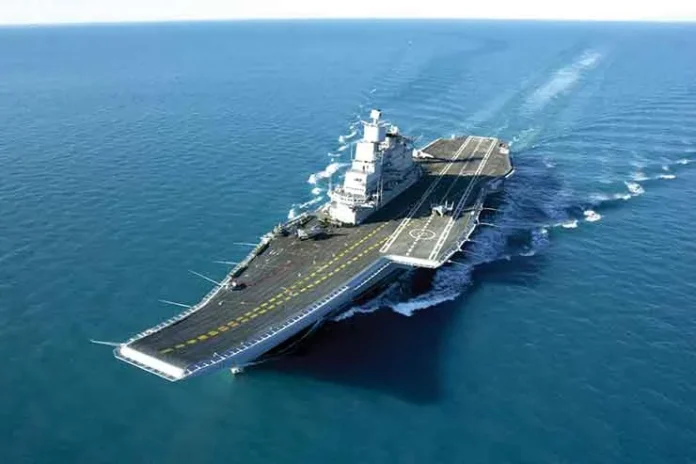
In 1945, diplomat and author KM Panikkar foresaw that India’s future lay in the sea. In his book, ‘India and the Indian Ocean,’ he wrote: “While to other countries, the Indian Ocean is only one of the important oceanic areas, to India it is the vital sea. Her life lines are concentrated in that area. Her future is dependent on the freedom of that vast water surface. No industrial development, no commercial growth, no stable political structure is possible for her unless the Indian Ocean is free and her own shores fully protected. The Indian Ocean must therefore remain truly Indian.”
While India does not aspire to control the Indian Ocean, like any great power it must acquire the ability to project force into the Indian Ocean Rim and, if required for national security or humanitarian purposes, beyond the region. For a nation poised to shape the 21st century, India’s story is inseparable from the big blue. With 90 per cent of its trade moving across maritime highways and a strategic location at the heart of the Indo-Pacific, India’s maritime ambition is not a choice — but destiny. At the focus of this destiny stands the Indian Navy, a silent yet formidable force knitting together national security, economic resilience and the vision of a ‘Viksit Samriddha Bharat’ or a developed and prosperous India.

Today’s Navy carries its mission in a crisp mantra: Combat Ready. Cohesive. Aatmanirbhar. Three words that capture decades of transformation — and a future defined by noble intentions.
Combat Ready: Sharpening the Spear
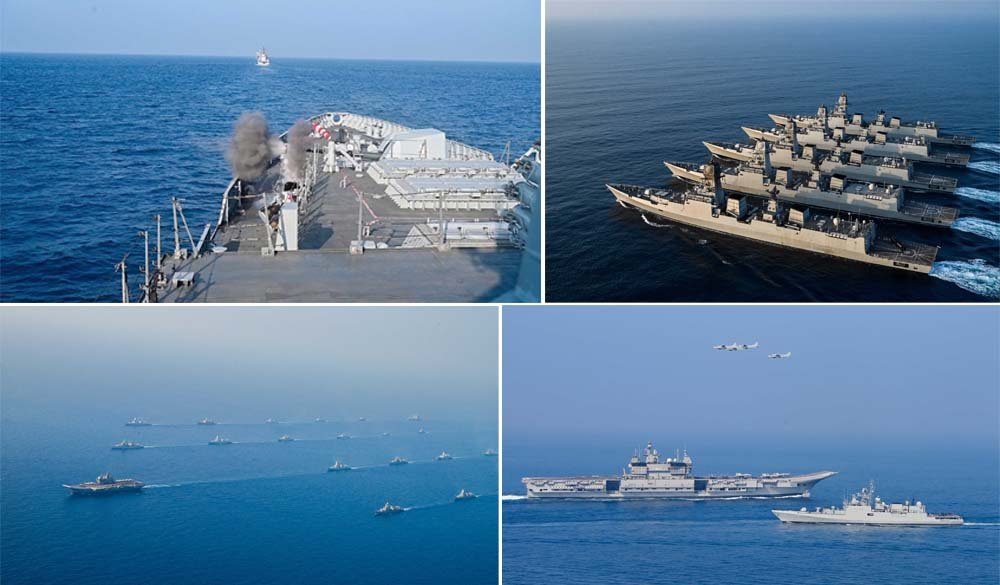
The Indian Navy’s operational tempo today rivals the world’s advanced maritime forces. Massive exercises like TROPEX 2025, held across the vast Indian Ocean Region, are more than drills — they are rehearsals for any contingency, from humanitarian missions to high-intensity conflict. Similarly, Exercise Trishul, a tri-service mega-operation, brings together the Army, Navy and Air Force across domains ranging from land and sea to cyber and space.
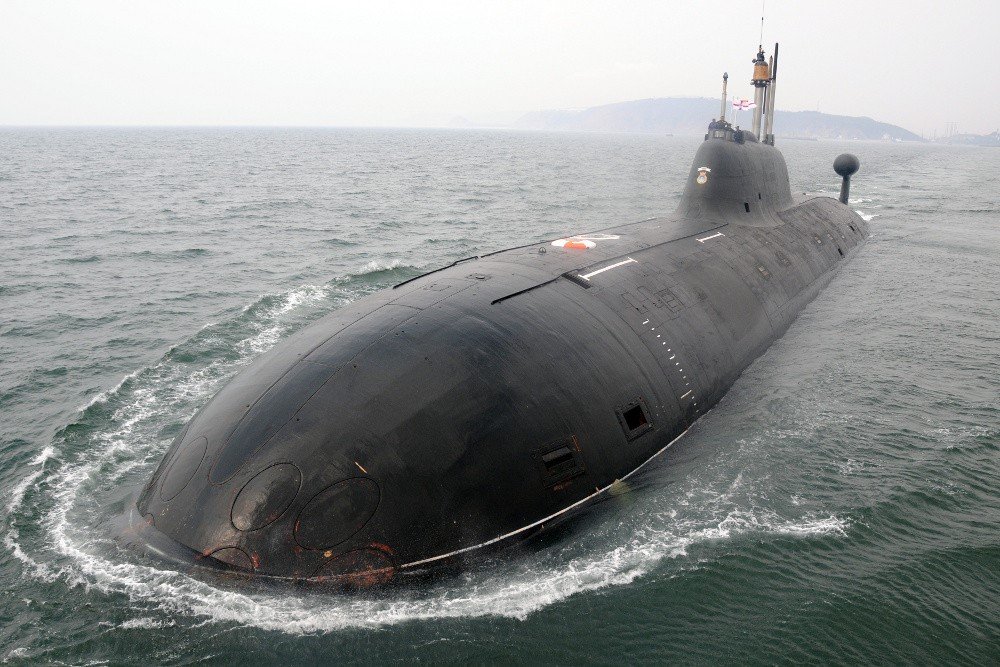
This synergy is backed by a modernising fleet: stealth destroyers and frigates, advanced submarines — including nuclear-powered and ballistic missile variants — P-8I maritime surveillance aircraft and expanding aircraft carrier capabilities. Add to this a growing ecosystem of UAVs, electronic warfare platforms and network-centric systems, and you get a force designed not only to defend but to deter.
Whether escorting merchant vessels through danger zones, conducting anti-piracy patrols, or responding to crises like Operation Sindoor, the Navy’s operational presence remains constant, vigilant and reliable.

Cohesive Force: A Military that Moves as One
If combat readiness is one pillar, cohesion is another. India’s military is steadily transitioning towards integrated theatre commands, and the Navy is at the forefront of this evolution.

Joint drills, coastal defence operations and combined domain-awareness networks link the Navy seamlessly with the Coast Guard, paramilitary units and partners across the Indo-Pacific. This expanded Maritime Domain Awareness — powered by satellites, AI-based analytics, unmanned systems and fusion centres — ensures the seas surrounding India remain transparent and secure.
Through multilateral exercises like Malabar and Milan, and initiatives such as MAHASAGAR (Mutual and Holistic Advancement for Security and Growth Across Regions), India has also cemented its reputation as the region’s preferred security partner. It is diplomacy through presence — quiet, firm and influential.
Aatmanirbhar Bharat at Sea: India Builds its Own Maritime Future
Self-reliance is no longer an aspiration for the Indian Navy — it is a way of life. India today ranks among the world’s major shipbuilding and ship-recycling nations. More than 1,500 Indian-registered ships operate across global waters. Major ports are expanding rapidly, backed by a new shipbuilding and repair policy and 100 per cent FDI in major maritime sectors.
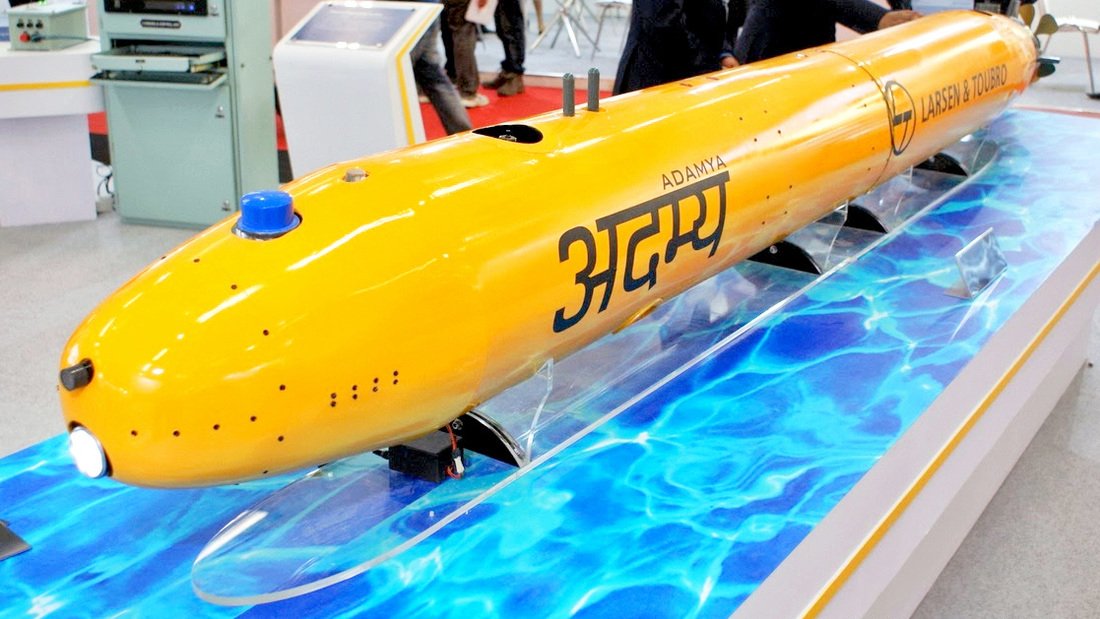
Within naval shipyards, indigenous destroyers, stealth frigates, landing platform docks and unmanned systems are taking shape. DRDO, private firms and start-ups are developing homegrown sensors, weapons, propulsion technologies and AI-enabled systems. Rigorous sea trials test every aspect — from hull integrity to digital combat suites — ensuring Indian-built ships meet world-class standards.
Legal reforms are powering this resurgence. New bills replacing colonial-era maritime laws — on merchant shipping, carriage of goods and coastal operations — modernise India’s maritime governance and boost safety and environmental protection.
The Navy, meanwhile, is digitising everything: maintenance, logistics, personnel management and supply chains. With AI-enabled predictive systems and cyber-secure platforms, the fleet is as efficient as it is advanced.

Human Capital: The Heart of Naval Power
Behind every cutting-edge platform stands a sailor or officer shaped by rigorous training and nurtured by strong support systems. The Indian Navy’s academies are evolving into hubs of technological excellence — emphasising cyber warfare, unmanned systems, electronic warfare and multi-domain operations. Simulators, wargaming labs and joint drills refine instinct and judgement long before a sailor sets foot on a deck.
The Navy’s commitment to welfare ensures families remain supported, careers flourish, and morale stays high. Leadership at the highest levels champions integrity, accountability and national service — values echoed at platforms such as the annual Commanders’ Conference in New Delhi.
Through community outreach and awareness drives, the Navy also builds maritime consciousness. This is something that Panikkar urged India to cultivate decades ago: “If India desires to be a naval power, it is not sufficient to create a navy… it must also create a naval tradition in the public.”
Securing the Seas: Vigilance in a New Maritime Age
India’s maritime security network blends technology with strategy. Coastal radars, satellites, long-range aircraft and digital surveillance systems provide real-time monitoring against illegal fishing, trafficking or grey-zone threats.
When disaster strikes — whether earthquakes, cyclones or evacuations abroad — the Navy is often first on the scene, delivering supplies, rescuing people and offering medical aid across the Indian Ocean Region.
Environmental stewardship, too, forms part of its mission. From clean-energy initiatives to marine conservation support, the Navy champions sustainability in a domain increasingly stressed by human activity.
Geopolitics and the Blue Economy: The Stakes Have Never Been Higher
In a world defined by Indo-Pacific competition, India’s maritime strength is the foundation of both security and prosperity. Securing the Indian Ocean’s trade arteries and energy routes is not just strategic — it is existential.
The Navy’s role in supporting India’s Blue Economy is immense. From fisheries and offshore energy to shipping, tourism and ports, maritime industries thrive on safe seas. With exports touching record highs in recent years, naval security underpins India’s global economic footprint.
Looking Ahead: Vision 2047 and the Making of a Maritime Power
As India marches towards the centenary of its independence, the Indian Navy’s roadmap is bold and clear. More advanced platforms, deeper integration, indigenous technology, stronger partnerships and a highly skilled human force will define the path to Viksit Bharat 2047.
The Navy’s evolution — doctrinal, technological and cultural — forms the backbone of this vision. It remains, in every sense, the guardian of India’s maritime renaissance.
Conclusion
From safeguarding sea lanes to driving innovation, from enabling diplomacy to empowering economic growth, the Indian Navy stands at the heart of India’s journey towards a prosperous, developed future. In its commitment to being Combat Ready, Cohesive, and Aatmanirbhar, the Navy reflects the spirit of a resurgent nation — confident, capable and ready to claim its place on the world’s maritime stage.
Clearly, India’s future depends on the control of the sea. And the Indian Navy ensures that the future remains secure.

–The writer is a globally cited defence analyst based in New Zealand. The views expressed are of the writer and do not necessarily reflect the views of Raksha Anirveda
