

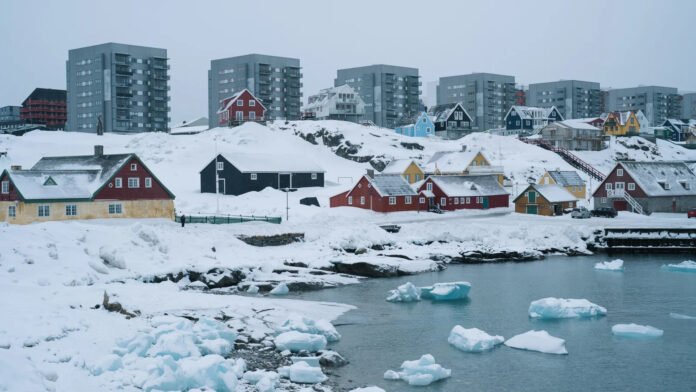
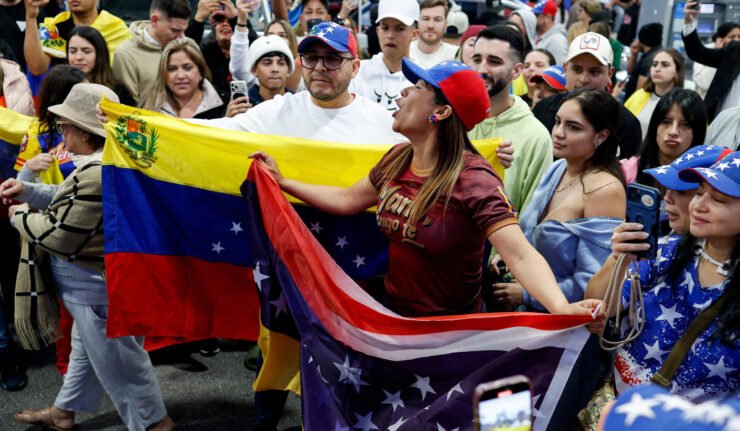
Following the military operation in Venezuela on January 3, in which the US forces captured Venezuelan President Nicolas Maduro, President Donald Trump has been repeatedly talking about annexing Greenland. Trump’s continuing threats, not even veiled, have created discomfort among the NATO allies in Europe. European countries are supporting Denmark, to which Greenland belongs, and Trump is coming down heavily on anyone who opposes his wish to make Greenland a part of the United States. He has threatened various countries, including Denmark, the United Kingdom, France, Germany, and Sweden, with tariffs up to 25% for opposing the US plan to take over Greenland.
Following the military operation in Venezuela on January 3, in which the US forces captured Venezuelan President Nicolas Maduro, President Donald Trump has been repeatedly talking about annexing Greenland. Trump’s continuing threats, not even veiled, have created discomfort among the NATO allies in Europe. European countries are supporting Denmark, to which Greenland belongs, and Trump is coming down heavily on anyone who opposes his wish to make Greenland a part of the United States. He has threatened various countries, including Denmark, the United Kingdom, France, Germany, and Sweden, with tariffs up to 25% for opposing the US plan to take over Greenland.

Some words and actions by the US president may be construed as reactions to contemporary developments worldwide. However, several of these resentments are old, dating back to his first term of presidency. His stand on Greenland could be understood from three perspectives.
First, as is apparent, Trump’s rhetoric on Greenland points towards deepening the US involvement in the geopolitics of the Arctic region, primarily a base for scientific experiments and exploration. It has transformed into a geopolitical entity with regional and extra-regional powers vying for a greater foothold. The Arctic Region includes the Arctic Ocean and parts of Canada, Denmark, Finland, Iceland, Norway, Russia, Sweden, and the US. Apart from rich deposits of natural resources, energy, and rare-earth elements, the Arctic Region is significant from a connectivity perspective.
Trump’s rhetoric on Greenland points towards deepening the US involvement in the geopolitics of the Arctic region, primarily a base for scientific experiments and exploration. It has transformed into a geopolitical entity with regional and extra-regional powers vying for a greater foothold
For instance, Russia, which is a resident power in the Arctic, enjoys an advantage in mineral extraction since it possesses an advanced icebreaker fleet as well as a substantial military presence in the region. This is perceived as a threat to other regional and extra-regional powers. Further, Russia is also developing the Northern Sea Route, a connectivity initiative through the Arctic, which includes several ports, primarily aimed at transporting oil and liquefied natural gas. Energy projects and the Northern Sea Route are key to Russia’s economy. Similarly, China, though not a resident power, has taken rapid strides to expand its outreach to the Arctic. Asserting itself as a Near-Arctic State, China unveiled its ambition to become a polar power in 2014. Initially working under Moscow’s shadow, Beijing has now started to underscore its presence by navigating its own icebreakers through the Arctic. China even considers the Arctic as a third Silk Road Corridor, a part of the Belt and Road Initiative.

With Russia and China firmly positioned in the Arctic, the US is aiming to challenge their influence as well as gain a greater share in the natural resources of the region.
Second, Trump’s obsession with Greenland has fractured the West’s response to Russia and support for Ukraine. With Trump focused on Greenland, the threat perception of Russia stands diluted. For the last four years, European countries have constantly presented themselves as living under threat, as Russia’s invasion of Ukraine was portrayed as being aimed at Europe and not just Ukraine. The US, having supported Ukraine and the European allies of NATO with financial and military aid, is now not only occasionally talking about opening diplomatic channels with Russia, but also creating divisions within Europe by eyeing Greenland.

Russia is a resident power in the Arctic and enjoys an advantage in mineral extraction. China considers the Arctic as a third Silk Road Corridor, a part of the Belt and Road Initiative. The United States is aiming to challenge the influence of China and Russia and gain a greater share of the natural resources
Further, even as Washington stands its ground on Greenland, Denmark’s Head of Joint Arctic Command Major General Soren Andersen stated that he is focused on countering Russia in the Arctic and not the US. However, though Denmark’s Joint Arctic Command is trying to play down the threat from the US, European NATO allies are dispatching their military personnel to Greenland, apparently for joint exercises, but in reality, to send a signal to Washington against any attack on Greenland. Again, these mixed signals from the NATO members are only widening the divisions between the US and its European allies and are weakening their stand against what they have perceived as a threat, Russia.
Third, in continuation from the earlier point, Trump’s statements about Greenland are not limited to the US’s increased involvement in the geopolitics of the Arctic Region. Trump’s pressure tactics also point towards growing friction and fault lines between Washington and its European NATO allies.
As President Trump’s resentment of European allies continues, French lawmakers called for Paris to rethink its relationship with NATO. French President Emmanuel Macron has also spoken about Europe’s autonomy as far as its security is concerned
Since his first term in office (2016-2020), Trump has had an uneasy relationship with the US’s European partners. Trump’s main rant against European countries was due to their lack of financial contribution to NATO. The US president had been critical about the lack of commitment from European partners towards NATO and had even threatened them with a trade war almost a decade back.
As Trump’s resentment of European allies continues, there are calls from French lawmakers that Paris should rethink its relationship with NATO. French President Emmanuel Macron has also spoken about Europe’s autonomy as far as security is concerned.
Fresh from his apparent success in Venezuela, Trump’s expansionist ideas are now pushing the US’s European allies away. Any move towards Greenland could fracture the US-Europe ties for a long time, and both sides could find it hard to repair them.

–The writer is an Independent Political Analyst and Researcher based in Vadodara. Follow him on Twitter: @NiranjanMarjani. The views expressed are of the writer and do not necessarily reflect the views of Raksha Anirveda
