
DENVER, July 11, 2018. Lockheed Martin has embraced a 3-D printed titanium dome for satellite fuel tanks so big you can’t even put your arms around it. The 46-inch- (1.16-meter-) diameter vessel completed final rounds of quality testing this month, ending a multi-year development programme to create giant, high-pressure tanks that carry fuel on board satellites.
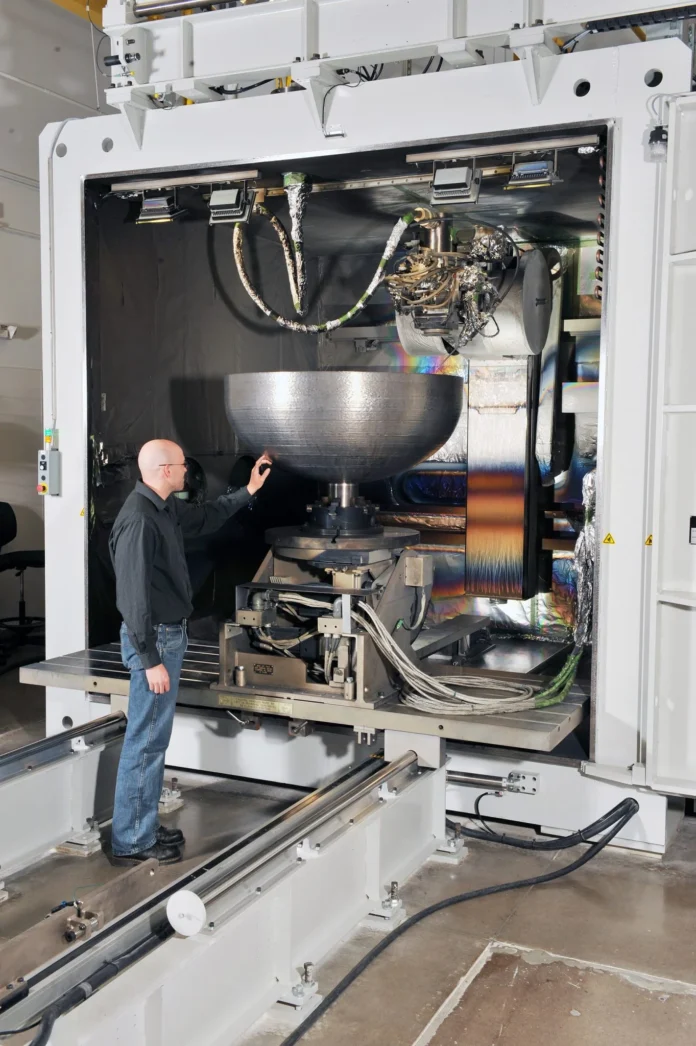
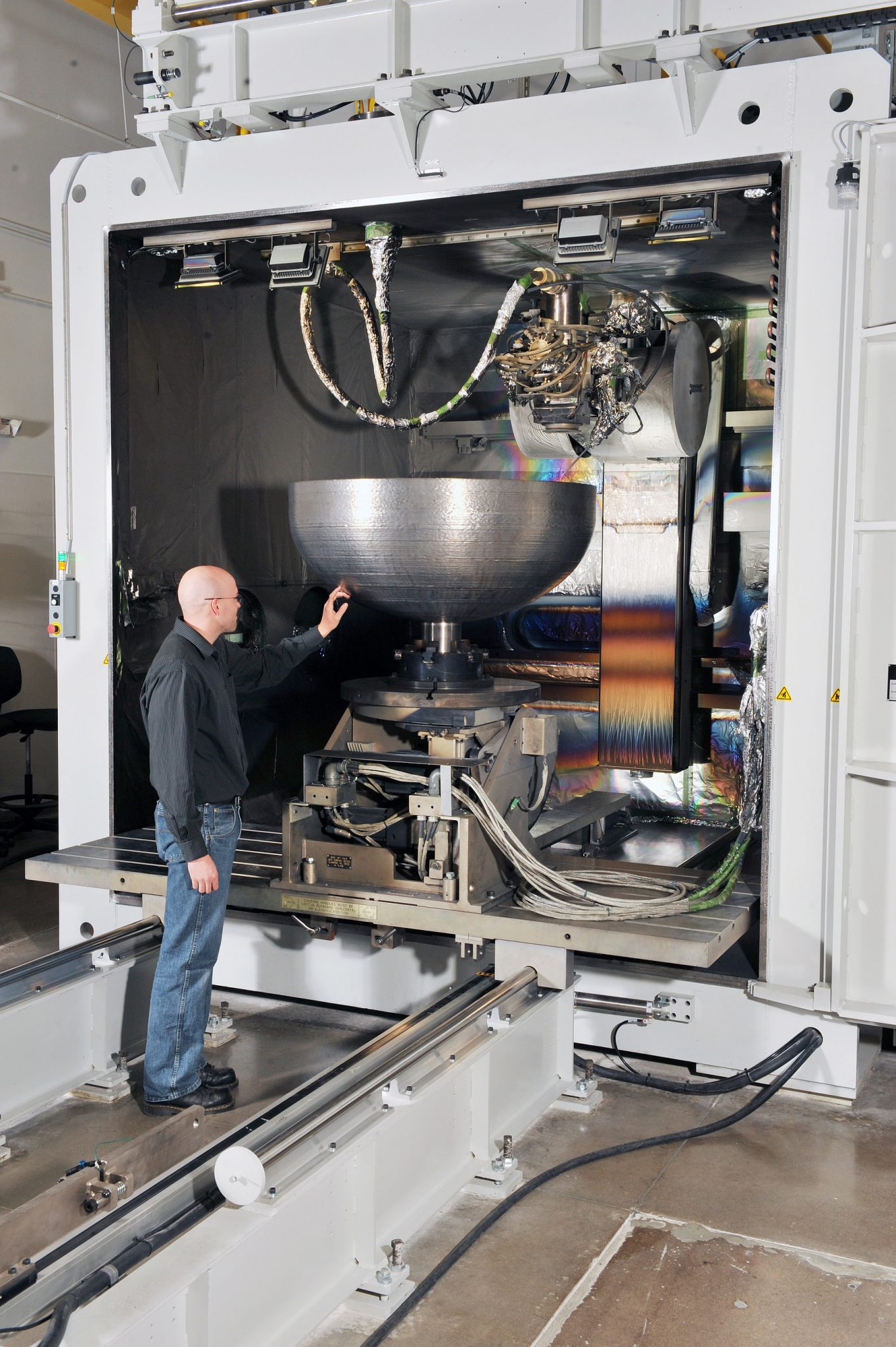
A Lockheed Martin engineer inspects one of the 3-D printed dome prototypes at the company’s space facility in Denver. The final dome measures 46 inches in diameter, large enough to fit 74.4 gallons of liquid.

The titanium tank consists of three parts welded together: two 3-D printed domes that serve as caps, plus a variable-length, traditionally-manufactured titanium cylinder that forms the body.
“Our largest 3-D printed parts to date show we’re committed to a future where we produce satellites twice as fast and at half the cost,” said Rick Ambrose, Lockheed Martin Space executive vice president. “And we’re pushing forward for even better results. For example, we shaved off 87 percent of the schedule to build the domes, reducing the total delivery timeline from two years to three months.”
Satellite fuel tanks must be both strong and lightweight to withstand the rigors of launch and decade-long missions in the vacuum of space. That makes titanium an ideal material, but procuring 4-foot-diameter, 4-inch-thick titanium forgings can take a year or more, making them the most challenging and expensive parts of the tank. Traditional manufacturing techniques also meant that more than 80 percent of the material went to waste. Now, 3-D printing eliminates all that lost material for the domes, and the titanium used for printing is readily available with no wait time.
“We self-funded this design and qualification effort as an investment in helping our customers move faster and save costs,” explained Ambrose. “These tanks are part of a total transformation in the way we design and deliver space technology. We’re making great strides in automation, virtual reality design and commonality across our satellite product line. Our customers want greater speed and value without sacrificing capability in orbit, and we’re answering the call.”

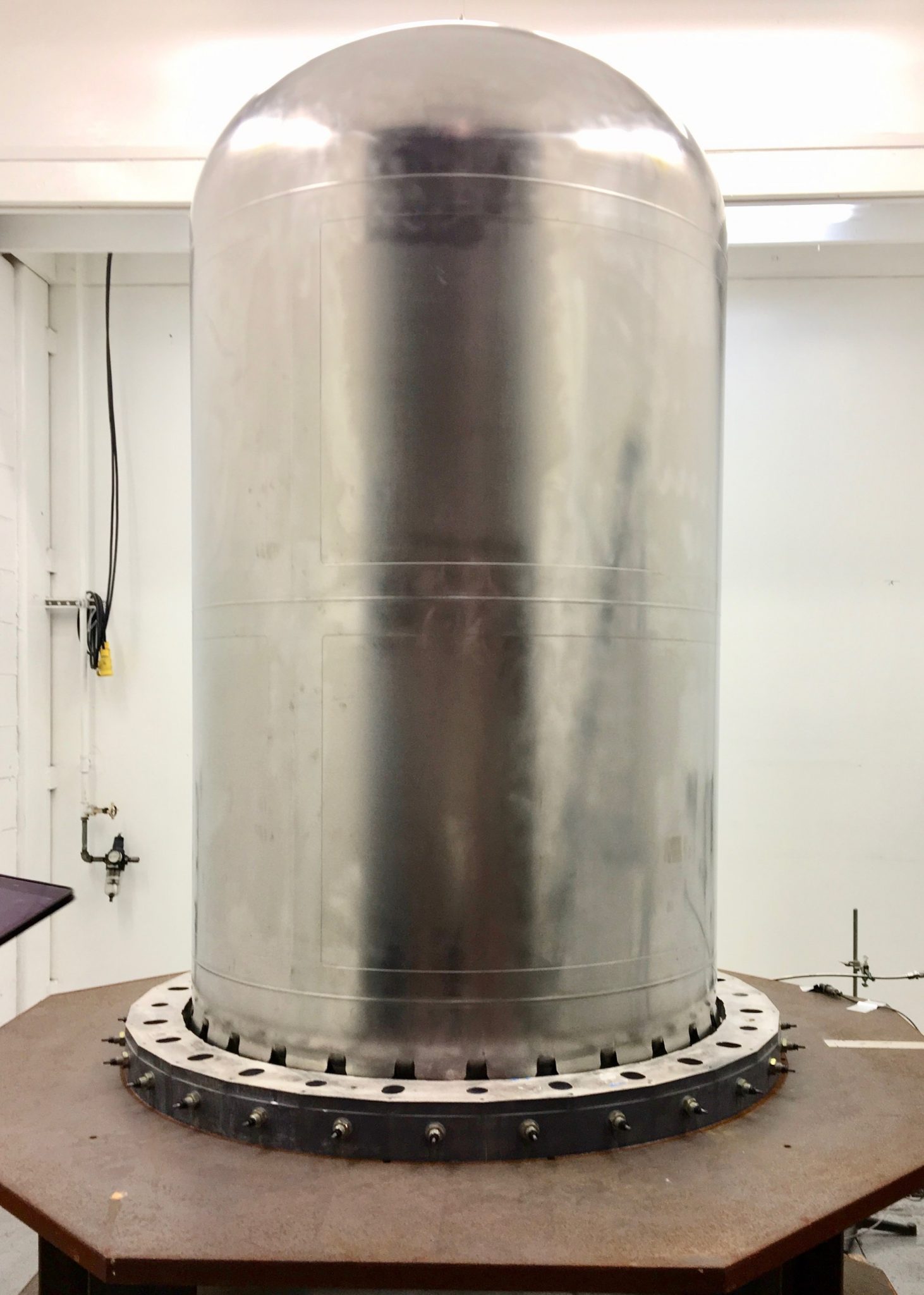
Even the smallest leak or flaw could be catastrophic for a satellite’s operations, so Lockheed Martin engineers went to great lengths to ensure the printed tanks meet or exceed the performance and reliability required by NASA. Engineers and technicians rigorously evaluated the structure, conducting a full suite of tests to demonstrate high tolerances and repeatability.
The tank domes are a leap in size for qualified 3-D printed materials. The largest part previously qualified was a toaster-size electronics enclosure for the Advanced Extremely High Frequency satellite programme. Lockheed Martin’s recent accomplishment continues a path of 3-D printed parts that bloomed in recent years. Since the company launched the first ever printed parts into deep space aboard NASA’s Juno spacecraft, it has produced thousands of flight components and even more for tooling and prototyping using a variety of metals and composites.

Technicians used Electron Beam Additive Manufacturing® to produce these domes in the largest 3-D printer at our facility in Denver. Lockheed Martin now offers the tank as a standard product option for LM 2100 satellite buses.