
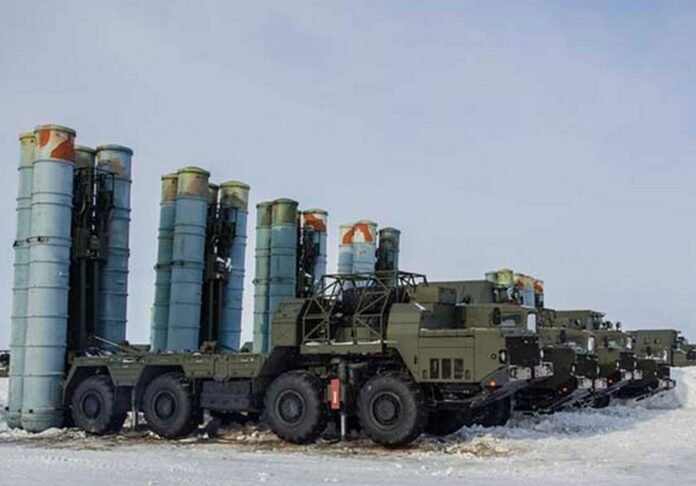
Tel Aviv: The US armed forces get ready to future confrontations with countries operating the Russian made S-300 air defence systems.
In addition to Russia, countries that have used the S-300 air defence system include Algeria, Armenia, Azerbaijan, Belarus, Bulgaria, China, Egypt, Greece, India, Iran, Kazakhstan, Slovakia, Syria, Ukraine, and Venezuela.

The US Army and Marine Corps train against mock-ups and decoy representations of Russian S-300 air defence systems during military exercises such as Resolute Hunter 26-1, mainly at Naval Air Station Fallon in Nevada.
An Israeli senior expert on air defence told Raksha Anirveda that the training of the American forces is very relevant.
“This Russian air defence system is being operated by countries that may in a second, become targets for the US Air Force. The simulation will help the American in real action against these systems,” the expert added.
US troops practice finding targets, identifying them, and engaging them using full-size decoys and mock-ups of the S-300 system. These simulate their radar, visual, and electromagnetic signatures.

These training scenarios help prepare units to counter modern air defence threats common in potential adversaries, including Iran, Algeria, and China who operate S-300 variants.
The exercises often involve AGM-88G AARGM-ER anti-radiation missiles, targeting the simulated air defence site to test new tactics and technologies.

The US obtained real S-300 systems for study as far back as the early 1990s, but most training employs realistically recreated mock-ups with features similar to those encountered in combat zones.
These fake targets help US forces get better at finding, stopping, and destroying advanced air defence systems. They also help them get better at cyber warfare and coordinating attacks.
The expert added that this type of training is critical given the lethality and sophistication of the S-300 series, which can pose major obstacles to air operations in contested environments.

-The writer is an Israel-based freelance journalist. The views expressed are of the writer and do not necessarily reflect the views of Raksha Anirveda
