

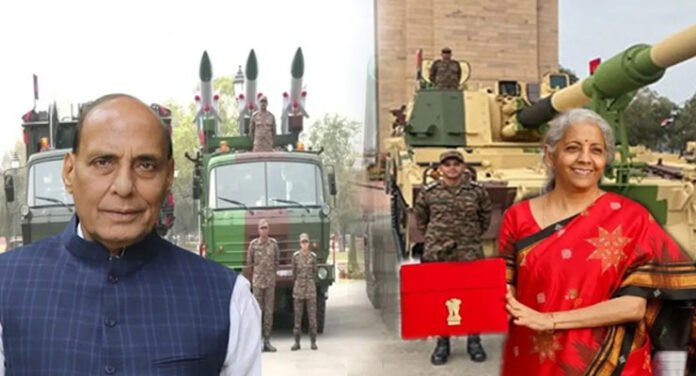
ABudget Shaped by Strategic Reality: When the Union Budget for 2026–27 was presented in Parliament, it carried strategic significance far beyond routine fiscal arithmetic. This was the first full defence budget after Operation Sindoor, an operation that underscored the reality of India’s two-front security challenge and the increasing likelihood of short-notice, high-intensity conflict. The geopolitical environment—marked by a militarily assertive China, a persistently hostile Pakistan, and rapid technological disruption—formed the backdrop against which the government unveiled a defence allocation of approximately ₹7.84 lakh crore, a near 15 per cent increase over the previous year.
Defence Minister Rajnath Singh framed the allocation as a reflection of national resolve, stating that the budget aimed to ensure that “India’s armed forces remain fully prepared to meet present and future security challenges while advancing self-reliance in defence manufacturing.” The numbers appeared reassuring, particularly as defence spending once again approached 2 per cent of GDP after several years of decline.

Yet, for the Indian Armed Forces, the central issue is not whether the budget is larger, but whether it meaningfully enhances combat capability, endurance, and deterrence credibility. The distinction between headline growth and battlefield impact lies at the heart of any serious assessment.
Five Years of Defence Spending: Continuity over Disruption
Over the last five years, India’s defence expenditure has demonstrated steady growth. From approximately ₹4.85 lakh crore in FY 2021, allocations have risen consistently to the current level. Even during periods of economic stress, defence spending was largely insulated, reflecting bipartisan political consensus on national security.
However, as former Defence Secretary Ajay Kumar once observed, “India’s challenge is not the absence of money, but the efficiency with which it is structured and spent.” Despite rising allocations, defence expenditure as a share of GDP fell from over 2.2 per cent in the late 2010s to below 2 per cent in recent years. Budget 2026 halts that slide but does not decisively push spending toward the 2.5–3 per cent threshold that many military planners argue is essential for sustained modernisation under a two-front contingency.
A senior serving officer, speaking privately, captured the prevailing sentiment:
“This budget restores balance. It does not yet deliver dominance.”

Capital vs Revenue: A Structural Constraint that Endures
One of the most enduring dilemmas in India’s defence budgeting is the dominance of revenue expenditure—salaries, pensions, maintenance—over capital outlay for modernisation. Budget 2026 does introduce a welcome correction, with capital expenditure rising by over 20 per cent year-on-year to approximately ₹2.19 lakh crore. This reflects an acknowledgement that deferred modernisation carries strategic risk.
Over the last five years, India’s defence expenditure has demonstrated steady growth. From approximately ₹4.85 lakh crore in FY 2021, allocations have risen consistently to the current level. Even during periods of economic stress, defence spending was largely insulated, reflecting bipartisan political consensus on national security
Yet, pensions alone account for nearly ₹1.7 lakh crore, while pay and allowances continue to absorb a substantial share of service-wise budgets. As a former Vice Chief of the Army Staff noted at a recent strategic forum, “Every rupee locked into legacy manpower structures is a rupee unavailable for future warfare.”

The budget thus reveals a careful balancing act: political and moral obligations toward personnel on one side, and the pressing need for technological transformation on the other. Without deeper manpower and pension reform, capital expenditure will remain under structural pressure.
The Indian Army: Sustaining Readiness, Deferring Transformation
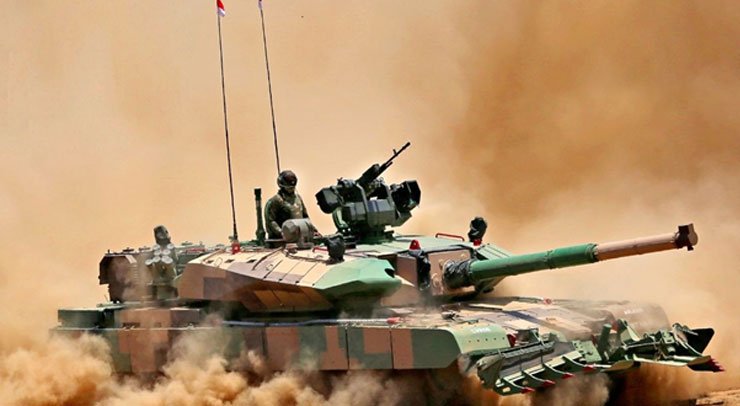
The Indian Army continues to shoulder the heaviest operational burden, deployed across the Line of Control, the Line of Actual Control, and multiple internal security theatres. Budget 2026 ensures that operational readiness is maintained, particularly in ammunition stocking, sustenance, and infrastructure support in forward areas.
However, the Army’s modernisation aspirations remain only partially met. Major programmes involving artillery rationalisation, mechanised forces upgrades, air defence systems, and large-scale drone induction require sustained multi-year funding. Yet, the Army’s share of capital expenditure continues to trail that of the Air Force and Navy.
A retired Army Commander summed up the concern candidly: “We are well-funded to fight the first battle. The worry is about the second and the third.”
In an era where land warfare is increasingly shaped by precision fires, ISR dominance, and unmanned systems, incremental capital allocations preserve capability but fall short of transformation.
In an era where land warfare is increasingly shaped by precision fires, ISR dominance, and unmanned systems, incremental capital allocations preserve capability but fall short of transformation
The Indian Air Force: Capital Infusion, Capability Catch-Up
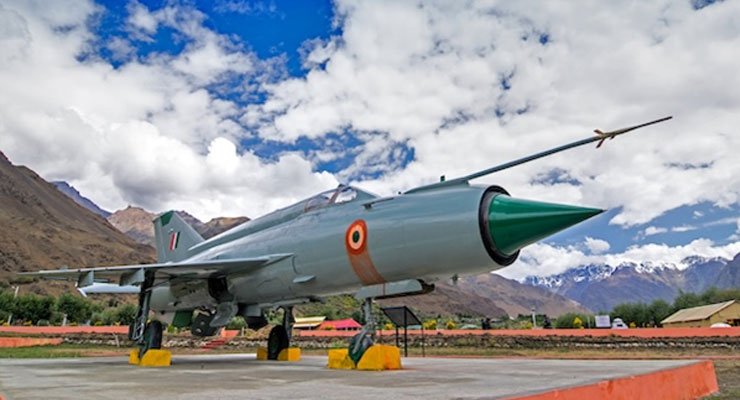
The Indian Air Force emerges as a relative beneficiary of Budget 2026. Increased allocations for fighter aircraft, aero engines, and aviation systems signal intent to arrest declining squadron strength and accelerate indigenous programmes. The budget supports both foreign acquisitions and domestic platforms, aligning operational needs with the Atmanirbhar Bharat framework.
Yet, air power specialists caution against equating platform acquisition with combat effectiveness. Air Marshal (Retd.) Anil Chopra has consistently argued that “modern air warfare is decided less by numbers and more by networks, sensors, and electronic warfare dominance.”
While Budget 2026 improves capital provisioning, gaps persist in force multipliers such as airborne early warning, electronic attack, secure data links, and integrated air defence systems. These require not only funding but also doctrinal clarity and joint integration.
The Indian Navy: Strategic Vision with Incremental Support
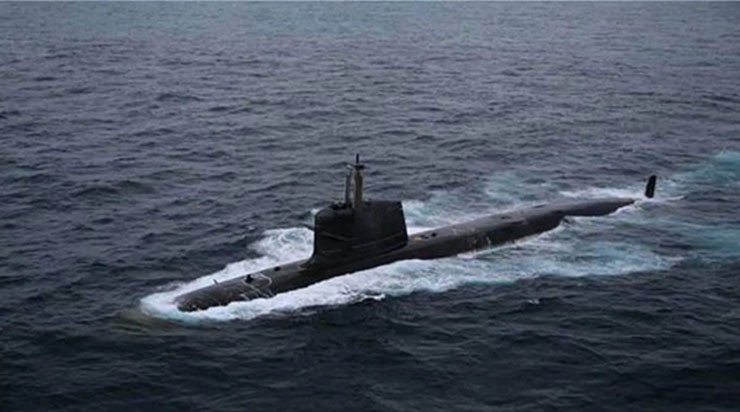
For the Indian Navy, Budget 2026 provides continuity rather than acceleration. Increased allocations for submarines, surface combatants, and unmanned maritime platforms reinforce India’s Indo-Pacific posture and undersea deterrence objectives.
While Budget 2026 improves capital provisioning, gaps persist in force multipliers such as airborne early warning, electronic attack, secure data links, and integrated air defence systems. These require not only funding but also doctrinal clarity and joint integration
Naval planners have long maintained that maritime power cannot be built in annual budget cycles. As a former Navy Chief remarked, “Ships take years to build, but decades to matter.”
While the budget supports ongoing programmes, it stops short of the quantum leap required to decisively alter the maritime balance with China. The Navy’s long-term aspirations remain viable, but dependent on sustained political commitment across successive budgets.
From Allocation to Arsenal: Weapon Platforms and Surge Capacity
Beyond aggregate numbers and service-wise distribution, the real test of Budget 2026 lies in its impact on specific weapon platforms and the armed forces’ ability to generate surge capacity during crisis. On this front, the budget delivers incremental but meaningful gains.
In combat aviation, the sharp rise in capital outlay directly supports continued induction and sustainment of platforms such as Rafale fighters, upgraded Su-30MKIs, and indigenous aircraft programmes. Increased funding for aero engines, spares, and maintenance improves fleet availability and combat persistence. As one senior Air Force official observed, “This year’s emphasis is not just on buying aircraft, but on keeping more of them mission-ready for longer durations.”
For the Navy, enhanced capital support accelerates construction timelines for submarines and surface combatants, while also improving operational availability of existing platforms. Funding continuity strengthens India’s ability to maintain undersea deterrence and sea-denial capabilities across the Indian Ocean Region.
The Army’s gains are more targeted. Budgetary support for artillery ammunition, air defence systems, loitering munitions, and tactical drones enhances battlefield lethality and short-duration conflict readiness. However, large-scale platform renewal—such as next-generation infantry combat vehicles and armoured fleet modernisation—remains constrained by limited capital share.
Crucially, Budget 2026 improves surge capacity, a vulnerability exposed during past crises. Higher allocations for ammunition stocking, spares, and domestic manufacturing reduce dependence on emergency imports and shorten replenishment cycles. Defence planners increasingly define surge capacity not merely as inventory depth, but as the ability of domestic industry to scale production rapidly during conflict
Crucially, Budget 2026 improves surge capacity, a vulnerability exposed during past crises. Higher allocations for ammunition stocking, spares, and domestic manufacturing reduce dependence on emergency imports and shorten replenishment cycles. Defence planners increasingly define surge capacity not merely as inventory depth, but as the ability of domestic industry to scale production rapidly during conflict.
Customs duty exemptions and assured procurement orders strengthen this industrial surge capability. As one senior defence planner noted, “Wars are rarely lost because platforms are missing; they are lost because intensity cannot be sustained. This budget improves sustainability, even if it does not yet transform force structure.”
Endurance, Sustenance, Mobility and Technology: The Less Visible Multipliers
While weapon platforms attract the most attention, the more decisive impact of Defence Budget 2026 lies in its effect on the less visible but critical enablers of combat power—endurance, sustenance, mobility, and technology absorption. Modern conflicts are increasingly won not by the first salvo, but by the side that can sustain operations, manoeuvre forces rapidly, and adapt technologically under pressure.
Enhanced allocations for ammunition reserves, spares, fuel logistics, and maintenance infrastructure directly improve operational endurance. Lessons from recent conflicts—from Galwan to Ukraine—have underscored that intensity rapidly depletes stocks, and replenishment speed determines battlefield momentum. A senior logistics officer noted that “this budget significantly reduces our dependence on crisis-time imports for basic warfighting sustenance,” pointing to higher domestic sourcing and warehousing capacities.
Mobility also receives indirect but meaningful support. Increased funding for strategic airlift availability, heavy-lift helicopters, bridging equipment, and border infrastructure maintenance enhances the armed forces’ ability to reposition forces across theatres at short notice. This is particularly relevant for rapid reinforcement along the northern borders, where terrain and weather magnify logistical challenges. As one former Corps Commander observed,
“Firepower means little if it cannot be moved where it is needed, when it is needed.”
Technology integration, though less visible in headline figures, benefits from higher allocations for ISR systems, secure communications, electronic warfare upgrades, and data-centric operations. These investments improve situational awareness and joint coordination, allowing commanders to compress decision cycles and exploit fleeting tactical advantages. However, experts caution that funding alone is insufficient. “Technology delivers advantage only when doctrine, training, and organisational culture evolve alongside it,” noted a defence technology analyst.
Taken together, Budget 2026 strengthens the armed forces’ ability to fight longer, move faster, and operate smarter, even if it does not yet deliver a wholesale technological leap. In future conflicts defined by tempo and endurance rather than decisive battles, these enablers may prove as consequential as any frontline weapon system.
Budget 2026 strengthens the armed forces’ ability to fight longer, move faster, and operate smarter, even if it does not yet deliver a wholesale technological leap. In future conflicts defined by tempo and endurance rather than decisive battles, these enablers may prove as consequential as any frontline weapon system
Budget 2026 strengthens the armed forces’ ability to fight longer, move faster, and operate smarter, even if it does not yet deliver a wholesale technological leap. In future conflicts defined by tempo and endurance rather than decisive battles, these enablers may prove as consequential as any frontline weapon system.
Operation Sindoor and Strategic Signalling
Operation Sindoor fundamentally reshaped political and military thinking about escalation control, readiness gaps, and deterrence credibility. Budget 2026 must be read as a response to that wake-up call.
The post-Sindoor increase in defence spending sends a deliberate signal—to adversaries and partners alike—that India is willing to resource its military posture. A senior government official described the budget as “a statement of resolve without fiscal recklessness.”

Yet, signalling alone is insufficient. Deterrence rests on demonstrated capability across domains—land, air, sea, cyber, and space. Budgets can enable this, but only sustained execution can deliver it.
Aatmanirbhar Bharat: Promise and Performance
One of the most consequential aspects of Budget 2026 is its impact on India’s defence industrial ecosystem. Customs duty exemptions, preference for domestic procurement, and rising capital expenditure reinforce the Aatmanirbhar Bharat vision.
India’s defence production and exports have reached record levels in recent years, and the budget strengthens this momentum. However, industry insiders caution that success depends on execution. “Budgetary intent must be matched by design capability, project discipline, and accountability,” said a senior private-sector defence executive.
For the armed forces, self-reliance is valuable only if it delivers timely, reliable, and combat-effective systems.
What the Budget Still Leaves Unresolved
Despite its strengths, Budget 2026 leaves several critical areas under-addressed. Investment in cyber warfare, space capabilities, artificial intelligence, autonomous systems, and integrated C4ISR architectures remains modest relative to the pace of global military innovation.
One of the most consequential aspects of Budget 2026 is its impact on India’s defence industrial ecosystem. Customs duty exemptions, preference for domestic procurement, and rising capital expenditure reinforce the Aatmanirbhar Bharat vision
Equally, without structural reform in manpower and pension systems, revenue expenditure will continue to crowd out future-oriented investments. As one strategic analyst observed, “India risks preparing for tomorrow’s wars with yesterday’s force structure.”
A Measured Verdict
Did the Defence Budget 2026 truly equip India for the next war?
The answer is measured rather than emphatic. The budget meets the armed forces’ aspirations in direction, signalling intent, correcting neglect, and strengthening sustainability. It falls short in depth, by not fundamentally reshaping force structure or decisively accelerating future-warfare capabilities.
Strategically, this is a consolidation budget, not a transformational one. It buys time, restores balance, and improves endurance. Whether it ultimately delivers deterrence superiority will depend on sustained political commitment, institutional reform, and consistent execution in the years ahead.

-The author retired as Major General, Army Ordnance Corps, Central Command, after 37 years of service. A management doctorate and expert on defence modernisation, he is the author of four books, including the Amazon bestseller “Breaking the Chinese Myth,” and a frequent media commentator. He is affiliated with several leading defence and strategic studies institutions in New Delhi. The views expressed are of the writer and do not necessarily reflect the views of Raksha Anirveda
