
India’s national security environments ought to be analysed in three dimensions, namely – International, regional and internal i.e. Russian – Ukraine conflicts in Europe, Sino – US rivalry in the Indo-Pacific region; Sino- Pak nexus and India’s Internal conflicts, aided and abetted from outside. These three parameters define the national security canvass, on which the government has to concentrate. It would be mandatory for the government to accord equal priorities in all three dimensions.

However, internal security needs more attention because the internal vulnerabilities are prone to direct influence by the regional and international factors. Raging insurgencies in J& K , North East and Maoists / Naxalite infested region of Bihar, Jharkhand, Chhattisgarh, Madhya Pradesh , Bengal and Andhra Pradesh do present a serious challenge. Do not forget Punjab and Tamil Nadu, which could join their ranks. Therefore, internal canvass of security is wide and complex. Take note of religious organisations like PFI inciting minority community.
An Overview of International Environs
While Sino – US race for global supremacy, on its own, endangers our maritime interests but combined with other two, it becomes a very potent threat. All said and done, all three scenarios, in a combined manner, would have a deep influence on India’s national security. International environs are a “Force Multiplier” for explosive internal situation in India.
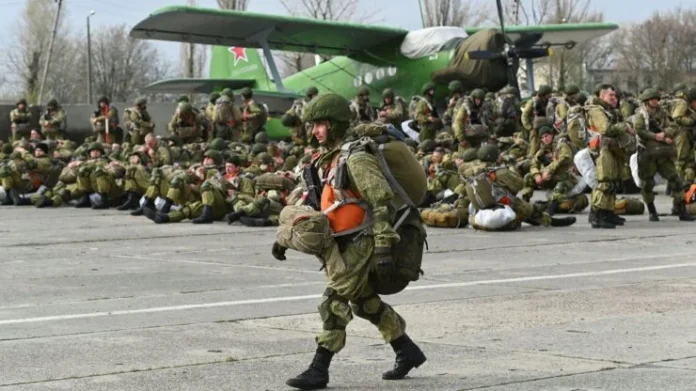
India is already in the middle of an unfolding drama over Russian – Ukraine conflict in Europe, probable likelihood of a crisis snowballing into a global conflict. Any escalation of this conflict would seriously threaten India’s strategic and economic interests . The threat of economic sanctions looms large over India due to import of continued oil from Russia, at 30% cheaper rates than open market. Besides, Indian problem was that it can not delink its relationship with Russia because of past history and significant percentage of military equipment being supplied by Russia. The Indian government has a difficult task at hand for a balancing act between the devil and the deep blue sea.
Like it or dislike it, Sino- US Cold War for Global supremacy is at our door steps. The Iran factor adds multitudes of problems. India is likely to be sucked into it. China sees India as a potential ally of USA, contesting her super power status. Therefore it has been continuously making endeavours to isolate India from her immediate neighbours. There is no doubt that China’s surrogates, like Pakistan, are mushrooming in India’s neighbourhood. Coupled with her “Strings of Pearls” strategy in the Indian Ocean, China has embarked upon her ambitious BRI (Belt Road Initiative) project to find a land route into Bay of Bengal and Persian Gulf through CMEC (China Myanmar Economic Corridor) and CPEC (China Pakistan Economic Corridor), respectively. It would have serious implications for Indian security.

China’s Foray into Bay of Bengal and National Security
“….There are grander geopolitical dynamics and ambitions driving the dispute related to the balance of power at the LAC, the broader Sino-Indian rivalry, a struggle for Bhutan’s loyalties, and the strategic vulnerability of India’s Chicken’s Neck….”
Jeff M. Smith Director of Asian Security Programs at the American Foreign Policy Council and author of Cold Peace: China-India Rivalry in the 21st Century

In 2018, China’s foreign minister visited Myanmar and proposed CMEC on the lines of CPEC. Myanmar establishment has acted very favourably. It is pointed out that China had leased Coco Island in Bay of Bengal for 40 years from Myanmar in 1994. This island lies some 15 km North East of Northern most island of Andaman & Nicobar group of Islands of India. China is developing military facilities there. Reportedly, it has created an air strip there, besides having signal intelligence. This island lies close to Sittwe port of Myanmar which is also leased to China by Myanmar. It is pertinent to know that China has two pipelines, one gas and one oil, running from Sittwe to Kunming in China. Thus, Bay of Bengal is figuring in a big way in the strategic interests of China.
Why is China showing such deep interests in Bay of Bengal? It must be noted that 80-90% of China’s petroleum products are from Middle East. This is transported over a distance of 12000 km through Indian Ocean via choke points at Malacca Strait and South China Sea. They say China has only 55-60 days reserve petroleum products. Thus it can not sustain an intense military conflict for more than 60 days. With sea lanes choked by USA, Japan, Australia and even India, it can run out of steam to sustain a war which might involve USA and the West. Present Indo – Sino conflict in Eastern Ladakh can escalate into a major conflict any time.
Belt Road Initiative ( BRI) or One Belt, One Road (OBOR) of China is actually part of this strategic plans of China. Significant is the point that it gets an opportunity to sandwich India, her biggest hurdle towards global ambitions, between CMEC and CPEC. This is a force multiplier for her String of Pearls policy to contain and roll back Indian influence into her borders.
Doklam crisis, five years back in July 2017, was a probing attempt by China to see India’s reaction. With Bay of Bengal in mind, it was trying to create a shortest route to Bay of Bengal through Chumbi valley – Siliguri Corridor – Bangladesh. It might attempt this at a convenient time in future. For now, it looks at CMEC as a suitable alternative. India can not ignore Chinese forays into Bay of Bengal through CMEC.
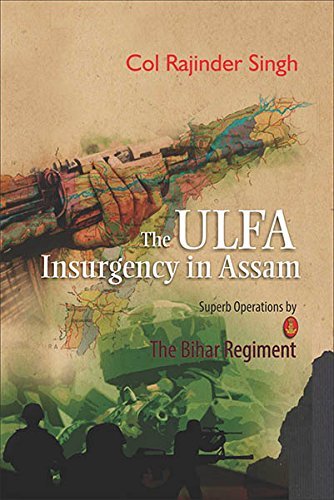
From the strategic point of view, India has many things to worry about, if China makes a large scale access by land route to Bay of Bengal. In his book “The ULFA INSURGENCY” defence analyst Col Rajinder Singh asserts that such a move by China would not only cut off its entire North East region but it would be more damaging and disturbing from National Security point of view. The author lists out serious challenges to five Indian positions as under ( extracted from the book “The ULFA INSURGENCY”, by Col Rajinder Singh):
- India’s Missile testing range ( MTR) in the Wheeler Island), some 10 km off the coast of Odisha and150 km
 east of Cuttack , would directly come under the threat of China.
 - Vishakhapattnam or Vizag India’s ship building / Submarine facility would become a target of China. India’s Nuclear submarine Arihant was built here.
- Indian space Research Organisation (ISRO) at Sriharikota can be effectively targeted from Coco Island. This can render a serious blow to Indian space research and her “Eyes in the Sky” programme.
- The Security of India’s Andaman & Nicobar island becomes untenable. India has 500 small and medium sized islands here. It controls the entry to not only Strait of Malacca but also it can regulate East – West traffic in the Indian Ocean.
- Indian states along her eastern coast, from Bengal to Tamil Naidu through Odisha and Andhra Pradesh become vulnerable to Chinese sponsored insurgency. Thus China can effectively carry out its strategic plans to break up India into 20-30 states, as a Chinese scholar had expounded the thesis in an article in 2009 in Global Times. This is a long desired plan of China because it knows India was her final frontier to be conquered before it could lay claim to super power status and dominate the world.
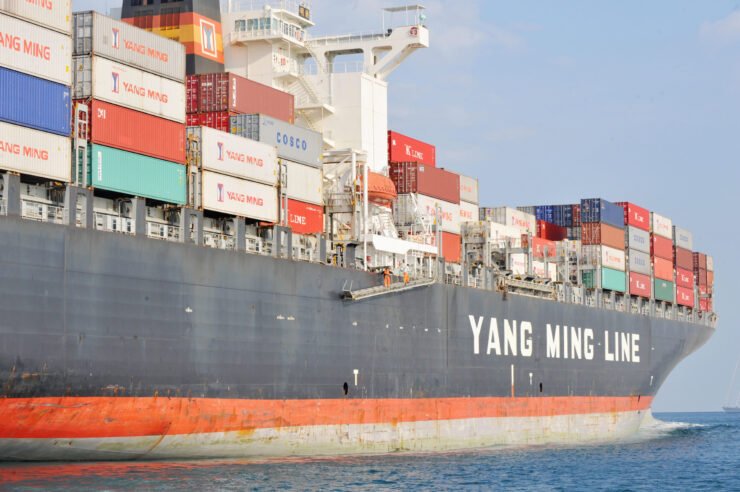
Other than Bay of Bengal, China has also her eyes on various staging posts in the Indian Ocean. It had already got the Hambantota port in Sri Lanka, besides Gwadar on Persian Gulf in Pakistan. Then, it had signed a free trade agreement (FTA), with the Maldives. It has fallen into a limbo now by quick action by Indian Government. But China had a part of this plan to secure her oil route from Middle East to Bay of Bengal. It is not surprising that Maldives who was already under 70% debt to China had accepted this agreement.
Sino-Pak Nexus Adding Fuel to India’s Internal Conflicts
It is no doubt that China and Pakistan are fast friends, though friendship was enticed by a mutual need to maintain animosity with India. In fact, China has outsourced her hostility towards India to Pakistan. It keeps nudging Pakistan to contain India’s military and economic growth. Pakistan, too, thinks that her friendship with China is deeper than the ocean and higher than Mount Everest. It can and would do anything to carry out China’s bidding. A hostile Pakistan towards India suits China’s scheme of things. No wonder, China keeps Pakistan amused on Azhar Masood and other such home- grown terror outfits of Pakistan. It eggs on Pakistan for military conflict with India in a sub- Nuclear frame work.
But here is a caveat. With the successful launching of ASAT (Anti- Satellite) weapon , India has entered the Ivy League of world powers. It’s missile power is second to none . With the acquisition of S-400 Triumph anti – missile defence system and Rafale fighter aircrafts, India has formidable defence system. Coupled with nuclear arsenal, this makes her the “Deterrent Power”. It means such capabilities would deter her potential adversaries from indulging in open aggression against her. At best, the confrontation might remain confined to borders. Therefore, while border skirmishes can not be ruled out, a full fledged war with either China or Pakistan is a rare possibility in the next two to three decades.
Threat from within – War by Other Means (WOM)
Thus, there is a paradigm shift in the making of war by ”Militarily Equal Nations” to achieve their political objectives. An indirect approach is made to exploit inner weaknesses of one’s adversary by using frustrated and dissatisfied segments of internal population. This is called “Sub- Conventional” conflict or what I have been calling WOM (War by Other Means).
In view of the above, India is likely to witness more of Kargil-99; Parliament -2001, Mumbai- 26/11, Uri-2016 and Pulwama-2019 kind of events to not only checkmate India but also destabilise it. As part of a “Designer War” of 21st Century, it is also referred to as WOM. It aims to exploit the internal vulnerabilities and weaknesses in India. These vulnerabilities are available in abundance from North East to J& K and Maoists dominated terrain of central India. Do not forget Punjab, UP, Bihar, West Bengal and Tamil Nadu, which can join their ranks. India has these sure signs of internal conflicts overshadowing external threat.
Therefore, India needs specialised forces for internal security. It needs national Counter Insurgency (CI) Grid to counter present and future problems. In short, India needs a comprehensive internal security plan as an appendage of external security and not independent of it. The dealing authority must be Ministry of Defence (MoD) or National Security Ministry. All resources, such as CRPF, CISF, RR, RPF, SFF and SB, must be clubbed under it, even all intelligence organisations from NIA (National Investigation Agency) to Military Intelligence.
Another issue that needs to be considered is the freedom of action to be given to security forces to deal with militants and terrorists in the Counter Insurgency (CI) Grid. The problem of India is that its leaders do not understand the nuances of WOM. India continues to deal with terrorists and insurgents as law and order problem in different parts of the country. AFSPA (Armed Forces Special Powers Act), enacted in 1958, keeping in mind the NAGA problem, has outlived its utility.
Tackling Threat from Within – PILE (Prevention, Isolation, Limiting & Execution)
Instead of diluting AFSPA, there was a need for comprehensive COZA- 2022 (Combat Zone Act), redefining “Enemy” and Internal Security. There can be no leniency with those, who pick up arms against the country. A clear cut line must separate law and order problem and internal security. India must learn from Sri Lanka as to how LTTE (Liberation Tiger of Tamil Elam) insurgency was strangulated. There can be no mercy with nation’s enemies. The four point formula to tackle terrorism and militancy is summed up in an acronym i.e. PILE, meaning, Prevent, Isolate, Limit and Execute.
Prevention, as the first step, demands certain measures to be adopted which seeks restrictions on citizenry and the media. Terrorists always have the initiative. The aim of Prevention is to seize this initiative from the terrorists. It is, therefore, utmost desirable that we identify targets picked up by Terrorists. These are basically of two kinds, namely, “Soft” and “Hard or Strategic”.
The aim of striking the soft targets is to create general scare and panic amongst people. The strike on ‘Strategic or Hard’ targets is carried out to demoralize the security forces engaged in Counter & Anti- Terrorist (CAT) operations. The Soft targets could be important political personalities, crowded markets and even certain places of public interest, such as pubs, restaurants, cinema halls, political or religious congregations etc. The Hard targets are generally national assets of significance, which might affect social and a religious cohesion or retard economic growth. These could vary from security forces installations to religious places, railway stations and even nuclear sites. The list is big but we ought to assess the impact of damage caused to each one.
Prevention does not mean, a nation must become a security state with fortress kind of defensive system. Prevention means make the perpetrators of terror haunted. Make them run for their lives. Strike them before they strike you. To do so, one needs to create an intelligence system to gauge each and every future move of the terrorist organizations. If need be ” Moles” be created within terrorist organizations. Intelligence system be so created that flow of information must not only be smooth but also timely. There is, therefore, a need for anti- terror intelligence grid, region wise and zone wise. One fact must be understood is to amalgamate all intelligence organisations into one big whole, otherwise they work at cross purposes.
To isolate Terrorism, India has to identify the breeding ground and hotspot of Terrorism. It is undoubtedly apparent that Pakistan was the mother, in whose womb it was born and the adult is now ruling roost in Iraq -Syria. It must be contained there, while other hotspots are kept subdued with more aggressive and active action by the respective governments. Time, energy and resources employed after the terrorist acts are more expensive than the preventive actions.
The maxim goes prevention is better than cure. It has to be so because after the disease catches you, there could be many side effects, which will otherwise tell upon your health. So is true of Terrorism, too. Prevention is often a better weapon in counter insurgency and its first casualty is the unbridled freedom allowed in the name of democracy. It implies that citizens have to cope up with certain restrictions on their freedom, which might cause inconvenience. They have to learn to live with it because such are the times and such is the threat world over. There is no point crying hoarse after the incident and making noise that stringent measures were being taken to punish the culprits.
The underlying principle of Counter Terrorism is to make the terrorists as haunted and seize initiative from them. Let them go on the run. Meet them with their rules of the game. Do not forget that diamond cuts diamond. This is what the free world has to do to ISIS, Taliban and Al Quaeda, otherwise the monster would continue to devour mankind. Everyone has to realise that “Islamic Fundamentalism” was the biggest enemy of humanity. It has to be mercilessly put down, if humanity has to survive.
It has been long surviving in India, with or without political support. Some political parties covertly support these fundamentalists under the overhang of “ Secularism”—- nay “ pseudo -secularism”. Most minority political leaders in various political outfits, support Scheduled castes ( SC) and Scheduled tribes( ST) and other castes of the Majority community, not because of any special “love” for them but to ensure a division and promote their own domination. Most of these leaders suffer from a hangover of 500 years of Muslim rule in India. This is their mind-set. And they were aided by political opportunists of “majority community” for their short sighted objectives.
Look at Kashmir of India. Its political class survives by covertly supporting “separatists”. While they cry aloud for revocation of Article 370 , but they fail to criticise “target killing” or “ongoing ethnic cleansing” of Kashmiri pundits, in the valley. What happened in Kashmir in the 1990s of the last century has been elaborately exhibited in the bollywood movie “Kashmir Files” by Vivek Agnihotri. Some say that movie depicts not even 10% of what actually had happened. But, sure it was peep into the deliberate “target killing” by “ Islamic Jihadis” which continues even today. In Kerala and some other South Indian states, the extremist organisations like PFI, were ogling religious venom to create a social divide for another partition of the country.
Islamic terrorism is not alone an Indian problem. Pakistan itself, the fountain head of “ Jihadi Culture”, has fallen victim to it. What was happening in Afghanistan, Iraq and Syria everyday, can not be wished away. What had happened in Sri Lanka on April 21, 2019, when eight explosions blasted churches and hotels killing 299 persons and injuring more than 400 , should tell the world as to what was in the menu in the near future? Relate it to New Zealand mass killing in two mosques in March 2019, one would find a ready made recipe for the ‘Clash of the Civilisations’. France , Belgium and other European countries have also fallen prey to this civilisational conflict. Talk of “ Islamophobia” is not entirely untrue. World leaders have to act in unison to minimise the impact of this clash.
Conclusion
In conclusion, it is emphasised that the issue of National Security, in view of internal conflicts, which rents the air off and on, was not a false alarm. “Religious Fundamentalism” of all religions, poses a serious problem to National Security. It is a job cut out for national security planners and strategists because of regional, international and internal environments .They have to take a proper stock of all three threats to work out a proper strategy to ensure India’s security .The government of the day cannot afford to neglect any one area.
-An ex-NDA and Wellington Staff College graduate, Col Rajinder Singh is a renowned author and security analyst. He has authored four books, two individually and two in collaboration. His best-selling books are Kashmir – A Different Perspective and The ULFA Insurgency. The views expressed are of the author and do not necessarily reflect the views of Raksha Anirveda

-An ex-NDA and Wellington Staff College graduate, Col Rajinder Singh is a renowned author and security analyst. He has authored four books, two individually and two in collaboration. His best-selling books are Kashmir – A Different Perspective and The ULFA Insurgency. The views expressed are of the author and do not necessarily reflect the views of Raksha Anirveda
