

Saudi Crown Prince Mohammed bin Salman’s visit to the USA on November 18 changed the status of Saudi Arabia from being a pariah state, as referred to by the former US President Joe Biden in the context of the killing of Saudi journalist Jamal Khashoggi in 2018, to a privileged partner under the Trump 2.0 administration. The visit was marked by various cooperation agreements, but the announcement for the sale of F-35 to Saudi Arabia is akin to a cherry on the pie for the Crown Prince.
Landmark cooperation agreements were signed on civil-nuclear energy, critical minerals, and Artificial Intelligence; however, the announcement for the sale of American F-35 fighter jets and 300 tankers to Saudi Arabia as part of the strategic defence agreement fosters the US-Saudi Security Partnership in the region. It is significant in terms of shaping the future bilateral political and strategic engagements while reinforcing America’s role as a regional security enabler in the Middle East.

F-35 Technology
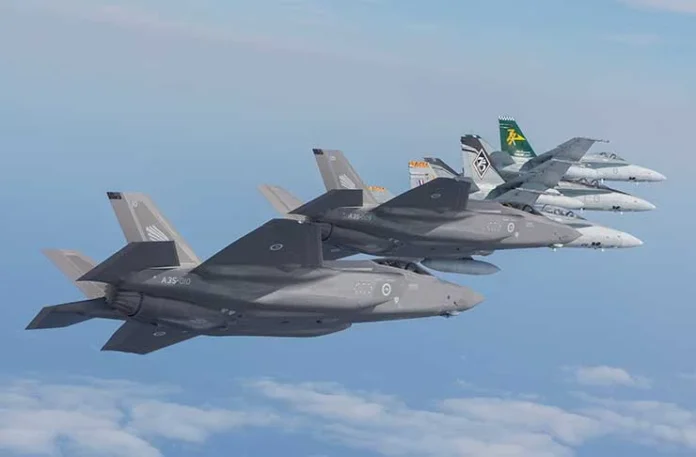
F-35 is the World’s most advanced fighter jet with stealth technology, ordinance storage, and advanced radar systems, making it indispensable. It is a fifth-generation fighter jet that goes beyond speed, thrust, and manoeuvring capacity, with a reduced heat signature and angled geometry, allowing it to enter defended airspace without being detected. It also has an in-built sensor to collect data from surroundings and the capacity to provide and share real-time 360-degree information at multiple domains, enhancing interoperability. It combines sensor assets within the aircraft and external assets to form a tactical picture, reducing the need to interpret multiple data sources and providing a holistic view.
It allows pilots to switch between air-to-air, air-to-surface, and surveillance missions, and is a force multiplier operating close to the battle ground as well as at elevated levels, improving the capability of networked platforms. Its ability to connect with other combat systems on the ground or in the air enables it to act as a part of the distributed swarm. One of its coveted and distinct features is its ability to avoid radar and strike the enemy’s fighter jets before they launch. As per Lockheed Martin, it is the most lethal, survivable, and connected fighter aircraft in the world.
The United States and Saudi Arabia signed landmark cooperation agreements on civil-nuclear energy, critical minerals, and Artificial Intelligence. However, the sale of F-35 fighter jets and 300 tankers to Saudi Arabia is significant in reinforcing America’s role as a regional security enabler in the Middle East
Lockheed Martin manufactures F-35 in three core variants, specifically designed for Air Forces, Marines, and Carrier Fleets. F-35A is the most common variant with internal fuel and weapon system, and has the capability to land and take off from a regular runway. F-35B is heavier with reduced fuel and weapons capacity, but can operate from very small air strips, and F-35C is customised for use on aircraft carriers and has supersonic speed. The US leads the fifth-generation race with its F-22 and F-35, followed by China’s J-20 and Russia’s Su-57.
The Geo-politics of F-35
Australia, Canada, Italy, Denmark, the Netherlands, Norway, and the United Kingdom are America’s partner countries that either manufacture some components or assemble the jets for their own governments. Twelve countries, including Japan, Finland, South Korea, Switzerland, Germany, Belgium, Poland, Romania, the Czech Republic, Greece, Singapore, and Israel, currently operate F-35 Lightning II. Access to F-35 boosts security capabilities and is becoming inevitable with more and more countries buying and keeping it in their cache. With a per unit cost of $80-110 million, F-35 has a height of 4.38 metres, empty weight 13,290 kg, wingspan 10.7 metres, length 15.7 metres and weapons payload capacity of 8,160 kg.

Within the Middle East, Israel is the only country that owns F-35, while other countries, including Türkiye and the UAE, had earlier expressed their interest in acquisition. Türkiye did not receive the fighter jet as it purchased S-400 air defence missile systems from Russia despite warnings from Washington, and the UAE suspended the deal due to preconditions imposed by the US at the behest of Israel’s concerns and opposition. Israel purchased the F-35 in 2010 and received it in 2016; since then, it has modified and enhanced its sensor capabilities, making it the most cutting-edge combat stealth aircraft.
Twelve countries, including Japan, Finland, South Korea, Switzerland, Germany, Belgium, Poland, Romania, the Czech Republic, Greece, Singapore, and Israel, currently operate the F-35 Lightning II
Saudi quest to own F-35 stems from its dominant position in the region and the associated vulnerabilities. In addition to Riyadh’s generic need to enhance its defence capabilities, its keenness to buy F-35 is also motivated by two recent incidents, the first is the use of these fighter jets by Israel against Iran in June 2025 underlining the need for preparedness and second is Israel’s attack on Qatar base in September 2025 highlighting the fickleness of US security guarantee in the region.

Apart from that, there are long-term and pre-existing threats mandating Riyadh to acquire F-35, for instance, Iran and Saudi Arabia signed a comprehensive agreement in 2023, but before that, they had been adversaries. Secondly, Saudi Arabia has troubled relations with the Houthis in Yemen; oil facilities in Jazin were attacked by them in 2019, and an oil depot in Jeddah and other facilities were hit in Riyadh in 2022. Also, the UAE has not expressed interest in F-35 after the suspension of the deal, but Saudi Arabia would like to have an upper hand in case Abu Dhabi purchases one in the future.
With a per-unit cost of $80-110 million, the F-35 has a height of 4.38 metres, empty weight of 13,290 kg, wingspan of 10.7 metres, length of 15.7 metres, and weapons payload capacity of 8,160 kg
Reflecting the strengthening of US-Saudi ties at the bilateral level, Riyadh has agreed to invest a trillion dollars, while Washington designated Saudi Arabia as a major non-NATO ally. Currently, Saudi Arabia owns Boeing F-15 Eagles, Panavia Tornados, and Eurofighter Typhoons, among others, but the F-35 is coveted and comes with status and prestige attached.
The US has agreed to sell F-35 to Saudi Arabia as it enhances its strategic and political interests. For Washington, arms sale goes beyond an economic transaction and are an instrument for diplomatic manoeuvring. Countries purchasing weapons from the US enter a long-term partnership owing to their dependence on American training, spare parts, testing facilities, and data updates. More than that, the controlled access of fighter jets in terms of software advancements and hardware upgradation, and customised conditions of sale, provides the US a considerable leverage on the buying country.
In the Middle East, Israel is the only country that has F-35s. Türkiye and the UAE expressed their interest in its acquisition. Türkiye did not receive the fighter jets because it had purchased S-400 air defence missile systems from Russia, and the UAE suspended the deal due to Israel’s opposition
In the context of the F-35 sale to Saudi Arabia, the manoeuvrability is not only economic but also a political signal for Saudi Arabia to join the Abraham Accords. Apart from that, it asserts the inevitable US presence in the region as a security provider. Further, it symbolises the strengthening of the strategic and security partnership between the US and Saudi Arabia. The fact that US President Trump has said that the F-35 being sold to Saudi Arabia will be pretty similar to that of Israel showcases the improving bilateral ties. However, the catch lies in the conditions of sale in terms of modifiability and advancements. Along with that F-35 sale to Saudi Arabia is also the US signalling for outmaneuvering China in the arms market in the long term.
In a nutshell, the US sale of F-35 to Saudi Arabia is a win-win for both countries, albeit a concern for Israel.

Dr Lakshmi Priya is Associate Professor at Jawaharlal Nehru University, New Delhi. She is an expert in Middle East Studies with experience in policy-oriented think tanks in India. She has published several articles and contributes write-ups on the geopolitical and socioeconomic issues of the region frequently. Earlier she has worked as Research Fellow at the Indian Council of World Affairs, and was a research scholar at the Manohar Parrikar Institute for Defence Studies and Analyses.
