
Bremen/ Noordwijk. The European Space Agency (ESA) and Airbus have agreed on service orders for two independent payload missions to be launched to the Bartolomeo payload hosting facility on the International Space Station (ISS) in 2022 and 2024, respectively.

The first payload mission is ESA’s Exobiology Platform (EXPO). This facility carries a set of radiation experiments aimed at better understanding the evolution of organic molecules and organisms in the space. Placed in a Zenith-facing slot, the facility will connect two scientific modules to Bartolomeo.
These modules will host everything needed for the experiments, including the scientific sample containers, fluidics systems and sensors related to the individual experiments called Exocube, IceCold and OREOcube. At the end of the three-year mission, the samples will be returned to Earth for detailed investigation and analysis.
The second payload is the Euro Material Ageing experiment platform (SESAME), developed by the French Space Agency (CNES). This mission will study the ageing behaviour of new materials in space and will also make use of Bartolomeo’s payload return option. After a year of exposure in space, the experiments will be returned to Earth, allowing scientists to thoroughly investigate the samples and fully understand the effects of the space environment on the materials.
These service orders, amounting to €6.5 million, are the first under a new framework agreement which ESA and Airbus have put in place, pre-defining the overall commercial conditions for ESA payload missions on Bartolomeo.

“With this framework contract, we are making it significantly easier for ESA to use the Bartolomeo Service for quick and affordable use of the ISS,” said David Parker, ESA Director of Human and Robotic Exploration.
“Commercial arrangements have been streamlined, which enables our researchers to enjoy the full benefits of Bartolomeo’s short lead times and high flexibility. We are very pleased to have the first two ESA payloads secured on the platform, and are looking forward to using this new European asset on the ISS.”

Andreas Hammer, Head of Space Exploration at Airbus, said: “We are looking forward to working with our partners at ESA on bringing these two and future payloads to space – and back again as needed. The strong interest from across ESA and other institutions as well as a number of commercial players confirms the need for our efficient and affordable payload hosting solutions in LEO.”
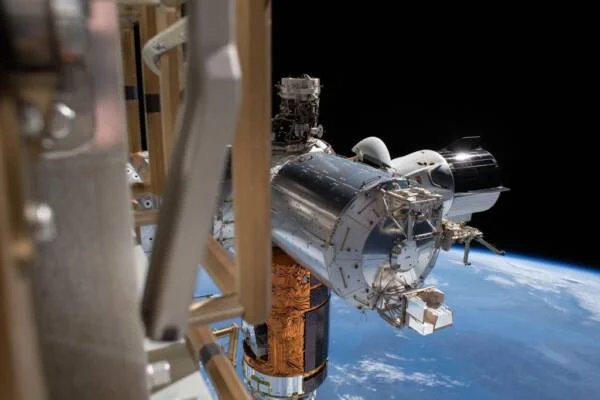
Airbus’ Bartolomeo platform was launched and robotically attached to the ISS Columbus Module in 2020. Following the final connection of the cabling during an Extravehicular Activity (EVA), or ‘spacewalk’, in early 2021, the platform will be ready for in-space commissioning.
Bartolomeo is an Airbus investment into the ISS infrastructure, enabling hosting of up to twelve external payloads in the space environment, providing unique opportunities for in-orbit demonstration and verification missions. It is operated in a partnership between Airbus, ESA, NASA and the ISS National Laboratory.
Bartolomeo is suitable for many types of missions, including Earth observation, environmental and climate research, robotics, material sciences and astrophysics. It provides sought-after payload-hosting capabilities for customers and researchers to test space technologies, verify a new space business approach, conduct scientific experiments in microgravity or enter into in-space manufacturing endeavours.
Launch opportunities are available on every servicing mission to the ISS, which occur about every three months. The payload accommodation allows slots for a wide range of payload mass, from 5 to 450 kg. As an evolution of the platform, Airbus will provide optical data downlink capacity of one to two terabytes per day.
Payloads can be prepared and ready to operate within one and a half years after contract signature. Payload sizes, interfaces, preparation before launch and integration processes are largely standardised. This reduces lead times and significantly reduces costs compared to traditional mission costs.
Airbus offers this easy access to space as an all-in-one mission service. This includes technical support in preparing the payload mission; launch and installation; operations and data transfer; and an optional return to Earth.